
Bank Loan Credit Rating (BLR): External Credit Assessment & Interest Rate Spread Guide
Quick Summary & Key Takeaways (Featured Snippet)
1. The Basel III Architecture: Why Banks Mandate External Loan Ratings
Following the 2008 global financial meltdown, the Basel Committee on Banking Supervision (BCBS) instituted the Basel III Capital Framework, adopted by the Reserve Bank of India through master circulars. Under Basel III, commercial banks are mandated to maintain a minimum Capital to Risk-Weighted Assets Ratio (CRAR) of 11.5% (inclusive of Capital Conservation Buffer).
To ensure banks do not under-provision for credit risks, the RBI strictly ties the risk-weight of corporate loan exposures to independent External Credit Assessment Institutions (ECAIs). Without an external rating, large corporate loans attract punitive risk weights of 100% to 150%, locking up excessive bank capital. Consequently, lenders make external BLRs a non-negotiable loan sanction covenant.
2. Accredited External Credit Assessment Institutions (ECAIs)
Under RBI's Master Circular on Basel III Capital Regulations, only SEBI-registered and RBI-accredited rating agencies can issue eligible Bank Loan Ratings:
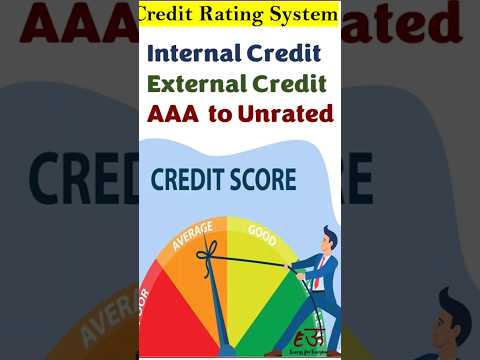
3. The RBI Risk-Weighted Asset (RWA) Matrix: Capital Relief Mechanics
The mathematical correlation between a company's external credit rating and the bank's regulatory capital allocation is governed by the RBI Risk Weight Matrix:
| Long-Term Rating | Short-Term Rating | RBI Risk Weight | Capital Required (per ₹100 Cr Loan) |
|---|---|---|---|
| AAA | A1+ | 20% | ₹2.30 Crores |
| AA | A1 | 30% | ₹3.45 Crores |
| A | A2 | 50% | ₹5.75 Crores |
| BBB | A3 | 100% | ₹11.50 Crores |
| BB and Below / Unrated | A4 / D | 150% | ₹17.25 Crores |
4. Interest Rate Spread Reduction: Saving 50 to 150 BPS on Borrowing Costs
Because an 'A' rated borrower requires the bank to set aside only ₹5.75 Crores of equity capital versus ₹17.25 Crores for an unrated borrower per ₹100 Crores of exposure, the bank's return on equity (ROE) improves dramatically.
Corporate treasurers actively leverage this regulatory capital relief to negotiate their bank's Credit Risk Premium. Moving from BBB to A+ routinely unlocks interest rate reductions of 75 to 125 basis points (0.75% to 1.25%) across working capital limits and term debt.
5. BLR Assessment Methodology: Business Risk vs Financial Risk Profiling
Rating agencies deploy rigorous analytical frameworks combining qualitative and quantitative criteria:
1. Business Risk Profile
- Industry growth prospects and cyclicality exposure.
- Market share, competitive barriers to entry, and brand strength.
- Customer concentration risk (top 5 clients revenue share).
- Supplier bargaining power and raw material price pass-through capability.
2. Financial Risk Profile
- Operating profit margins (EBITDA margin) consistency over 3-5 years.
- Capital structure gearing (Debt to Equity / TOL to TNW).
- Debt service coverage and liquidity cushion (cash & unutilized bank lines).
- Foreign currency hedging discipline and derivative exposures.
6. Benchmark Financial Ratios: TOL/TNW, DSCR, ICR & Working Capital Intensity
Rating analysts subject audited financial statements to standardized ratio thresholds:
7. Rating Scale Equivalences: Long-Term (AAA to D) vs Short-Term (A1+ to A4)
Bank facilities are rated on dual scales:
- Long-Term Scale (Tenure > 1 Year): Applies to Term Loans and Working Capital Term Loans. Ranges from
CRISIL AAA(Highest Safety) throughAA, A, BBB(Moderate Safety) down toBB, B, C, D(Default). - Short-Term Scale (Tenure ≤ 1 Year): Applies to Cash Credit, Overdraft, Letters of Credit (LC), and Bank Guarantees (BG). Ranges from
A1+(Highest Safety) down toA2, A3, A4, and D.
8. Step-by-Step Rating Process SOP: Mandate to Committee Press Release
Mandate Execution & Data Submission
Execute the rating agreement and submit 3-year audited financials, provisional current year numbers, order book details, and sanction letters.
Management Interaction & Factory Site Visit
Rating team conducts detailed interviews with the promoter/CFO and inspects manufacturing plants to evaluate operational bottlenecks and capacity utilization.
Rating Committee Adjudication & Press Release
Independent Rating Committee debates the analytical note and assigns the rating. Upon acceptance, the agency issues the formal Rating Letter and publishes the Rating Rationale.
9. Basel III Risk Weights vs Bank Capital Allocation Matrix
| Rating Grade | Risk Category | RBI Risk Weight | Indicative Interest Spread Over Benchmark |
|---|---|---|---|
| AAA | Prime Corporate | 20% | + 0.25% to 0.50% |
| AA / AA- | High Quality | 30% | + 0.50% to 0.85% |
| A / A- | Upper Medium | 50% | + 0.90% to 1.35% |
| BBB / BBB- | Lowest Investment Grade | 100% | + 1.50% to 2.25% |
| BB / B / Unrated | Non-Investment / Speculative | 150% | + 2.50% to 4.50% |
10. Mid-Market Corporate Case Study: Rating Upgrade from BBB to A+ Saves ₹1.8 Crores
Case Study: Heavy Forging Manufacturer (Faridabad)
A forging company with ₹180 Crores in consortium bank limits (₹70 Cr Term Debt + ₹110 Cr Working Capital) was rated CRISIL BBB/Stable. The company engaged in debt deleveraging, infusing ₹25 Crores in promoter equity and improving its TOL/TNW from 2.8x to 1.4x while enhancing its DSCR to 2.1x.
Rating Action: CRISIL upgraded the long-term rating to CRISIL A+/Stable and short-term rating to CRISIL A1.
Capital Weight Impact: Bank consortium risk weight plunged from 100% to 50%.
Interest Spread Negotiation: Lead bank reduced the lending spread over MCLR by 100 bps (1.00%), reducing annual interest expenses by ₹1.80 Crores and boosting net corporate profitability.
11. The 'Issuer Not Cooperating' (INC) Trap: 150% Risk Weight Penalties
Under SEBI credit rating regulations, if a company fails to provide quarterly No Default Statements (NDS) or withholds audited balance sheets, the rating agency is legally required to publish a rating action titled "Rating Migrated to Issuer Not Cooperating (INC)".
The Devastating Penalties of an INC Tag:
- RBI mandates that banks treat INC ratings as high-risk, applying a 150% risk weight regardless of past grades.
- Consortium banks automatically slap punitive interest surcharges of 1% to 2% per annum.
- No bank can sanction credit line enhancements or renew letter of credit limits until the INC tag is cleared.
12. Rating Presentation Pitfalls: Off-Balance Sheet Guarantees & Unhedged Forex
Pitfall 1: Un-disclosed Corporate Guarantees to Group Firms
Rating analysts consolidate all corporate guarantees given to sister concerns into the borrower's total debt. Un-budgeted subsidiary liabilities frequently trigger unexpected rating downgrades.
Pitfall 2: Over-Reliance on Short-Term Working Capital for Capex
Utilizing short-term bank cash credit limits to fund factory shed construction severely damages the current ratio and alerts analysts to negative asset-liability mismatch (ALM).
13. Annual Surveillance & Quarterly Review Protocols under SEBI/RBI Directives
A BLR rating is dynamic. Under SEBI regulations:
- Monthly NDS Submission: The company must submit a monthly "No Default Statement" (NDS) confirming zero delays in bank servicing.
- Annual Surveillance: Full-scope financial audit conducted within 12 months of previous review.
- Event-Driven Reviews: Immediate review triggered upon credit events (e.g. fire incident, director resignation, or litigation).
14. Decision Matrix: Selecting the Optimal Rating Agency for Your Industry
Selecting Rating Partners Based on Corporate Scale:
- Large Conglomerates & PSUs: CRISIL or ICRA for maximum international investor visibility and lowest bank spreads.
- Mid-Market Manufacturing (₹50 Cr - ₹300 Cr Turnover): CARE Ratings or India Ratings for deep sector specialization.
- Emerging MSMEs (₹10 Cr - ₹50 Cr Turnover): Acuité or Infomerics for faster turnaround and tailored SME rating criteria.
15. CFO & Treasury Team's Pre-Rating Financial Audit Checklist
Recommended Video Tutorials & Practical Walkthroughs
Watch these handpicked, expert video guides covering practical compliance, step-by-step procedures, and real-world implementation:
Recommended Video Tutorials & Practical Guides

16. Frequently Asked Questions (FAQs)
17. Official RBI Basel III Master Circulars & SEBI Credit Rating Regulations
Statutory Authority: RBI Master Circular on Basel III Capital Regulations (Ref: RBI/2023-24/31); SEBI (Credit Rating Agencies) Regulations, 1999 as amended; RBI Master Directions on External Credit Assessment Institutions; Banking Regulation Act, 1949 Section 21 & 35A.