
Channel Financing & Supply Chain Finance: Vendor & Dealer Credit with Anchor Corporate Guide
Quick Summary & Key Takeaways (Featured Snippet)
1. The Supply Chain Finance Revolution: Anchor-Led Working Capital
In conventional commercial banking, credit evaluation is bilateral and siloed: every SME vendor and retail distributor must pledge physical real estate collateral and produce three years of audited balance sheets to secure modest Cash Credit limits at double-digit interest rates (12% to 16%).
Supply Chain Finance (SCF) dismantles this inefficiency by adopting an Anchor-Led Ecosystem Model. By anchoring the credit relationship to a large, highly-rated corporate (such as Tata Motors, Hindustan Unilever, or Larsen & Toubro), financing institutions extend liquidity to the entire corporate supply chain based on real-time transaction data rather than static collateral.
2. Upstream Financing: Vendor Financing & Reverse Factoring
Upstream financing addresses the liquidity needs of tier-1 and tier-2 raw material and component suppliers:
Mechanics of Reverse Factoring:
- The vendor delivers goods and generates an e-invoice with standard 90-day credit terms.
- The Anchor Corporate confirms goods receipt and approves the invoice in its enterprise ERP (SAP/Oracle).
- The financing bank automatically disburses 100% of the invoice value (less nominal discounting interest) directly into the vendor's bank account on Day 2.
- On Day 90, the Anchor Corporate repays the principal invoice amount directly to the bank.
3. Downstream Financing: Dealer & Distributor Channel Credit Lines
Downstream financing accelerates cash realization from the wholesale distribution network:
How Channel Finance Works for Distributors:
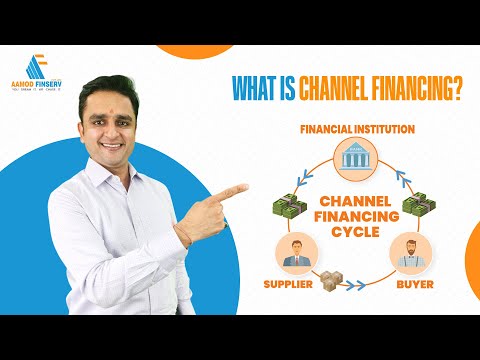
The bank sanctions an unsecured, revolving credit facility (e.g. ₹50 Lakhs to ₹5 Crores) to an authorized distributor. When the distributor places an order with the Anchor, the bank pays the Anchor immediately. The distributor receives a 30 to 90 day credit window from the bank to sell inventory to retail merchants before settling the loan, converting the Anchor's receivables into instant cash.
4. The Anchor Arbitrage: Pricing Off the Blue-Chip Corporate Rating
The fundamental economic engine powering SCF is Credit Rating Arbitrage:
A tier-2 auto component SME with a BBB rating borrows at 11.50% to 13.00% with 100% immovable property collateral.
Under a AAA-rated OEM's reverse factoring program, the same vendor gets invoice discounting at 7.75% to 8.50% without any collateral.
5. TReDS Platform Integration: Invoicemart, M1xchange & RXIL Workflows
Under RBI directives and the MSMED Act, the Government instituted Trade Receivables Discounting System (TReDS) exchanges to eliminate MSME delayed payment distress:
The Three Institutional TReDS Platforms in India:
- Receivables Exchange of India (RXIL): Joint venture of NSE and SIDBI.
- M1xchange: Leading private digital invoice discounting marketplace.
- Invoicemart (A.TREDS): Backed by Axis Bank and mjunction.
Mandatory Corporate Onboarding: Ministry of MSME mandates that all corporate enterprises with annual turnover exceeding ₹250 Crores and Central Public Sector Enterprises (CPSEs) must register on TReDS.
6. Legal Structuring: Recourse vs Limited Recourse vs Non-Recourse
The legal allocation of credit risk determines balance sheet treatment and pricing:
7. ERP API Integration: Automated Real-Time Invoice Discounting
Modern enterprise supply chain finance programs operate with zero manual paperwork. Banks and fintech platforms deploy secure REST APIs integrated directly into the Anchor's SAP S/4HANA or Oracle ERP:
- Automated invoice validation matching purchase orders (PO), goods receipt notes (GRN), and GST e-invoices.
- Real-time automated debits to bank credit lines and instant NEFT/RTGS payouts to vendor bank accounts.
- Automated e-mandate (e-NACH) creation for dealer repayment on due dates.
8. Step-by-Step Program Onboarding & Daily Drawdown SOP
Anchor Umbrella Limit Sanction
Lender sanctions an umbrella SCF line (e.g. ₹200 Crores) based on the Anchor Corporate's balance sheet and credit rating.
Vendor/Dealer Digital Onboarding
Suppliers and distributors complete paperless digital KYC, sign tripartite assignment agreements via Aadhaar e-Sign, and activate limits.
Automated Drawdown & Settlement
Invoices approved in ERP trigger automated discounting. Lenders disburse funds to vendors within 24 hours, collecting from anchors at invoice maturity.
9. Channel Financing vs Traditional Cash Credit vs Factoring Matrix
| Feature | Channel / Supply Chain Finance | Traditional Cash Credit (CC) | Traditional Factoring |
|---|---|---|---|
| Underwriting Basis | Anchor credit rating & transactional data | Borrower balance sheet & real estate collateral | Buyer ledger assessment |
| Collateral Required | Nil to Minimal (Transaction backed) | Heavy (100% to 150% property mortgage) | Receivables assignment only |
| Interest Rate | 7.50% - 9.50% | 10.50% - 13.50% | 11.00% - 14.00% |
| Disbursement Speed | Real-time / 24 Hours via ERP API | Monthly Drawing Power (DP) cycles | Manual invoice submission (2-5 days) |
10. Consumer Electronics OEM Case Study: Slashing DSO by 38 Days
Case Study: Major White-Goods Appliance Manufacturer (Noida)
A white-goods manufacturer with ₹1,200 Crores in annual revenue distributed appliances through 450 regional distributors. The OEM suffered from high Days Sales Outstanding (DSO of 58 days) and frequent payment defaults during festival inventory build-up.
Solution: Onboarded a consortium bank Channel Financing program covering 320 tier-1 distributors with ₹250 Crores in credit lines.
Operational Impact: OEM received 100% invoice settlement within 24 hours of dispatch, slashing DSO from 58 days to 20 days.
Distributor Benefit: Distributors secured 60 days of credit at 8.75% interest, increasing seasonal purchasing power by 32% and eliminating unorganized market borrowing.
11. Accounting Red Flags: Ind AS 109 Trade Payables vs Bank Borrowings Reclassification
CFOs and corporate controllers must exercise extreme caution regarding balance sheet treatment under Ind AS 109 (Financial Instruments) and Ind AS 107:
The Balance Sheet Reclassification Danger:
If an Anchor Corporate negotiates extended payment terms (e.g. paying the bank on Day 180 when standard vendor terms are 45 days), or if the Anchor pays the discounting interest directly to the bank, statutory auditors will rule that the transaction has lost its operational commercial nature. Auditors will legally reclassify the liability from "Trade Payables" to "Borrowings / Bank Debt". This sudden surge in reported debt breaches bank loan gearing covenants (TOL/TNW) and triggers rating downgrades.
12. Implementation Traps: Stop-Supply Triggers & Anchor Commercial Defaults
Pitfall 1: Failure to Enforce Stop-Supply Protocols
If a distributor defaults on a channel finance installment, the Anchor must immediately freeze ERP dispatches. Continuing dispatches to an overdrawn dealer breaches bank agreements and triggers anchor recourse liabilities.
Pitfall 2: Circular Invoicing Between Sister Concerns
Discounting invoices generated between related-party entities without genuine physical movement of goods constitutes criminal financial fraud under Section 447 of the Companies Act.
13. Tripartite Agreements: Power of Attorney, Escrow & Assignment Deeds
A legally enforceable SCF program requires robust contractual documentation:
- Master Tripartite Agreement (MTA): Executed between Anchor, Bank, and Vendor/Dealer defining operational covenants and payment cascades.
- Irrevocable Power of Attorney (PoA): Authorizing the lender to debit designated escrow or settlement bank accounts on due dates.
- Deed of Assignment: Legally assigning all underlying invoice receivables to the bank under Section 130 of the Transfer of Property Act.
14. Decision Matrix: Selecting SCF Platforms for Tier-1 & Tier-2 Suppliers
Platform Selection Strategy:
- MSME Vendor Portfolio: TReDS (RXIL/M1xchange) is mandatory. Delivers cheapest auction pricing and satisfies statutory Section 43B(h) compliance.
- Proprietary Distributor Network: Bank-specific Channel Finance platform (e.g. HDFC, ICICI, SBI) for deep ERP integration and custom credit scoring.
- Global Supply Chains (Cross-Border): Multi-bank fintech platforms (Taulia, PrimeRevenue) for multi-currency settlement.
15. Treasury Head & Supply Chain Director's Monthly SCF Audit Checklist
Recommended Video Tutorials & Practical Walkthroughs
Watch these handpicked, expert video guides covering practical compliance, step-by-step procedures, and real-world implementation:
Recommended Video Tutorials & Practical Guides

16. Frequently Asked Questions (FAQs)
17. Official RBI Supply Chain Directives, MSMED Act & Ind AS Standards
Statutory Authority: RBI Guidelines on Trade Receivables Discounting System (TReDS); Factoring Regulation Act, 2011; Micro, Small and Medium Enterprises Development (MSMED) Act, 2006; Indian Accounting Standard (Ind AS) 109 Financial Instruments & Ind AS 107 Disclosures; Section 130 of Transfer of Property Act, 1882.