
Environmental Impairment Liability (EIL) Insurance: Industrial Pollution & CPCB Compliance Guide
Quick Summary & Key Takeaways (Featured Snippet)
1. Industrial Environmental Liability Landscape in India
India's environmental jurisprudence is among the most stringent in the world, governed by the landmark Supreme Court doctrine of Absolute Liability established in the M.C. Mehta vs Union of India case. Under this legal principle, any commercial enterprise engaged in hazardous or inherently dangerous industrial activity owes an absolute and non-delegable duty to the community.
The establishment of the National Green Tribunal (NGT) under the NGT Act, 2010 empowered regulators and civil society to enforce the "Polluter Pays Principle" with unprecedented rigor. Industrial polluters are routinely levied multi-crore "Environmental Compensation" penalties for effluent discharge, underground aquifer contamination, toxic air emissions, and illegal hazardous waste handling.
2. PLIA 1991 vs Comprehensive EIL: The Coverage Void
Many industrial CFOs erroneously believe that holding a statutory Public Liability Insurance Act (PLIA), 1991 policy protects their enterprise from environmental disasters. In reality, PLIA has extreme statutory limitations:
Mandatory PLIA 1991
- Statutory compensation capped at ₹25,000 per fatality and ₹12,500 for medical relief.
- Maximum relief for private property damage capped at ₹6,000 per claimant.
- Completely excludes ecological damage, clean-up costs, and contaminated land restoration.
- Excludes gradual seepage and slow subterranean pipe corrosion.
Comprehensive EIL Policy
- Multi-crore customizable limits (₹10 Crores to ₹200+ Crores Sum Insured).
- Full coverage for third-party bodily injury, chronic illness, and lost agricultural yield.
- Comprehensive on-site and off-site environmental clean-up and bioremediation.
- Covers legal defense costs, crisis management PR, and NGT compliance directives.
3. Sudden & Accidental vs Gradual Pollution Perils
Commercial general liability and property policies typically contain severe pollution restrictions. True environmental protection requires bifurcated coverage addressing both temporal profiles:
Immediate, unforeseen events such as a chemical storage tank rupture, pipeline flash explosion, gas release, or flash flooding inundating an effluent treatment plant (ETP) lagoon within hours.
Slow, unnoticed microscopic corrosion in underground fuel tanks, continuous hairline cracks in concrete neutralization pits, or steady leachate permeating deep soil layers over 5 to 10 years until borewell water becomes toxic.
4. Clean-Up Costs: On-Site Soil & Groundwater Remediation vs Off-Site Third-Party Loss
Remediation expenses following an industrial environmental accident easily dwarf immediate asset losses:
The Anatomy of Comprehensive Clean-Up Coverage:
- On-Site Clean-Up: Removal of contaminated soil, hazardous sludge excavation, bioremediation, and installation of continuous pump-and-treat systems to decontaminate aquifers beneath the insured facility.
- Off-Site Clean-Up: Remediation of neighboring agricultural farmlands, dredging and chemical neutralization of polluted rivers or canals, and provision of alternative potable water supplies to villages.
- First-Party Discovery Triggers: Coverage triggered immediately when internal monitoring reveals hazardous threshold exceedances requiring statutory reporting to SPCB, without waiting for a lawsuit.
5. National Green Tribunal (NGT) & CPCB Strict Liability Compensation
The Central Pollution Control Board (CPCB) and State Pollution Control Boards (SPCBs) exercise sweeping statutory powers under Section 33A of the Water (Prevention and Control of Pollution) Act, 1974 and Section 31A of the Air Act, 1981, including the immediate disconnection of electricity/water and factory closure notices.
Furthermore, the NGT regularly calculates Environmental Compensation using standardized mathematical formulas reflecting the capital cost of remediation, duration of pollution, and economic benefits derived from non-compliance. EIL policies provide specialized environmental legal defense coverage to contest arbitrary assessments and negotiate realistic remediation Consent Decrees.
6. Claims-Made Triggers & Maintaining Continuity of Retroactive Dates
EIL insurance is written strictly on a Claims-Made and Reported basis. To maintain valid protection:
The Golden Rule of Retroactive Dates:
When renewing an EIL policy or transferring underwriters, the insured enterprise must ensure that the Retroactive Date remains pinned to the inception date of the original policy. If an underwriter resets the retroactive date to the current renewal date, all historical coverage for gradual leaks that originated in previous years is permanently extinguished.
7. Transportation of Hazardous Waste & Off-Site Disposal Liability
Under the Hazardous and Other Wastes (Management and Transboundary Movement) Rules, 2016, the generator of hazardous waste retains legal liability until the waste is safely incinerated or entombed in an authorized Treatment, Storage, and Disposal Facility (TSDF).
A dedicated Transportation Pollution Liability (TPL) endorsement ensures that if a third-party contractor's hazardous waste tanker overturns en route, causing toxic chemicals to spill into an irrigation canal, the primary generator's corporate balance sheet is fully indemnified.
8. Step-by-Step Environmental Incident Reporting SOP
Emergency Containment & Statutory Intimation
Activate onsite emergency response plans. Notify the SPCB, District Magistrate, and insurer claims desk within mandatory statutory windows (typically 24 to 48 hours).
Environmental Consultant & Forensic Surveyor Mobilization
Underwriter appoints MoEFCC-accredited environmental engineering consultants to take soil and water core samples, establish pollution plumes, and prepare clean-up protocols.
Remediation Execution & Regulatory Certification
Incur pre-approved clean-up costs for hazardous waste excavation and aquifer treatment. Submit final environmental audit clearance reports to SPCB and underwriter.
9. EIL vs Commercial General Liability (CGL) vs PLIA Matrix
| Feature | EIL Insurance | CGL Policy | PLIA 1991 |
|---|---|---|---|
| Sudden & Accidental Pollution | Fully Covered | Only if S&A Rider added | Covered (Fixed Limits) |
| Gradual / Seepage Pollution | Fully Covered | Strictly Excluded | Excluded |
| On-Site Soil Clean-Up | Fully Covered | Excluded | Excluded |
| Off-Site Clean-Up & Bioremediation | Fully Covered | Excluded | Excluded |
| NGT Environmental Compensation | Admissible | Excluded | Excluded |
10. Industrial Case Study: Bulk Drug Pharma Effluent Leakage & NGT ₹12 Crore Penalty
Case Study: Active Pharmaceutical Ingredient (API) Plant (Telangana)
In August 2024, an undetected underground crack in an effluent holding sump at an API manufacturing facility in Hyderabad caused untreated high-TDS chemical washings to percolate into surrounding village borewells over 9 months.
Regulatory Action: NGT Principal Bench initiated suo motu proceedings, levying an interim Environmental Compensation penalty of ₹12 Crores and ordering plant closure.
Insurance Response: The company held an EIL policy with ₹25 Crores Sum Insured and an uninterrupted 5-year retroactive date.
Claim Settlement: Underwriters funded ₹4.8 Crores in legal defense, negotiated a structured bioremediation plan approved by the PCB costing ₹6.5 Crores, and indemnified village borewell remediation, saving the business from permanent closure.
11. High-Risk Underwriting Traps: Pre-Existing Known Contamination & Inadequate Sum Insured
Pitfall 1: Non-Disclosure of Pre-Existing Baseline Contamination
Underwriting an older industrial site without conducting an environmental Phase-I / Phase-II baseline assessment leads to disputes. Underwriters will disallow claims if contamination existed prior to the retroactive date.
Pitfall 2: Token Sum Insured (₹2 Crores for a Red Category Unit)
Aquifer remediation in India costs upwards of ₹10 to ₹30 Crores. Buying a minimal ₹2 Crore policy leaves the company with severe balance sheet exposure during an NGT crackdown.
12. Core Policy Exclusions: Willful Non-Compliance & Intentional Dumping
EIL insurance is designed for unintentional industrial accidents and latent seepage. It strictly excludes:
- Deliberate bypassing of Effluent Treatment Plants (ETP) or illegal midnight dumping into municipal drains.
- Operating without valid Consent to Operate (CTO) or Hazardous Waste Authorisation from the SPCB.
- War, radioactive contamination, and asbestos-related claims.
13. Natural Resource Damage (NRD) & Ecological Restoration Coverage
Modern EIL policies include specific coverage for Natural Resource Damage (NRD). When a spill damages public water bodies, mangrove ecosystems, or forest land, government authorities demand ecological restoration rather than simple monetary damages. NRD coverage funds ecosystem re-seeding, wetland restoration, and long-term bio-monitoring.
14. Decision Matrix: Red, Orange & Green Category Industry Risk Profiling
Recommended EIL Policy Limits by CPCB Classification:
- CPCB Red Category (Chemicals, Petrochemicals, Pharma): Minimum ₹25 to ₹100 Crores Sum Insured + Gradual Pollution + Transportation Rider.
- CPCB Orange Category (Food Processing, Light Engineering): ₹10 to ₹25 Crores Sum Insured + On-Site & Off-Site Clean-Up.
- CPCB Green Category (Assembly, Electronics): ₹5 to ₹10 Crores Sum Insured focused primarily on sudden chemical/diesel fuel tank ruptures.
15. EHS Director & Risk Officer's Annual Environmental Insurance Checklist
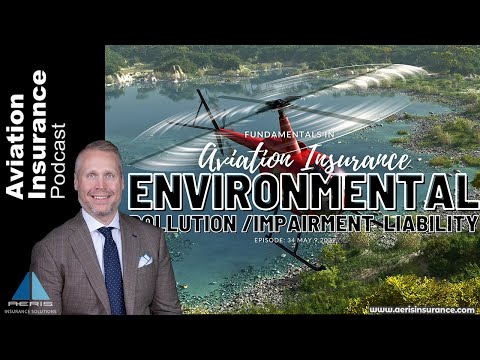
Recommended Video Tutorials & Practical Walkthroughs
Watch these handpicked, expert video guides covering practical compliance, step-by-step procedures, and real-world implementation:
Recommended Video Tutorials & Practical Guides

16. Frequently Asked Questions (FAQs)
17. Official CPCB, MoEFCC & NGT Environmental Legislation Directory
Statutory References: The Environment (Protection) Act, 1986; Public Liability Insurance Act, 1991 (PLIA); National Green Tribunal Act, 2010; Water (Prevention and Control of Pollution) Act, 1974; Hazardous and Other Wastes (Management and Transboundary Movement) Rules, 2016; CPCB Industrial Categorisation Directives.