
What is the key difference between a Letter of Credit (LC) and a Bank Guarantee (BG)?
The fundamental difference lies in the trigger of payment: A Letter of Credit (LC) is a primary obligation where the bank guarantees payment to the seller as the standard payment method once compliant shipping documents are presented. A Bank Guarantee (BG) is a secondary obligation where the bank pays only if the applicant defaults on a contractual milestone, tender requirement, or loan repayment. LCs are primarily used for physical goods transit, while BGs are used for infrastructure projects, tenders, and advance payments.
1. What is an LC and a Bank Guarantee?
Both Letters of Credit and Bank Guarantees are non-fund based credit facilities provided by commercial banks in India. Under a non-fund facility, the bank does not disburse immediate cash; instead, it provides its institutional creditworthiness and balance sheet strength to back your transaction.
Letter of Credit (Documentary Credit)
A written undertaking issued by an opening bank at the request of an applicant (buyer) in favor of a beneficiary (seller), committing to honor compliant presentation of stipulated shipping documents (Bill of Lading, Invoice, Packing List) within agreed deadlines.
Bank Guarantee (BG)
A tripartite agreement under Section 126 of the Indian Contract Act, 1872, where the guarantor bank promises to pay a designated beneficiary if the principal debtor defaults on a contractual covenant, tender performance, or financial debt.
2. Who Needs These Non-Fund Based Facilities?
Depending on your operating model, cash flow cycle, and regulatory obligations, distinct commercial entities utilize LCs and BGs:
- Importers of Capital Goods & Raw Materials: Foreign suppliers rarely offer unsecured open-account credit terms; an Irrevocable Sight LC eliminates supplier non-delivery and non-payment risks.
- Government Tenderers & EPC Contractors: Public Sector Undertakings (PSUs), NHAI, and state electricity boards mandate Bid Bond BGs (Earnest Money Deposit) and Performance Bank Guarantees (PBG) before awarding contracts.
- Domestic Distributors & Franchises: FMCG giants and petroleum companies require dealers to submit Financial Bank Guarantees to secure stock allocations without daily prepayments.
- Exporters Seeking Pre-Shipment Advances: Exporters use Back-to-Back or Transferable LCs to procure inputs from local suppliers using the overseas buyer's master credit line.
3. Types of LCs and Bank Guarantees
Common Types of Letters of Credit (LC)
Sight LC
Payment is released immediately (within 5 banking days) once the advising/confirming bank verifies that shipping documents match terms perfectly.
Usance / Acceptance LC
Payment is deferred to a future date (e.g., 60, 90, or 180 days from Bill of Lading date), providing working capital credit to the buyer.
Confirmed LC
A second bank (usually in the exporter's country) adds its guarantee, mitigating country and issuing-bank sovereign risk.
Standby LC (SBLC)
Operates like a bank guarantee under US banking practice, invoked only in case of non-performance or default by the buyer.
Common Types of Bank Guarantees (BG)
Performance Bank Guarantee (PBG)
Assures the beneficiary that if the contractor fails to deliver goods or complete works as per specifications, the bank will pay liquidated damages (typically 5%–10% of contract value).
Financial Bank Guarantee (FBG)
Guarantees monetary repayment, such as an Advance Payment Guarantee where an employer recovers unadjusted mobilization funds if a project stalls.
Bid Bond / Earnest Money BG
Submitted with tender bids to ensure the bidder does not withdraw their tender or alter commercial prices prior to contract awarding.
Customs / Deferred Duty BG
Furnished to Indian Customs under EPCG or advance authorization schemes to clear imported capital machinery duty-free pending export obligations.
4. Operational Workflow & Transaction Mechanics
Both instruments rely on structured messaging across authenticated telecommunication channels (SWIFT MT700 for LC issuance, MT760 for BG issuance; SFMS within India):
Contractual Foundation
Buyer and seller execute a Purchase Order or Tender Agreement specifying the requirement for an irrevocable LC or BG, payment terms, and acceptable banks.
Bank Application & Security Margin
The applicant submits the application to their bank with cash margin (FD lien) or against their approved non-fund working capital limit.
Transmission via SWIFT / SFMS
The issuing bank transmits the encrypted financial message to the advising bank, which authenticates the digital signatures and delivers it to the beneficiary.
Performance or Claim Settlement
In an LC, the seller ships goods and presents documents to get paid. In a BG, the instrument expires unused unless the beneficiary files a verified claim before expiry.
5. Bank Eligibility & Credit Assessment
Indian commercial banks evaluate businesses under strict prudential lending criteria before sanctioning non-fund limits:
Credit Score & Track Record
Commercial CIBIL Rank (CCR) between 1 and 4, promoters' personal credit score > 720, and zero Days Past Due (DPD) over the past 24 months.
Financial Ratios
Minimum Current Ratio of 1.33, Total Outside Liabilities to Tangible Net Worth (TOL/TNW) < 3.5, and positive operating cash flows.
Collateral Backing
Fixed asset collateral coverage of 100% to 150%, supplemented by personal guarantees of all active partners and directors.
6. Bank Charges, Commission & Stamp Duty
| Fee Component | Letter of Credit (LC) | Bank Guarantee (BG) | Applicable GST |
|---|---|---|---|
| Issuance Commission | 0.50% to 1.75% p.a. (often pro-rata for tenor) | 0.75% to 2.50% p.a. (charged quarterly or annually) | 18% GST |
| Cash Margin Required | 10% to 25% (or 100% via FD without limit) | 10% to 25% (or 100% via FD without limit) | Exempt (Interest earned on FD) |
| SWIFT / SFMS Charges | ₹1,000 – ₹3,500 per outward SWIFT | ₹500 – ₹1,500 per SFMS transmission | 18% GST |
| Discrepancy / Amendment Fee | \$75 – \$125 per discrepant document set | ₹1,000 – ₹5,000 per amendment | 18% GST |
| Stamp Duty on Deed | Minimal (State Stamp Act rules) | ₹200 to 0.50% depending on state stamp rules | Zero GST (State Tax) |
7. Mandatory Documentation & Sanction SOP
Documents to Issue an LC
- Form LC Application & Master Agreement cum Counter Indemnity
- Signed Proforma Invoice / Contract with Incoterms 2020
- Import Export Code (IEC) certificate & GSTIN registration
- Insurance Cover Note with bank clause endorsement
- Board Resolution (for Pvt Ltd / Ltd companies)
Documents to Issue a Bank Guarantee
- BG Application Form with specific wording accepted by the beneficiary
- Notice Inviting Tender (NIT) or Letter of Award (LoA)
- Counter Indemnity on appropriate non-judicial stamp paper
- Fixed Deposit receipt marked with bank lien (for margin)
- Board Resolution authorizing directors to bind the company
8. Step-by-Step Issuance & Retirement Workflow
Step 1: Sanction of Non-Fund Based Limit
Approach your relationship manager with past 3 years audited balance sheets, CMA data, and sanction request. Secure an sanctioned LC/BG limit with sub-limits.
Step 2: Draft Vetting
Obtain the exact LC draft or BG format from your supplier or tendering authority. Get your bank's trade desk to pre-vet the terms to eliminate non-standard liability clauses.
Step 3: Execution & Margin Lien
Sign the counter-indemnity deed, deposit the designated margin money into an earmarked Term Deposit, and authorize debit of issuance commissions plus 18% GST.
Step 4: SFMS / SWIFT Transmission
The bank issues the instrument. For domestic BGs, Structured Financial Messaging System (SFMS) generates a unique transaction reference (UTR) sent to the beneficiary's bank.
Step 5: Retirement & Closure
For LCs, pay the invoice amount upon bill presentation to retire documents. For BGs, retrieve the original physical guarantee letter from the beneficiary and submit it to your bank for cancellation and margin release.
9. LC vs BG: Side-by-Side Comparison Matrix
| Parameter | Letter of Credit (LC) | Bank Guarantee (BG) |
|---|---|---|
| Nature of Liability | Primary liability (Bank pays as the standard settlement method) | Secondary liability (Bank pays only if the applicant defaults) |
| Typical Purpose | Purchase and shipping of physical raw materials or capital equipment | Contractual execution, tender earnest deposits, advance guarantees |
| Trigger for Payment | Submission of verified, compliant shipping documents within expiry | Submission of written demand/notice certifying applicant's default |
| Governing International Rules | ICC Uniform Customs and Practice (UCP 600) | ICC URDG 758 and Indian Contract Act, 1872 |
| Documentary vs Performance | Strictly documentary; banks deal in papers, not physical goods | Linked to contractual performance, default notices, or court decrees |
| Parties Involved | Applicant, Issuing Bank, Advising Bank, Beneficiary, Confirming Bank | Applicant (Principal Debtor), Guarantor Bank, Beneficiary (Creditor) |
10. Real-World MSME Case Studies
Case Study 1: Capital Machinery Import via Sight LC
A Pune-based auto component manufacturer imported a CNC machining center worth €250,000 from Germany. The German supplier refused open credit. The Indian company opened an Irrevocable Sight LC with State Bank of India. Once the machine was boarded at Hamburg port, the German bank presented the Bill of Lading, Certificate of Origin, and Packing List. SBI audited the documents, released €250,000 to Germany within 5 days, and released the original Bill of Lading to the importer to take delivery at Nhava Sheva port. Both parties remained 100% protected.
Case Study 2: Highway Construction Contract with Performance Bank Guarantee (PBG)
A civil infrastructure firm won an NHAI road tender worth ₹40 Crore. The tender terms required an upfront 5% Performance Bank Guarantee (₹2 Crore) valid for 36 months plus a 12-month defect liability claim period. The contractor deposited ₹30 Lakh (15% cash margin) and offered their commercial office as collateral. HDFC Bank issued the PBG via SFMS to NHAI. No cash changed hands; the contractor preserved working capital while NHAI gained risk protection against unfinished work.
11. Fatal Operational & Documentation Errors
- Documentary Discrepancies under LC: Mismatched spelling in the commercial invoice, outdated Bill of Lading dates, or missing inspection certificates cause banks to reject documents, triggering \$100+ discrepancy fees and port demurrage.
- Ignoring the Claim Expiry Clause in BGs: Failing to notice an ambiguous claim expiry date can leave your bank margin blocked indefinitely because the bank cannot cancel the guarantee without a formal discharge certificate.
- Signing Unconditional BG Formats Without Legal Review: PSUs frequently demand "unconditional and irrevocable" guarantees payable on first demand without proof of breach. If a contractual dispute arises, the beneficiary can encash the full amount instantly.
12. Risk Factors & Legal Traps
The Doctrine of Independence & Strict Compliance
Under both UCP 600 for LCs and established Indian contract law for BGs, banks deal exclusively in documents, not in physical goods or contract disputes. If documents submitted under an LC conform to the letter, the bank is legally obligated to honor payment even if the buyer claims the delivered goods are defective. You cannot ask a bank to halt payment based on commercial disagreements without obtaining an injunction for proven fraud.
13. Legal & Regulatory Framework (UCP 600 / FEMA)
Non-fund based instruments operate under well-defined statutory and regulatory frameworks:
- ICC UCP 600: The globally recognized rulebook that governs commercial letters of credit, setting standards for document examination (Article 14) and bank liability.
- ICC URDG 758: The Uniform Rules for Demand Guarantees, balancing the rights of applicants and beneficiaries in international bank guarantees.
- RBI Master Directions: Governs bank co-acceptances, non-fund limits, foreign currency guarantees, and Trade Credit limits under Foreign Exchange Management Act (FEMA 1999).
- GST on Bank Charges: 18% GST charged on processing and advising commissions is eligible for full Input Tax Credit (ITC) if your business is registered under regular GST.
14. Strategic Playbook: How to Choose Between LC and BG
Choose a Letter of Credit When:
- You are importing or purchasing tangible raw materials or machinery
- You are trading with a new overseas vendor with no payment history
- The seller insists on guaranteed payment upon shipment dispatch
- You require deferred payment terms (Usance LC for 90–180 days)
Choose a Bank Guarantee When:
- You are bidding on government, PSU, or large corporate tenders
- The client demands security against advance mobilization funds
- You need to prove technical performance capability over multi-year terms
- You are deferring customs duty with Indian ports or tax authorities
15. Trade Finance Compliance Checklist
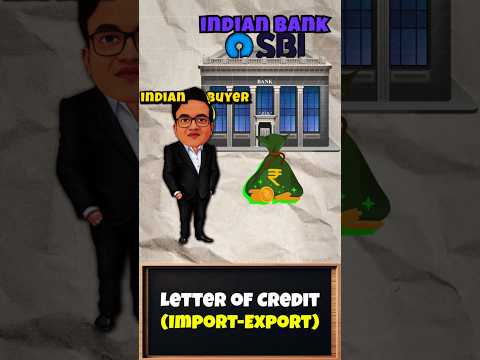
Recommended Video Tutorials & Practical Walkthroughs
Watch these handpicked, expert video guides covering practical compliance, step-by-step procedures, and real-world implementation:
Recommended Video Tutorials & Practical Guides

16. Frequently Asked Questions
What is the primary difference between a Letter of Credit (LC) and a Bank Guarantee (BG)?
A Letter of Credit (LC) is a primary commitment where the issuing bank pays the seller directly once compliant shipping documents are presented. In contrast, a Bank Guarantee (BG) is a secondary commitment where the bank pays only if the buyer or contractor defaults on a contractual or financial obligation.
What are typical bank charges for issuing an LC or BG in India?
Indian public and private sector banks generally charge between 0.50% and 2.50% per annum of the instrument value, depending on the client's internal credit rating, CCR rank, and provided collateral. In addition, 18% GST applies to all bank processing fees.
How much cash margin or Fixed Deposit (FD) is required to open an LC or BG?
For businesses with an approved non-fund based credit limit backed by tangible real estate or asset collateral, banks typically require 10% to 25% cash margin as an FD with bank lien. For businesses without a sanctioned credit facility, 100% to 110% cash margin in Fixed Deposits is mandatory.
What is the difference between a Financial Bank Guarantee and a Performance Bank Guarantee?
A Financial Bank Guarantee guarantees repayment of a monetary liability, such as an advance payment or loan installment. A Performance Bank Guarantee guarantees successful execution of a service or infrastructure project according to agreed quality, timelines, and specifications.
Can an Indian court stop the encashment of an unconditional Bank Guarantee?
Courts in India rarely intervene in unconditional bank guarantees. The Supreme Court of India has established that an injunction against encashing an unconditional bank guarantee can only be granted in exceptional cases involving proven egregious fraud or irretrievable injustice.