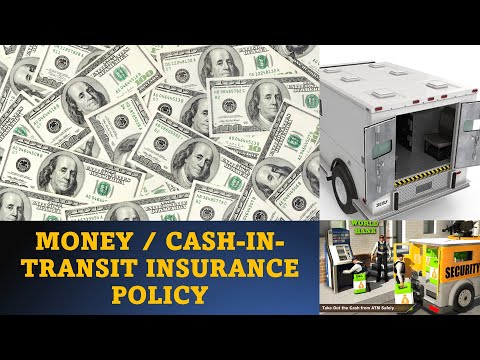
Quick Summary & Key Takeaways (Featured Snippet)
1. The Commercial Cash Risk: What is Money Insurance?
Despite the rapid explosion of Unified Payments Interface (UPI) and digital banking across India, cash remains the dominant transactional medium across large segments of wholesale mandis, FMCG distributor networks, fuel retail outlets, jewelry showrooms, and cash-on-delivery (COD) logistics hubs.
Holding and moving large physical cash volumes exposes businesses to armed highway robbery, motorcycle snatching, overnight safecracking, and daylight counter hold-ups. Money Insurance shields enterprise liquidity by providing comprehensive indemnity against loss of money arising from actual or threatened violence.
2. Section I: Money in Transit (CIT) from Bank to Business Premises
Section I covers money while in the personal custody of authorized company employees or contracted Cash-in-Transit (CIT) agencies:
- Bank-to-Office Transit: Moving cash withdrawn from a scheduled bank to the company's corporate headquarters, regional offices, or project sites for salary disbursements or petty cash funding.
- Office-to-Bank Transit: Transporting daily cash collections from retail stores, fuel stations, or customer service centers to the bank for deposit.
- Customer Collection Routes: Traveling salesmen collecting cash payments directly from retail merchants along predetermined distribution beats.
- Covered Hazards: Armed robbery, violent mugging, snatching from moving vehicles, and vehicle accidents resulting in physical cash destruction or loss.
3. Section II: Money in Locked Safes, Vaults & Strongrooms
Section II covers cash stored overnight inside locked, burglar-resistant safes or concrete strongrooms on the insured business premises:
Physical Safe Cracking
Covers loss where criminals break into premises outside business hours and force open locked safes using gas torches, drills, sledgehammers, or explosives.
Duress Opening
Covers loss where criminals compel safe custodians to open combination locks under threat of armed violence or bodily harm to employees or their families.
4. Section III: Cash at Counters, Tills & Point-of-Sale During Business Hours
High-turnover retail environments (such as supermarkets, department stores, pharmacy chains, and cinema box offices) hold large floating cash sums in cashier drawers:
Section III covers loss of money from open cash registers or cash counters during normal operating business hours resulting from armed holdup, daylight robbery, or sudden violent snatching. Most policies establish a dedicated sub-limit (e.g., ₹25,000 to ₹1,00,000 per cash till) and exclude losses resulting from short-changing or cashier counting errors.
5. Legal Definition of 'Money': Currency, Cheques, Demand Drafts & Stamps
In standard commercial underwriting, the policy definition of "Money" extends beyond physical fiat banknotes:
Contractual Definition of Money
"Money shall mean and include current legal tender currency notes and coins, uncrossed cheques, crossed cheques, bank drafts, pay orders, postal orders, money orders, revenue stamps, and postage stamps belonging to the Insured or for which the Insured is legally responsible."
6. Money Insurance vs Fidelity Guarantee vs Standard Burglary Policy
| Insurance Policy | Asset Protected | Primary Risk Covered | Internal Employee Dishonesty |
|---|---|---|---|
| Money Insurance | Cash, cheques, drafts in transit & safe | Armed robbery, holdup & safecracking | Strictly Excluded |
| Fidelity Guarantee | Corporate funds & inventory | Employee fraud, forgery & embezzlement | 100% Core Purpose |
| Standard Burglary Policy | Plant, machinery, furniture & stock | Forcible entry and theft of physical goods | Money in safe strictly excluded (unless endorsed) |
7. Mandatory Underwriting Warranties: Daily Cash Books & Armored Escorts
Insurers strictly condition claim settlements upon the policyholder maintaining precise operational discipline:
Daily Cash Book Maintenance Warranty
The insured must warrant that a complete daily written record of all money in transit and money stored in safes is entered in a bound cash book or ERP ledger every business day. The cash register must be kept in a secure location separate from the safe itself.
The Overnight Key Clause Warranty
Safe keys, combination codes, and electronic keycards must never be kept inside the office premises outside business hours. Keys must be taken home overnight by authorized keyholders.
Armored Escort Transit Thresholds
Transits exceeding specified sum insured thresholds (e.g., above ₹10 Lakhs) must be conducted in dedicated security vehicles with armed guards, or outsourced to certified cash logistics firms (e.g., SIS, CMS Info Systems, Brink's).
8. Step-by-Step Claim Settlement SOP: Police FIR & Physical Survey
Immediate Police Intimation & FIR Registration
Lodge an immediate complaint with the local police station under robbery/burglary sections. Obtain a certified copy of the FIR and spot panchanama.
Preserve Physical Evidence & Safe Damage
Do not repair damaged doors, broken locks, or drilled safe plates until the IRDAI surveyor inspects and photographs the forcible entry marks.
Submit Audited Cash Register & Bank Slips
Furnish the previous day's closing cash balance book, bank deposit pay-in counterfoils, day-end POS billing tallies, and signed employee statements.
9. High-Cash Sector Risk Profiles: Supermarkets, Jewelers & Fuel Stations
Different commercial sectors require tailored endorsements:
- Fuel Stations & Highway Dhabas: High night-time holdup risk. Policies must include extended overnight counter limits and cash collected during festive holidays when banks remain closed for 3-4 consecutive days.
- Jewelry & Diamond Showrooms: Require special endorsements covering transit between manufacturing workshops, hallmarking centers, and exhibition vaults.
- FMCG & Beverage Distributors: Require "Traveling Salesmen Cash Collection" riders covering field agents carrying cash collections on two-wheelers.
10. Top Audit Pitfalls & Claim Repudiation Checklist
Why Money Insurance Claims Get Repudiated
- Leaving Cash in Open Drawers Overnight: Storing cash in desk drawers or wooden cupboards instead of approved burglar-resistant steel safes voids Section II coverage.
- Deviation from Prescribed Transit Routes: Unexplained detours, personal stops, or overnight home storage of transit cash by employees leads to claim rejections.
- Failure to Maintain Contemporaneous Cash Registers: Attempting to reconstruct cash logs post-robbery will be flagged as fraudulent by forensic surveyors.
Recommended Video Tutorials & Practical Walkthroughs
Watch these handpicked, expert video guides covering practical compliance, step-by-step procedures, and real-world implementation:
Recommended Video Tutorials & Practical Guides