
PM MITRA Mega Textile Parks: 7 Greenfield/Brownfield Hubs & Financial Incentives Guide
Quick Summary & Key Takeaways (Featured Snippet)
1. The PM MITRA Architecture: Realizing the Prime Minister's 5F Vision
India is the world's second-largest producer of cotton and textiles, but its manufacturing ecosystem has historically suffered from severe geographic fragmentation. Cotton grown in Gujarat or Maharashtra is spun into yarn in Tamil Nadu, woven in Surat, dyed in Tirupur, cut and sewn in Bengaluru or Noida, and shipped from Mumbai. This geographic sprawl inflates domestic logistics costs to an unsustainable 14% to 16% of GDP.
To consolidate the industry and build economies of scale matching Vietnam, Bangladesh, and China, the Ministry of Textiles launched the PM Mega Integrated Textile Region and Apparel (PM MITRA) Parks Scheme. The scheme operationalizes the Prime Minister's 5F Vision:
2. The 7 Approved Mega Textile Parks: Strategic Geographic Hubs
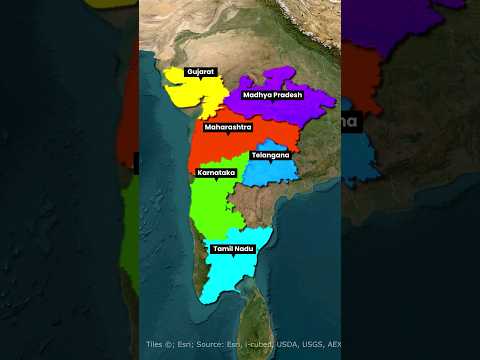
Following rigorous challenge-method evaluations across 13 competing states, the Ministry of Textiles selected 7 strategic mega sites, each spanning a contiguous land parcel of at least 1,000 acres:
3. Development Capital Support (DCS): ₹500 Cr Greenfield & ₹200 Cr Brownfield Grants
The Central Government funds core infrastructure through Development Capital Support (DCS):
Central grant assistance capped at ₹500 Crores per park, covering up to 30% of the total project development cost to create core trunk infrastructure from scratch.
Central grant assistance capped at ₹200 Crores per park, covering up to 30% of the remaining development cost to upgrade existing partially developed industrial zones.
4. Competitive Incentive Support (CIS): Up to ₹300 Cr Operational Subsidies
To attract mega anchor manufacturing investors and incentivize rapid commercial production, the Ministry provides Competitive Incentive Support (CIS) of up to ₹300 Crores per park:
Anchor Investor Incentive Slabs:
- Units establishing operations early receive cash incentives equal to up to 3% of annual sales turnover.
- For an anchor enterprise with an investment > ₹300 Crores: Maximum CIS incentive capped at ₹30 Crores over 3 years.
- For large units with investment > ₹100 Crores: Maximum CIS incentive capped at ₹10 Crores.
- Incentives are disbursed annually based on audited GST returns and physical production verification.
5. Special Purpose Vehicle (SPV) Architecture: 51% State & 49% Central Partnership
Each PM MITRA park is governed under a joint institutional partnership:
- A dedicated Special Purpose Vehicle (SPV) is incorporated under the Companies Act, 2013.
- Equity Shareholding: 51% equity held by the State Government, and 49% equity held by the Central Government.
- The SPV acts as a single-window clearance agency, executing land leases, issuing construction building permits, and managing common utilities without municipal bureaucratic friction.
6. World-Class Infrastructure: Plug-and-Play Sheds, Power & Zero Liquid Discharge (ZLD)
Textile wet processing (dyeing, bleaching, printing) has historically faced plant closures across India due to environmental pollution litigation. PM MITRA solves this through centralized environmental engineering:
7. The Integrated Value Chain: Spinning, Weaving, Processing & Garmenting Integration
By co-locating spinning mills, circular knitting, shuttle-less weaving, automated dyeing, garment cutting, and logistics warehouses within a single 1,000-acre perimeter, PM MITRA eliminates inter-state freight overheads. Fabrics move from weaving to dying to garment assembly within hours on intra-park conveyor routes, slashing production turnaround time from 90 days down to 21 days.
8. Step-by-Step Corporate Unit Allotment & Incentive Claim SOP
Plot Application & SPV Agreement
Submit an Expression of Interest (EOI) to the park's SPV portal detailing proposed capital outlay, job creation commitments, and land acreage requirements. Execute a 99-year industrial lease deed.
Plug-and-Play Factory Construction & Machinery Installation
Erect pre-engineered industrial structures, connect to park high-voltage electricity and CETP lines, and install modern spinning, weaving, or garment machinery.
Commercial Production & Annual CIS Claims
Commence commercial dispatch. Submit annual audited turnover certificates to the SPV to receive 3% CIS incentive payouts directly into your bank account.
9. PM MITRA vs SITP vs PLI for Textiles Comparative Matrix
| Parameter | PM MITRA Scheme | Scheme for Integrated Textile Parks (SITP) | PLI for Textiles |
|---|---|---|---|
| Minimum Scale | Contiguous 1,000+ Acres | Small (20 to 50 Acres) | Entity-level investment |
| Central Grant | Up to ₹500 Cr (DCS) + ₹300 Cr (CIS) | Max ₹40 Crores per park | Zero infrastructure grant |
| Operating Incentive | 3% CIS on annual sales (up to ₹30 Cr) | Zero operational subsidies | 3% to 15% incremental turnover |
| Effluent System | Mandatory Centralized Zero Liquid Discharge | Basic primary ETP plants | Individual company compliance |
10. Global Apparel Exporter Case Study: Setting Up a 2,500-Loom Unit in PM MITRA Navsari
Case Study: Integrated Man-Made Fibre (MMF) Exporter
A large synthetic fabric manufacturer invested ₹350 Crores to establish an integrated weaving and digital textile printing unit on a 40-acre plot in the PM MITRA park at Navsari, Gujarat.
Infrastructure Savings: Avoided spending ₹45 Crores on an individual ZLD plant by plugging into the park's central CETP.
Power Tariffs: Secured uninterrupted green power at ₹4.20/kWh via the dedicated park solar transmission corridor.
Incentive Payouts: Qualified as an anchor investor, securing the maximum ₹30 Crores CIS incentive over 3 years, alongside ₹18 Crores in Gujarat State Industrial Policy capital subsidies.
11. Implementation Pitfalls: Delayed State Lease Registrations & ZLD Effluent Breaches
Pitfall 1: Failure to Satisfy Commercial Turnover Milestones
CIS incentive disbursements are linked to strict annual commercial sales hurdles. Failure to achieve the committed threshold in the approved project report forfeits that year's CIS cash subsidy.
Pitfall 2: Discharging Non-Compliant Toxic Dye Effluents
Pre-treating chemical washings before releasing them into the central CETP is mandatory. Discharging unauthorized high-TDS sludge leads to immediate disconnection of industrial utilities and heavy SPCB penalties.
12. State Industrial Convergence: Power Subsidies, Stamp Duty Waivers & Capital Grants
State governments host PM MITRA parks with generous state policy packages:
- 100% Stamp Duty Exemption: Zero stamp duty and registration fees on land lease deeds executed with the SPV.
- Electricity Tariff Subsidies: Power tariff rebates of ₹1.50 to ₹2.00 per unit for 5 to 7 years.
- Capital Investment Grants: Additional 10% to 20% state capital investment subsidies for mega manufacturing units.
13. ESG & Global Brand Sourcing: Meeting EU Carbon & Traceability Standards
Global fashion retailers (such as Zara, H&M, and Marks & Spencer) face stringent international sustainability mandates, including the European Union's Carbon Border Adjustment Mechanism (CBAM) and supply chain transparency directives. By producing within PM MITRA's certified ZLD and green-energy estates, Indian exporters gain preferred vendor status, shielding their order books from international environmental tariffs.
14. Decision Matrix: Selecting the Optimal PM MITRA Park for Your Product Line
Strategic Park Selection by Textile Segment:
- Synthetic Fabrics & MMF Weaving: PM MITRA Navsari (Gujarat) or Dhar (Madhya Pradesh) for immediate chemical and synthetic yarn ecosystem integration.
- Cotton Knits & Technical Textiles: PM MITRA Virudhunagar (Tamil Nadu) or Warangal (Telangana) for proximity to Coimbatore yarn hubs.
- High-Fashion Apparel & Home Textiles: PM MITRA Lucknow-Hardoi (Uttar Pradesh) or Amravati (Maharashtra) for massive skilled tailoring labor reserves.
15. Textile CFO & Project Director's PM MITRA Application Checklist
Recommended Video Tutorials & Practical Walkthroughs
Watch these handpicked, expert video guides covering practical compliance, step-by-step procedures, and real-world implementation:
Recommended Video Tutorials & Practical Guides
16. Frequently Asked Questions (FAQs)
17. Official Ministry of Textiles Gazette Notifications & Scheme Guidelines
Statutory Authority: Ministry of Textiles Scheme Guidelines for PM Mega Integrated Textile Region and Apparel (PM MITRA) Parks (Gazette Notification No. 1/4/2021-P&G); Production Linked Incentive (PLI) Scheme for Textiles; Environment (Protection) Act, 1986 Zero Liquid Discharge (ZLD) Standards; Foreign Trade Policy (FTP 2023).