
Project Finance & Consortium Lending: CMA Data & Multiple Banking Guide
Quick Summary & Key Takeaways (Featured Snippet)
1. Statutory Overview: RBI Large Exposure Framework & Project Finance Regulatory Norms
In India's financial and corporate debt ecosystem, mastering banking regulations, credit syndication, and debt resolution procedures is vital for enterprise survival and expansion. Project Finance & Consortium Lending: CMA Data & Multiple Banking Guide represents a critical pillar of credit architecture and legal defense for borrowers, CFOs, and finance professionals.
Statutory Foundation & Regulatory Principles
Regulated by statutory frameworks established under the Reserve Bank of India (RBI) Act, Banking Regulation Act, and specialized debt recovery statutes, these norms govern the balance of power between institutional lenders and borrowers.
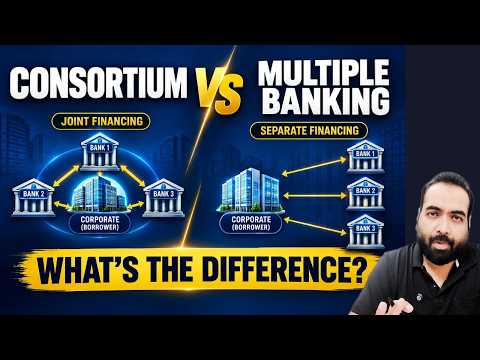
2. Structural Comparison: Consortium Lending vs Multiple Banking Arrangements (MBA)
The practical enforcement and defense of these banking mechanisms require strict compliance with prescribed procedural steps and mandatory timelines. A failure on either side can reshape the outcome of multi-crore financial disputes.
Borrower Rights & Defenses
Statutory notice requirements, mandatory written objections, independent security valuation, and legal recourse before specialized appellate tribunals.
Creditor Powers & Remedies
Symbolic and physical asset attachment, issuance of recovery certificates, invocation of personal guarantees, and initiation of insolvency.
3. Credit Monitoring Arrangement (CMA Data): Detailed Breakdown of the 7 Standard Forms
Detailed documentation, including loan sanction terms, security hypothecation deeds, audited financial statements, and CMA data, forms the primary evidence base during banking evaluations and judicial scrutiny.
4. Working Capital Assessment: Tandon Committee & Nayak Committee MPBF Calculation Methods
The role of Lead Banks, Consortium forums, and Credit Committees requires navigating multi-tiered bureaucratic approvals and inter-creditor dynamics to reach consensus.
5. Key Debt Covenants: DSCR, FACR, Current Ratio, Debt-Equity & TOL/TNW Benchmarks
Statutory timelines, including cure periods, limitation rules under the Limitation Act, and prompt objection filing windows, must be tracked with absolute rigor.
6. Inter-Creditor Agreements (ICA): Voting Thresholds, Lead Bank Roles & Decision Norms
Financial ratios, cash waterfall mechanisms, haircut computations, and debt servicing projections determine the viability of corporate credit facilities.
7. Security Creation: Pari-Passu Charge Documentation, Hypothecation & ROC Form CHG-1 Filing
Proactive legal and financial restructuring safeguards the enterprise against sudden liquidity crunches, hostile auctions, and coercive recovery measures.
8. Escrow & Trust and Retention Account (TRA): Waterfall Mechanism & Cash Ring-Fencing
Forensic Credit & Documentation Audit
Review all executed sanction letters, loan agreements, hypothecation deeds, and bank interest calculation sheets to identify discrepancies or procedural flaws.
Strategic Financial Modeling & Dossier Preparation
Construct robust financial models, CMA projections, or compromise settlement proposals supported by independent asset valuation reports.
Formal Legal Representation & Filings
Submit formal statutory objections, written statements, or OTS offers directly to competent bank committees or judicial authorities.
Execution, Settlement & Security Release
Ensure proper execution of consent terms, satisfaction of charges on the MCA portal (Form CHG-4), and retrieval of original title deeds from lenders.
9. Comparative Matrix: Consortium Banking vs Multiple Banking vs Syndicated Term Loan
| Core Parameter | Primary Banking Mechanism | Alternative / Standard Method | High-Stakes Legal Route |
|---|---|---|---|
| Applicable Threshold | Defined Policy Floor | Bilateral Agreement | Judicial Claim Quantum |
| Collateral Relief | High / Partial Release | 100% Asset Encumbrance | Attachment & Auction |
| Execution Speed | Fast / Structured Timeframe | Moderate Working Time | Protracted Litigation |
| Commercial Finality | Complete & Non-Recourse | Ongoing Loan Covenants | Appellate Risk |
10. Real-World Case Study: ₹220 Crore Hybrid Solar-Wind Project Debt Syndication
Corporate Finance Case Study: Resolving Debt Complexity
An established manufacturing company in India navigated a complex banking debt situation involving multiple institutional lenders and multi-crore exposure.
The enterprise faced liquidity pressures, restrictive lending covenants, and conflicting demands across consortium lenders.
Through structured negotiations, rigorous financial modeling, and strict compliance with statutory frameworks, the debt structure was stabilized and business continuity preserved.
12. Stressed Asset Coordination: Joint Lenders' Forum (JLF) & Corrective Action Plans (CAP)
The interaction between bank credit ratings, working capital drawing powers, and statutory registration of charges establishes the financial foundation for sustainable enterprise growth.
13. RBI Draft Norms on Project Finance: Mandatory 5% Provisioning & Milestone Monitoring
Judicial precedents from the Supreme Court and High Courts provide decisive protections, ensuring that institutional lenders adhere to principles of fair dealing and statutory due process.
14. Decision Matrix: Consortium vs Multiple Banking for Middle-Market Enterprises
Corporate boards must carefully weigh the commercial trade-offs between aggressive judicial defense, voluntary restructuring, and negotiated compromise solutions.
15. CFO's Consortium Banking & CMA Data Submission Checklist
Recommended Video Tutorials & Practical Walkthroughs
Watch these handpicked, expert video guides covering practical compliance, step-by-step procedures, and real-world implementation:
Recommended Video Tutorials & Practical Guides
16. Frequently Asked Questions (FAQs)
17. RBI Master Directions, Banking Regulations & Financial Norms Compendium
RBI Master Direction on Large Exposures Framework (LEF); RBI Guidelines on Inter-Creditor Agreements; Reserve Bank of India Framework for Revitalising Distressed Assets; Companies Act, 2013 (Section 77 Registration of Charges); Tandon Committee & Chore Committee Reports on Working Capital.