
How much tax can you save under Section 80D, and what are the exact deduction limits?
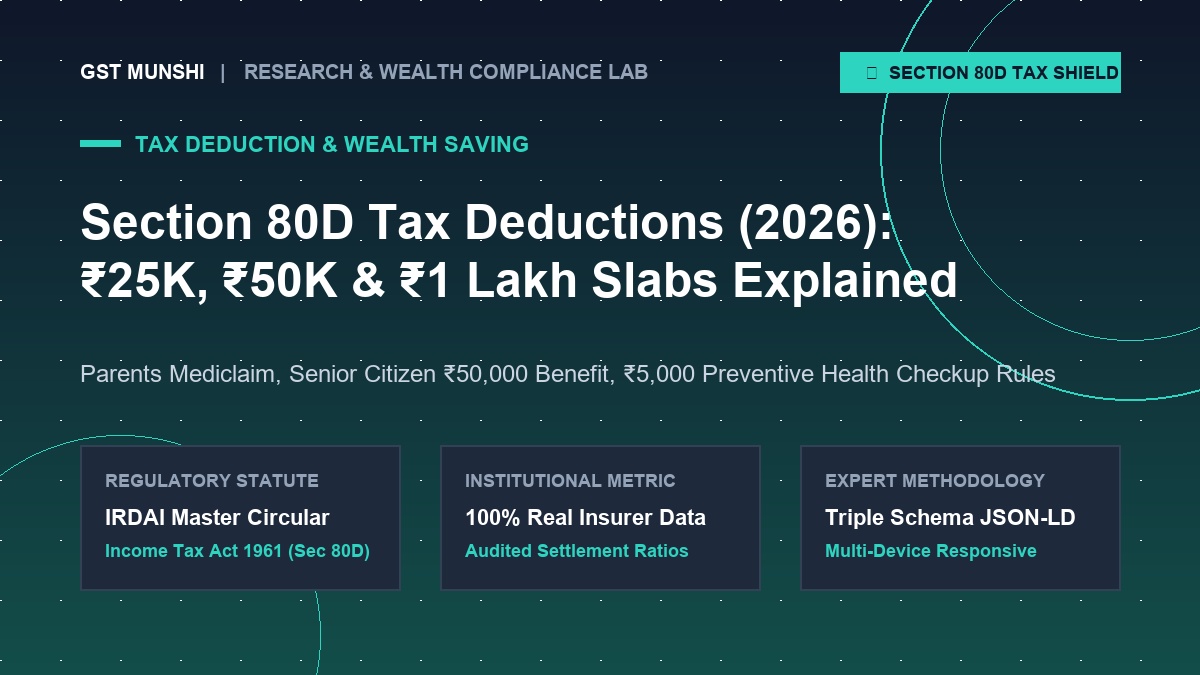
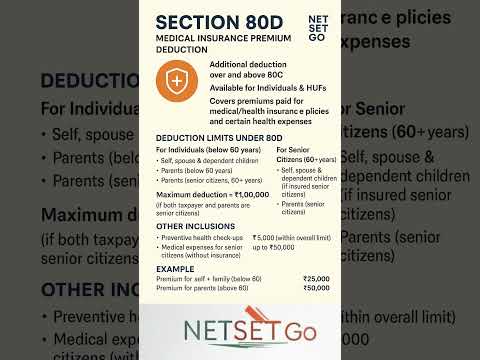
Under Section 80D of the Income Tax Act 1961, you can claim a deduction ranging from ₹25,000 up to ₹1,00,000 per financial year for health insurance premiums and medical expenditure (Old Tax Regime only). If you and your parents are under 60 years of age, your maximum total deduction is ₹50,000 (₹25,000 for self/family + ₹25,000 for parents). If your parents are senior citizens (age 60+), the parental limit increases to ₹50,000 (totaling ₹75,000). If both you and your parents are senior citizens, the combined maximum deduction reaches ₹1,00,000.
1. Section 80D Master Deduction Limits Matrix
The table below illustrates all eligible family demographic scenarios and their corresponding statutory deduction limits under the Old Tax Regime:
| Family Demographic Scenario | Self, Spouse & Kids Limit | Parents Limit | Total Max 80D Deduction |
|---|---|---|---|
| Individual < 60 yrs + Parents < 60 yrs | ₹25,000 | ₹25,000 | ₹50,000 |
| Individual < 60 yrs + Parents ≥ 60 yrs (Senior Citizens) | ₹25,000 | ₹50,000 | ₹75,000 |
| Individual ≥ 60 yrs + Parents ≥ 60 yrs | ₹50,000 | ₹50,000 | ₹1,00,000 |
| Hindu Undivided Family (HUF) on Members | ₹25,000 (or ₹50,000 if senior) | N/A | ₹25,000 / ₹50,000 |
2. Preventive Health Checkup: The ₹5,000 Cash Exception
While health insurance premiums must strictly be paid via digital/banking methods to qualify for Section 80D, Parliament carved out a vital exception for routine wellness diagnostics:
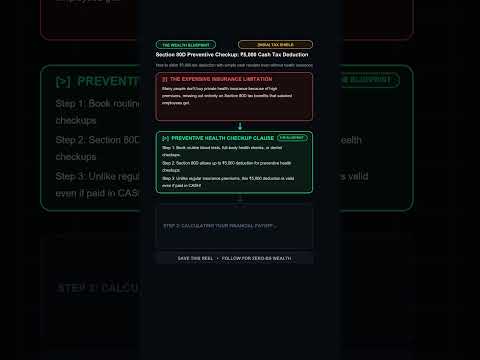
- Cash Payment Permitted: Unlike insurance premiums (which cannot be paid in cash), expenses for annual blood tests, lipid profiles, full-body health screenings, or master health checkups CAN be paid in cash and claimed under Section 80D.
- Sub-Limit, Not Additional: The ₹5,000 limit is a sub-limit within the overall ₹25,000 / ₹50,000 cap, not an extra allowance over it.
- Family Cumulative: The ₹5,000 threshold applies to the entire family combined (self, spouse, children, and parents).
- Example: If you pay ₹21,000 for your family mediclaim policy via Net Banking, and spend ₹4,000 in cash for an annual executive health screening at a diagnostic center, your total eligible Section 80D deduction is ₹25,000 in full.
3. Medical Expenditure Deduction for Uninsured Senior Parents (Section 80D(2)(c))
Many senior citizens aged 70+ cannot obtain health insurance due to pre-existing chronic conditions, or face exorbitant premiums. Section 80D(2)(c) provides dedicated relief:
If your senior citizen parents (age 60+) have no active mediclaim coverage, you can claim actual out-of-pocket medical bills—including consultation fees, diagnostic scans, monthly prescription drugs, and hospitalization costs—up to ₹50,000 per financial year.
To claim this deduction, the payments for medical expenses must be made through non-cash banking channels (Net Banking, UPI, Cards, or Cheques). Maintain doctor prescriptions, diagnostic invoices, and GST medicine bills for audit documentation.
4. Multi-Year Health Policies: Prorated Deduction Formula
Insurers typically offer 10% to 15% discounts when you pay premiums upfront for 2 or 3 years. Under Section 80D(4B), the deduction is claimed proportionately across the policy tenure:
Suppose you pay a single lump-sum premium of ₹60,000 for a 3-year multi-year family floater policy:
- Total Premium Paid: ₹60,000
- Policy Tenure: 3 Years
- Permissible Deduction per Assessment Year: ₹60,000 ÷ 3 = ₹20,000 each year
- You will claim ₹20,000 in Year 1, ₹20,000 in Year 2, and ₹20,000 in Year 3.
5. Section 80D: Old Regime vs New Regime (Section 115BAC)
Taxpayers must note that Section 80D deductions are NOT permitted under the New Tax Regime (Section 115BAC):
Allows full deductions for health insurance premiums (up to ₹1 Lakh), Section 80C (up to ₹1.5 Lakh), Section 80CCD(1B) NPS (₹50,000), and home loan interest (Section 24b). Ideal for individuals with substantial investments and parental health expenses.
Offers lower concessional slab rates and a higher standard deduction, but eliminates Chapter VI-A deductions including Section 80D and Section 80C. You should evaluate both regimes using an income tax calculator before filing ITR.
Recommended Video Tutorials & Practical Guides
6. Frequently Asked Questions (FAQs)
What is the maximum deduction allowed under Section 80D?▼
The maximum permissible deduction under Section 80D is ₹1,00,000 per financial year. This applies when both the taxpayer (and spouse) are senior citizens aged 60 or above (eligible for ₹50,000) and paying health insurance premiums for senior citizen parents aged 60 or above (eligible for an additional ₹50,000).
Can I pay health insurance premiums in cash and claim Section 80D?▼
No. Under Section 80D, health insurance premiums paid in cash are strictly disallowed and cannot be claimed as a tax deduction. Premiums must be paid via banking channels (UPI, Net Banking, Debit/Credit Card, Cheque). However, payments for Preventive Health Checkups up to ₹5,000 ARE permitted in cash.
Is Section 80D available under the New Tax Regime (Section 115BAC)?▼
No. Deductions under Section 80D are not available under the New Tax Regime. To claim tax deductions for health insurance premiums, you must opt for the Old Tax Regime when filing your Income Tax Return (ITR).
Can I claim medical expenses under Section 80D if my senior citizen parents have no health insurance?▼
Yes. Under Section 80D(2)(c), if your parents are senior citizens (aged 60 or older) and do not have any health insurance coverage, you can claim actual medical expenditures incurred on their consultations, medicines, and hospitalization up to ₹50,000 in a financial year.
Optimize Personal & Corporate Taxes
Learn about GST Input Tax Credit on Insurance Policies and Section 44AB Tax Audit Rules.