Second Hand Family Car Buying Guide: 12 Essential Features, PDI Checklist & RTO Rules
Direct Answer: What Features Are Non-Negotiable When Buying a Used Family Car?
Interactive Used Car Risk & 3-Year Cost Calculator
Adjust the car parameters below to calculate vehicle health risk score, immediate service buffer, and 3-year outlay.
1. The 12 Non-Negotiable Features Every Second-Hand Family Car Must Have
When shopping in the Indian pre-owned market, flashy cosmetic accessories like panoramic sunroofs or diamond-cut alloy wheels often distract buyers from core functional necessities. For family use, every car must satisfy these 12 essential checkpoints across three vital tiers:
Crash Safety & Child Anchors
- ABS with EBD: Prevents wheel lockup during hard braking in monsoon rains; ensures the car doesn't spin out.
- ISOFIX Child Seat Mounts: Rigid metal anchors welded to the chassis to lock child safety seats securely without seatbelt slack.
- Dual Front Airbags (Minimum): Deploys in head-on collisions; verify passenger airbag switch is functional.
- Rear Parking Sensors & Camera: Critical for spotting children, bicycles, or low curbs hidden in the blind zone behind the vehicle.
Summer Cooling & Rough Roads
- Dedicated Rear AC Vents: Independent rear blower vents prevent rear-seat passengers from suffocating in 45°C Indian summer traffic.
- 170 mm+ Ground Clearance: Clears unscientific high-hump speed breakers and waterlogged dips without chassis underbody impact.
- 300L+ Boot Space: Accommodates full-size family strollers, luggage trolleys, and grocery supplies simultaneously.
- Flat Rear Floor / Low Tunnel: Ensures a third middle passenger can sit comfortably on road trips without straddling a high transmission hump.
Drivetrain & Running Costs
- High Part Availability: Stick to high-volume brands (Maruti, Hyundai, Honda, Toyota) where spare parts are available over-the-counter.
- Smooth Torque Converter / CVT: Avoid fragile dual-clutch systems on used cars; traditional automatics easily cross 1,50,000 km.
- Defogger & Rear Wiper: Essential for safety during torrential monsoons and dense winter highway fog in northern India.
- E20 Ethanol Compatibility: Prefer petrol models manufactured from 2020 onward with material seals rated for ethanol-blended fuels.
2. Transmission Face-Off: Which Automatic Is Safest for a Used Family Car?
Automatic cars represent over 40% of used family vehicle queries. However, purchasing the wrong transmission type can turn an affordable used car into a financial nightmare. Compare the 5 major gearbox types below:
| Transmission Type | Family Comfort Rating | Long-Term Reliability | Clutch / Repair Cost | Recommended Used Models |
|---|---|---|---|---|
| Torque Converter (TC / AT) | Excellent (Ultra Smooth) | Extremely High (2,00,000+ km) | ₹8,000 – ₹14,000 (Fluid Flush) | Maruti Brezza 4-Speed, Hyundai Creta 1.6 AT, Toyota Innova AT |
| Continuously Variable (CVT) | Superior (Zero Shift Jerk) | High (Requires 40k km fluid change) | ₹10,000 – ₹18,000 (Fluid) | Honda City 4th/5th Gen, Honda Jazz, Nissan Magnite CVT |
| Manual Transmission (MT) | Moderate (Driver Clutch Fatigue) | Bulletproof Mechanicals | ₹6,000 – ₹12,000 (Full Clutch Set) | Maruti WagonR, Swift, Hyundai i20, Honda Amaze |
| Automated Manual (AMT / AGS) | Poor (Noticeable Head-Nod Jerk) | Moderate (Actuator wears at 60k km) | ₹15,000 – ₹25,000 (Actuator) | Maruti Baleno AMT, Hyundai Grand i10 Nios AMT, Tata Tiago AMT |
| Dual-Clutch (DCT / DSG) | Rapid Sporty Shifts | High Risk (Prone to Bumper Traffic Overheat) | ₹1,20,000 – ₹2,50,000 (Mechatronics) | VW Polo TSI DSG, Skoda Rapid DSG, Hyundai Venue DCT (Avoid used) |
3. The 5-Point Pre-Purchase Physical Inspection (PDI) Protocol
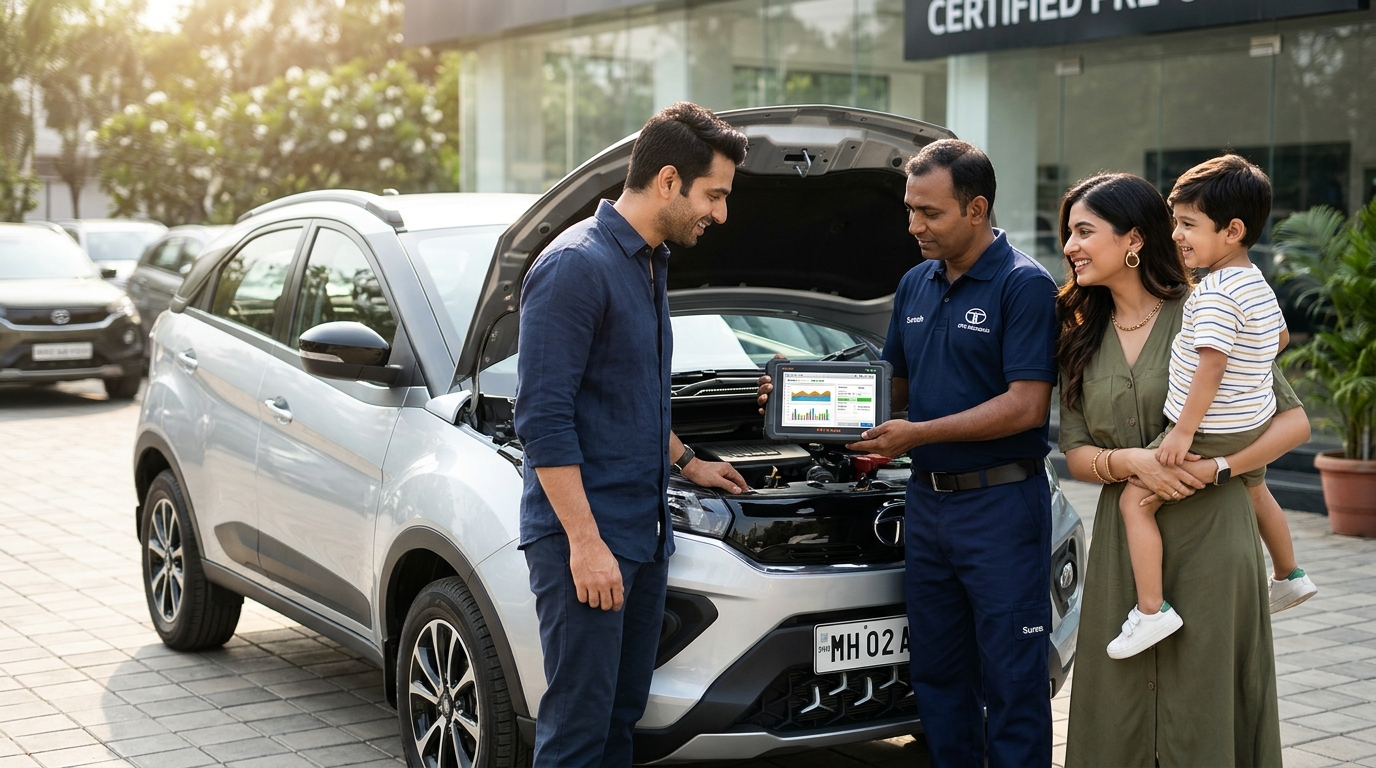
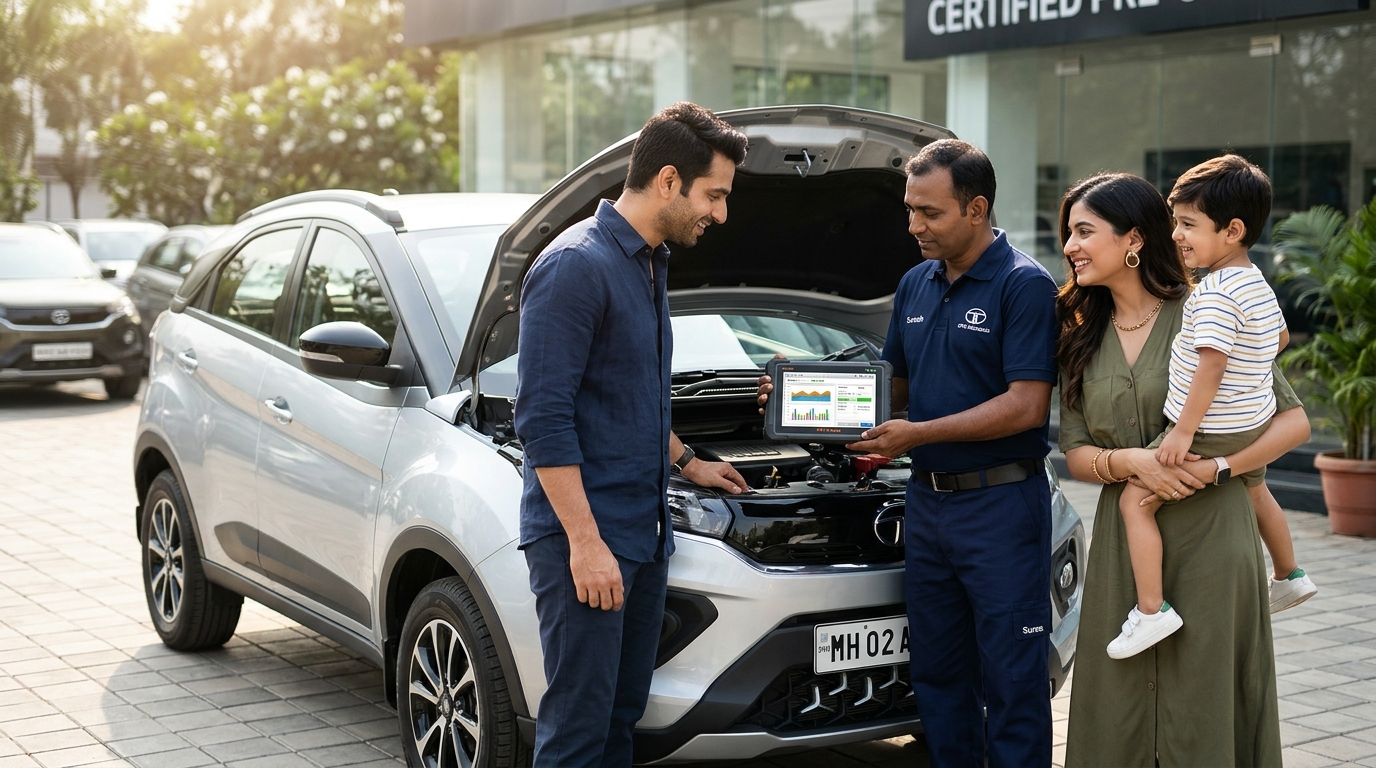
Never finalize any second-hand car deal solely based on clean exterior photographs or shiny showroom detailing. Conduct this structured 5-point physical audit in broad daylight:
Pillar Spot-Welds & Structural Crumple Zone Check
Open each door and gently pull down the rubber weatherstripping along the A, B, and C pillars. Inspect the factory spot-welds. Original manufacturer welds are indented, perfectly circular, and spaced evenly every 1.5 to 2 inches. If you see jagged weld beads, uneven primer, or wavy sheet metal, the vehicle has been repaired after a major rollover or side-impact collision. Also check the front radiator support apron under the bonnet for hammer marks or non-factory yellowish silicone paste.
Cold Engine Start & Piston Ring Blow-By Test
Insist on starting the car when the engine is completely cold (touch the bonnet and engine block with your hand before turning the key). Watch the tailpipe exhaust: a light wisp of clear water condensation is normal on cold mornings, but blue smoke indicates burning engine oil (worn valve seals or piston rings), while thick white smoke with sweet odor indicates coolant leaking through a blown head gasket. Once idling, carefully remove the oil filler cap; violent chuffing pulses of smoke signal severe engine compression loss.
Odometer Rollback Detection & ECU Diagnostics
Odometer tampering is widespread in India, costing as little as ₹500 at unauthorized roadside shops. To detect it: call the authorized brand dealership service desk with the car's VIN to obtain last logged service dates and kilometer readings. Cross-check interior friction surfaces: if the odometer displays only 35,000 km, but the brake pedal rubber is worn down to bare metal, the steering wheel texture is buffed smooth, and the driver seat cushion has collapsed, the car has easily clocked over 80,000 km.
Flood & Waterlogged Immersion Inspection
Cars submerged in monsoons develop catastrophic electrical short circuits months after drying. Open the boot and remove the spare wheel: look for dried mud silt, fine sand particles, or brown surface rust in the spare wheel well rim. Stick your nose into the footwell carpets to detect musty mold mildew. Inspect the metal seat rail slider bolts and wiring harnesses under the dashboard—if they show white chalky corrosion or rusted screw heads, walk away immediately.
Dynamic Suspension, CV Joint & Brake Test Drive
Turn off the music system and roll down all windows. Turn the steering wheel to full lock (left and right) while driving slowly in a tight circle; repetitive clicking or knocking sounds indicate worn CV joints and drive shafts (₹8,000–₹16,000 per side). Drive over sharp speed bumps at 20 km/h: the car should absorb the bump and settle in exactly 1 rebound. If it continues floating and bouncing 2 to 3 times, the hydraulic shock absorber struts are blown.
4. Legal & RTO Paperwork Checklist Under Motor Vehicles Act 1988
A mechanically sound car with defective documentation can be impounded by police or face heavy compounding penalties. Verify these mandatory statutory documents:
Verify the physical chassis number stamped under the driver seat frame or firewall matches character-by-character with the RC Smart Card and Parivahan portal record. Check ownership serial (1st vs 2nd owner).
Under CMVR Rule 55, Form 29 is the Notice of Transfer by the seller, and Form 30 is the Application for Transfer by buyer and seller. Both forms must be signed in duplicate with clear passport photos.
If the vehicle was bought on an auto loan, verify the RC hypothecation column. The seller must provide Form 35 in duplicate along with an official Bank NOC letter confirming full loan clearance.
Open the official Parivahan E-Challan portal (echallan.parivahan.gov.in) to ensure there are no unpaid overspeeding or red-light violation challans pending against the car's registration number.
5. Recommended Used Family Cars in India by Budget Tier
Based on long-term mechanical reliability, spare parts availability, safety crash test scores, and cabin space, here are the top verified options across popular budget brackets:
Maruti WagonR & Hyundai Grand i10
Ideal for first-time car buyers and small nuclear families of 3–4 members.
Honda Amaze, Maruti Baleno & Jazz
The golden value-for-money bracket offering plush 5-seater cabin comfort and large boots.
Maruti Brezza, Honda City & Ertiga
Full-size family road trip capability with high ground clearance or 7-seat flexibility.
Interactive 10-Point Pre-Purchase PDI Inspection Checklist
Check off each item during your on-site physical car inspection.
6. Verified Automotive Video Guides & Mechanical Demonstrations
Watch these verified video demonstrations covering real-world family car feature evaluations, physical inspection routines, and zero-depreciation insurance transfer procedures:
7. Frequently Asked Questions (FAQ)
Find immediate, authoritative answers to common legal, mechanical, and financial queries regarding second-hand family cars in India: