

Quick Summary & Key Takeaways (Featured Snippet)
Origin and Scriptural Significance
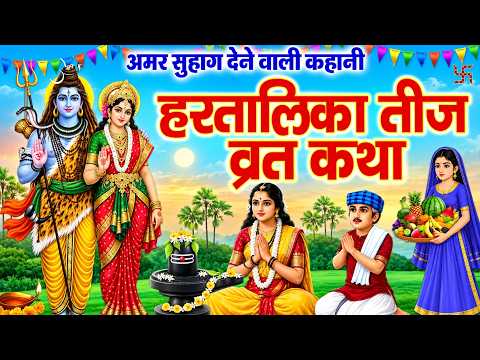
Hartalika Teej commemorates the supreme austerity (tapasya) of Goddess Parvati to unite in marriage with Lord Shiva. Her father, King Himavan, had initially consented to marry her to Lord Vishnu on the recommendation of Sage Narada.
To fulfill her resolute devotion to Lord Shiva, her trusted childhood friends secretly escorted her into an inaccessible forest cave near the riverbank. There, Parvati molded a Shiva Lingam out of river sand and performed unyielding penance, ultimately winning Lord Shiva's divine hand.
Recommended Video Tutorials & Practical Guides
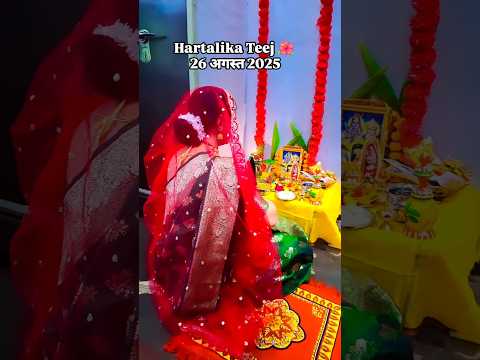
Auspicious Dates & Pradosh Kaal Shubh Muhurat
| Year | Bhadrapada Tritiya Date | Morning Puja Muhurat | Pradosh Kaal Puja Window (Recommended) | Next Morning Paran Time |
|---|---|---|---|---|
| 2026 | September 14, 2026 (Monday) | 06:05 AM to 08:34 AM | 06:28 PM to 08:48 PM | After 06:06 AM (Sep 15) |
| 2027 | September 4, 2027 (Saturday) | 06:01 AM to 08:32 AM | 06:39 PM to 08:56 PM | After 06:02 AM (Sep 5) |
Step-by-Step Puja Vidhi and 16 Shringar Offerings
- Sankalpa in the Morning: Devotees take an early bath before sunrise, wear clean festive attire (customarily green or red sarees), and take a formal vow (Sankalpa) of Nirjala fast for matrimonial welfare.
- Sculpting the Clay Idols: In the evening, collect pure sand from a riverbank or clean black clay. Carefully shape small, unbaked figures of Lord Shiva, Goddess Parvati, and Lord Ganesha on a wooden stool covered in yellow silk.
- Erecting the Phulera Canopy: Above the pedestal, tie a festive canopy made of fresh flowers, betel leaves, and mango fronds known traditionally as a Phulera.
- Offering the 16 Shringar Items (Suhag Pitari): Present Goddess Parvati with the 16 traditional bridal items: sindoor, bindi, kajal, mehendi, red bangles, mahavar (alta), nose ring, toe rings (bichhiya), comb, mirror, scented perfume, red chunri, turmeric, kumkum, and betel leaves.
- Abhishekam & Belpatra to Lord Shiva: Bathe the Shiva idol with holy Ganga water, milk, and honey. Offer fresh 3-petaled Belpatra leaves, Dhatura, Shami leaves, and Janeu (sacred thread).
- Vrat Katha & Ratri Jagran: Gather together to read or listen to the sacred Hartalika Vrat Katha in its entirety. Sing bhajans throughout the four quarters of the night (Chaar Pahar Puja).
Paran Vidhi: How to Conclude the Fast the Next Morning
Sacred Fast Breaking Protocol
On the morning following Tritiya (Chaturthi):
- Perform morning aarti and conclude the final prayers.
- Donate the Suhag Pitari items and clothes to an elderly married woman or a temple priest.
- Carefully immerse the temporary sand/clay idols in a sacred river or domestic clean water container.
- Break the fast (Paran) by drinking holy water / Gangajal followed by consuming cucumber, soaked grams, or seasonal fruits.
Frequently Asked Questions
Can pregnant or nursing mothers observe Hartalika Teej?
While the traditional fast is Nirjala, pregnant women, nursing mothers, and those with chronic medical ailments (such as diabetes or hypertension) are granted scriptural exemptions (Phalahar). They may consume milk, fruits, coconut water, and nuts rather than risking their health with complete water deprivation.
What is the difference between Hariyali Teej, Kajari Teej, and Hartalika Teej?
All three are monsoon festivals dedicated to Shiva and Parvati, but they fall on different dates: Hariyali Teej occurs on Shravana Shukla Tritiya; Kajari Teej on Bhadrapada Krishna Tritiya; and Hartalika Teej on Bhadrapada Shukla Tritiya. Hartalika Teej is considered the most spiritually rigorous of the three.