When is Anant Chaturdashi 2027 and what are the shubh muhurat timings?
Anant Chaturdashi 2027 Master Factsheet & Ephemeris Baseline
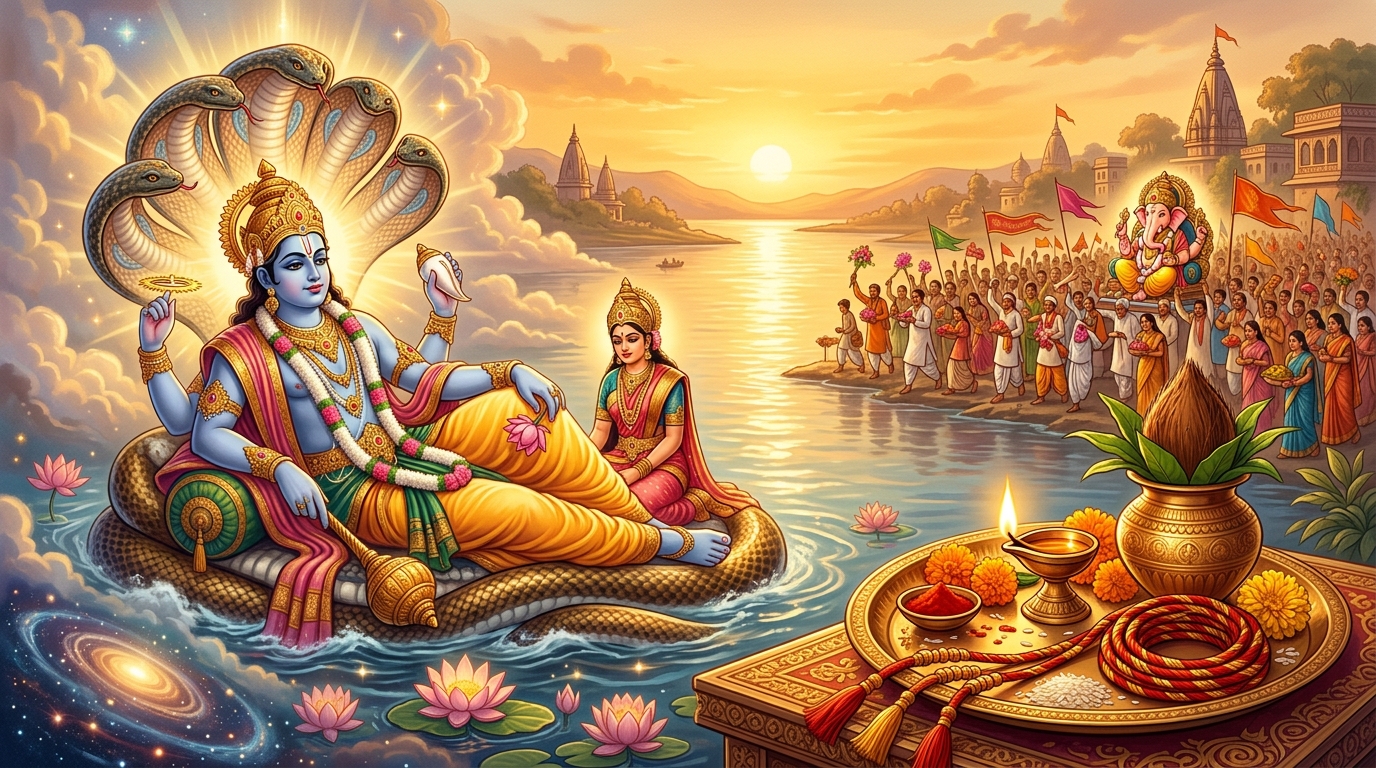
Anant Chaturdashi represents one of the most spiritually charged junctures in the Hindu lunar calendar. Occurring on the fourteenth day of the bright waxing fortnight (Shukla Paksha) in the sacred month of Bhadrapada, the festival unites two monumental religious traditions: the devoted worship of Bhagwan Ananta (the eternal, infinite manifestation of Lord Vishnu resting upon the serpent Sheshanaga) and the magnificent farewell immersion (Maha Visarjan) of Lord Ganesha, bringing the ten-day festival of Ganeshotsav to an auspicious close.
Interactive Anant Muhurat & City Timing Finder
Plan your sacred rituals with astronomical precision. Because Vedic muhurat timings and planetary Choghadiya periods depend on local sunrise and sunset coordinates, use the reactive finder below to calculate specific muhurat windows across major Indian metropolitan areas:
Anant Chaturdashi 2027 Muhurat & Choghadiya Time Finder
Select your city and scheduled ritual to view localized Vedic sunrise, planetary Choghadiya periods, and authentic procedural guidelines.
Lord Vishnu Anant Vrat Puja & 14-Knot Sutra Consecration
Sit facing East or North on a clean woollen mat. Consecrate the copper kalash with sacred water, betel nuts, and mango leaves. Immerse the 14-knot cotton thread in turmeric milk before tying.
Panchang Timings & Tithi Calculations for September 14, 2027
Under the classical Drik Ganita astronomical system, festivals governed by tithi observance require an exact correlation with solar dawn (Surya Udaya). In 2027, the Bhadrapada Shukla Chaturdashi tithi initiates shortly after midnight at 12:39 AM IST on Tuesday, September 14, 2027, and remains in continuous effect until 02:48 AM IST on Wednesday, September 15, 2027.
Because the Chaturdashi tithi is already prevailing when the Sun rises on Tuesday morning across the entire length and breadth of the Indian subcontinent, the universal Udaya Tithi rule confirms that all religious obligations, fasts, thread-tying ceremonies, and idol immersions must be conducted on Tuesday, September 14, 2027. Unlike complex festival years where a tithi spans two sunrises or suffers truncation (Kshaya Tithi), the 2027 calendar offers an uninterrupted 26-hour window of complete spiritual sanctity.
| Major City | Sunrise (IST) | Sunset (IST) | Morning Anant Puja Window | Prime Visarjan Period |
|---|---|---|---|---|
| New Delhi (NCR) | 06:06 AM | 06:27 PM | 06:06 AM – 12:16 PM | 12:16 PM – 01:49 PM (Amrit) |
| Mumbai (Maharashtra) | 06:25 AM | 06:41 PM | 06:25 AM – 12:33 PM | 12:33 PM – 02:05 PM (Amrit) |
| Pune (Maharashtra) | 06:22 AM | 06:38 PM | 06:22 AM – 12:30 PM | 12:30 PM – 02:02 PM (Amrit) |
| Bengaluru (Karnataka) | 06:08 AM | 06:19 PM | 06:08 AM – 12:14 PM | 12:14 PM – 01:45 PM (Amrit) |
| Kolkata (West Bengal) | 05:24 AM | 05:43 PM | 05:24 AM – 11:34 AM | 11:34 AM – 01:06 PM (Amrit) |
| Ahmedabad (Gujarat) | 06:25 AM | 06:44 PM | 06:25 AM – 12:35 PM | 12:35 PM – 02:07 PM (Amrit) |
| Hyderabad (Telangana) | 06:05 AM | 06:19 PM | 06:05 AM – 12:12 PM | 12:12 PM – 01:44 PM (Amrit) |
| Varanasi (Uttar Pradesh) | 05:44 AM | 06:04 PM | 05:44 AM – 11:54 AM | 11:54 AM – 01:27 PM (Amrit) |
Theological Foundations: Who is Bhagwan Ananta?
The Sanskrit word "Ananta" literally denotes that which is limitless, endless, eternal, and unbound by the constraints of temporal creation or decay. While mainstream cultural focus in contemporary cities frequently centers upon the public spectacles of Ganeshotsav, the foundational spiritual bedrock of this day belongs to the worship of Lord Vishnu in his cosmic, all-pervading form.
According to the Bhavishya Purana and Mahabharata, Lord Ananta is visualized as reclining in yogic slumber (Yoga Nidra) upon the thousand-hooded serpent Sheshanaga amidst the primordial Ocean of Milk (Ksheerasagara). In this metaphysical vision, Sheshanaga personifies remaining energy (Shesha literally means remainder), representing that spiritual consciousness which persists even when the physical universe undergoes dissolution (Pralaya).
The Divine Symbolism of Lord Vishnu’s Four Implements
During the Anant Chaturdashi rituals, devotees meditate upon the four sanctified attributes held within the hands of Lord Vishnu:
The 14 Knots of Anant Sutra: The Fourteen Cosmic Lokas
The defining sacred emblem of Anant Chaturdashi is the Anant Sutra—a sanctified thread fashioned from cotton or raw silk, dyed bright yellow with turmeric and saffron pastes, and knotted precisely fourteen times. Each individual knot is consecrated with specific Vedic mantras invoking Lord Vishnu’s sovereignty over the fourteen dimensional planes (Lokas) of Vedic cosmology.
By tying the Anant Sutra upon the wrist, the devotee symbolically wraps their mortal existence in divine cosmic armor, establishing that their thoughts, actions, and destiny are safeguarded across all fourteen planetary dimensions:
| Knot Number | Cosmic Realm (Loka) | Realm Nature | Spiritual Significance |
|---|---|---|---|
| Knot 1 | Bhur Loka | Physical Earthly Plane | Governs material existence, bodily vitality, and physical duties. |
| Knot 2 | Bhuvar Loka | Intermediate Astral Plane | Governs prana (vital breath), atmospheric forces, and subtle senses. |
| Knot 3 | Svar Loka (Svarga) | Heavenly Celestial Plane | Realm of divine radiance, mental joy, and righteous rewards. |
| Knot 4 | Mahar Loka | Abode of Great Sages | Governs illumined wisdom, higher intellect, and sage contemplation. |
| Knot 5 | Janas Loka | Realm of Pure Consciousness | Governs creative spiritual genesis and enlightened soul forces. |
| Knot 6 | Tapas Loka | Realm of Ascetic Fire | Governs intense penance, spiritual austerity, and willpower. |
| Knot 7 | Satyam Loka (Brahma Loka) | Realm of Ultimate Truth | Highest realm of purity, non-duality, and transcendental reality. |
| Knot 8 | Atala Loka | First Subterranean Realm | Protects against instinctive passions and sensory illusions. |
| Knot 9 | Vitala Loka | Second Subterranean Realm | Protects against uncontrolled material greed and destructive wrath. |
| Knot 10 | Sutala Loka | Realm of Righteous King Bali | Inspires selfless charity, devotion, and surrender to divine will. |
| Knot 11 | Talatala Loka | Fourth Subterranean Realm | Shields the mind against deception, arrogance, and mental confusion. |
| Knot 12 | Mahatala Loka | Fifth Subterranean Realm | Neutralizes subconscious fears and subterranean negative energies. |
| Knot 13 | Rasatala Loka | Sixth Subterranean Realm | Protects from chronic physical debility and material ruin. |
| Knot 14 | Patala Loka (Naga Loka) | Nethermost Base of Creation | Domain where Sheshanaga supports the weight of all planetary bodies. |
The Sacred Anant Vrat Katha: Legend of Rishi Kaundinya & Sushila
The ritual recitation of the Anant Vrat Katha constitutes an essential spiritual requirement of the festival. Without hearing this ancient narrative, the observance of the fast is deemed incomplete. The story is recorded in the Bhavishyottara Purana, narrated by Lord Krishna to King Yudhishthira when the Pandavas were suffering intense destitution during their twelve-year forest exile.
The Virtuous Life of Sushila and Sage Kaundinya
In ancient times, a pious Brahmin named Sumanta lived with his virtuous wife Diksha. They were blessed with a daughter named Sushila, who was renowned for her modesty and devotion. Following the untimely demise of Diksha, Sumanta married a harsh-tempered woman named Karkasha. Karkasha ill-treated young Sushila continuously. When Sushila came of age, she was married to the venerable sage Kaundinya. As the couple departed for Kaundinya’s hermitage, Karkasha cruelly sent them away with merely a handful of stale roasted grains.
The Discovery of the Anant Vrat on the River Bank
While journeying toward their home, evening twilight approached, and they paused by the tranquil banks of a river. There, Sushila observed a congregation of women dressed in auspicious crimson garments worshipping with deep reverence. Inquiring curiously, Sushila asked which deity they were worshipping with such adoration.
The women explained that they were observing the Anant Chaturdashi Vrat dedicated to Lord Vishnu. They detailed that tying the 14-knot holy thread, offering 14 sweet wheat preparations, and pledging fourteen consecutive years of observance would eradicate all poverty and bestow enduring divine grace. Inspired with devotion, Sushila washed her hands, observed the rites with sincerity, consecrated a thread, tied it upon her left wrist, and brought half the offerings back to her husband.
The Fatal Mistake of Pride and the Fall from Grace
From that blessed day forward, miraculous prosperity transformed Kaundinya’s hermitage. Abundance filled their granaries, cattle multiplied, and students flocked from far and wide. However, prosperity gradually clouded Sage Kaundinya’s intellect with intellectual arrogance. One afternoon, noticing the yellow thread adorning Sushila’s wrist, Kaundinya asked suspiciously whether she was practicing magical charms to control his mind.
Despite Sushila’s humble plea that the thread represented Bhagwan Ananta’s grace, Kaundinya forcibly snapped the sacred cord from her wrist in a fit of pride and cast it contemptuously into the sacred hearth fire. Sushila swiftly retrieved the smouldering cord and immersed it in milk, but the spiritual transgression had already occurred.
Almost instantly, misfortune fell upon the hermitage. Fire consumed their dwellings, thieves plundered their wealth, their cattle perished, and relatives turned against them. Reduced once more to total penury, Kaundinya realized that his unprovoked disrespect toward Lord Ananta had stripped them of all blessings.
Penance in the Forest and the Vision of Bhagwan Ananta
Filled with deep remorse, Sage Kaundinya abandoned his home and wandered into dense forests, weeping and crying out for Lord Ananta. Along his path, he encountered several symbolic beings: a mango tree loaded with fruit that no bird would touch, a cow standing with its calf unable to eat grass, a bull wandering aimlessly on a barren plain, and two interconnected lakes with clear water that refused to slake each other's thirst. When Kaundinya asked each of them if they had seen Lord Ananta, none could provide an answer.
Exhausted and collapsing from starvation, Kaundinya fell to the earth, preparing to end his life. At that very moment, Lord Vishnu manifested before him in the disguise of an elderly Brahmin. Taking Kaundinya by the hand, the Lord revealed His four-armed divine cosmic form, illuminating the entire forest with celestial radiance.
The Lord explained the symbolic allegories: the mango tree was a proud scholar in a past life who never shared knowledge; the cow was a miser who consumed wealth without offering charity; the bull was a ruler who trampled upon justice; and the lakes were wealthy sisters who gave to each other but neglected the needy. The Lord blessed Kaundinya for his sincere repentance, instructed him to observe the Anant Vrat continuously for fourteen years, and restored his family's peace, prosperity, and spiritual liberation.
Step-by-Step Anant Vrat Puja SOP Blueprint
Devotees observing the Anant Vrat on Tuesday, September 14, 2027, should adhere to the traditional five-stage protocol outlined below during the auspicious morning muhurat window (06:06 AM – 12:16 PM IST):
Purificatory Morning Bath & Fasting Sankalp
Awaken during Brahma Muhurta (around 04:30 AM). Bathe in fresh water with a few drops of holy Ganga water. Wear clean, unstitched or freshly washed yellow garments. Sit facing East or North on an asana and take water, akshat (unbroken rice), and flowers in the right palm to pronounce the formal Sankalp: "I, [Name], observe this Anant Vrat for the eradication of distress and the attainment of peace, health, and prosperity."
Altar Preparation & Sthapana of Kalash and Lord Vishnu
Cover a wooden chowki (pedestal) with clean yellow silk cloth. Construct an Ashtadal Padma (eight-petaled lotus) using unbroken raw rice colored with turmeric. Place a copper or brass Kalash filled with pure water, five mango leaves, a betel nut, and a coconut wrapped in red mauli atop the rice. Install the sacred image or idol of Lord Vishnu reclining on Sheshanaga alongside Goddess Lakshmi.
Consecration of the 14-Knot Anant Sutra
Prepare a pure cotton or raw silk thread knotted fourteen times. Immerse the thread gently in raw cow’s milk blended with fragrant turmeric paste. Place it upon a betel leaf beside Lord Vishnu. Perform Shodashopachara worship by offering sandalwood paste, yellow flowers, tulsi leaves, dhoop, and a burning ghee lamp while chanting "Om Anantaya Namaha" fourteen times.
Offering of 14 Roth (Sweet Puri Delicacies)
Prepare exactly fourteen sweet whole-wheat flatbreads or puris fried in pure desi ghee, sweetened with organic jaggery or cane sugar. Offer all fourteen Roth as Naivedya to Bhagwan Ananta. Under strict scriptural rules, divide the offerings into two exact halves: seven Roth are donated to pious seekers or Brahmins, while the family consumes the remaining seven Roth as prasadam.
Katha Recitation, Aarti & Wrist Thread Binding
Gather family members to listen reverently to the Anant Vrat Katha. Perform the final Mangal Aarti with camphor. Conclude by tying the consecrated Anant Sutra: men tie it upon their right wrist or right upper arm, while women tie it upon their left wrist or left upper arm. Recite the Raksha Mantra: "Ananta Sansara Samudra Magnam Samuddhara Tvam Kripaya Prabho" (Lift me across this ocean of infinite worldly existence, O Compassionate Lord).
Ganesh Visarjan 2027: Shubh Choghadiya Immersion Muhurat Matrix
While morning hours belong to Bhagwan Ananta, the remainder of Anant Chaturdashi is world-famous as the climactic final day of Ganeshotsav. Over millions of households and grand Sarvajanik Pandals in Mumbai, Pune, Nagpur, Hyderabad, and Surat bid a tearful and celebratory farewell to Lord Ganesha.
Under Vedic astrological science, immersion ceremonies must never be initiated during inauspicious planetary periods like Rahu Kaal, Roga, or Udveg Choghadiya. Below is the comprehensive 24-hour planetary Choghadiya matrix calculated for Tuesday, September 14, 2027 (IST):
| Time Bracket (IST) | Choghadiya Ruler | Planetary Nature | Suitability & Recommended Activity |
|---|---|---|---|
| 06:06 AM – 07:38 AM | Roga | Inauspicious | Avoid starting processions or immersions; conduct morning prayers and home cleaning. |
| 07:38 AM – 09:11 AM | Udveg | Inauspicious | Avoid idol movement; complete Anant Vrat Katha reading and preparation of naivedya. |
| 09:11 AM – 10:44 AM | Chala (Char) | Auspicious (Movement) | Excellent window to begin idol shifting, loading onto chariots, and starting rallies. |
| 10:44 AM – 12:16 PM | Labha | Highly Auspicious (Prosperity) | Prime morning muhurat for early visarjan ceremonies and business altar farewells. |
| 12:16 PM – 01:49 PM | Amrita | Most Auspicious (Nectar) | Peak daytime immersion window. Highly recommended for family bucket and home water tank visarjan. |
| 01:49 PM – 03:22 PM | Kala (Kaal) | Inauspicious | Halt immersion operations; allow devotees to distribute refreshments and rest. |
| 03:22 PM – 04:54 PM | Shubha | Auspicious (Fortunate) | Prime afternoon immersion window for suburban pandals and local neighborhood water bodies. |
| 04:54 PM – 06:27 PM | Roga | Inauspicious | Avoid water immersion during dusk sunset transits until Labha begins. |
| 07:54 PM – 09:22 PM | Labha (Night) | Auspicious (Evening Twilight) | Ideal for grand community processions reaching beachheads and artificial municipal lakes. |
| 10:49 PM – 03:11 AM (Sep 15) | Shubha, Amrita & Chala | Continuous Auspicious Cycle | Celebrated overnight procession windows for landmark historic Ganesh murtis across Mumbai and Pune. |
Pre-Immersion Ganesh Uttar Puja & Farewell Protocol
Before a consecrated idol of Lord Ganesha can be moved from its altar, the performance of Uttar Puja (concluding farewell worship) is religiously mandatory. Omitting this step and directly submerging the idol is considered an inauspicious breach of Vedic etiquette, akin to evicting an honoured guest without gratitude.
Tradition dictates that a traveller returning home requires food for the journey. Devotees prepare Dahi Bhaat (cooked rice seasoned with fresh curd and salt), sweet modaks, puffed rice (laddus of murmura), and fresh fruit. Place these offerings before Bappa, requesting Him to accept this nourishment on His voyage back to Mount Kailash.
Bow with folded hands and chant the traditional forgiveness prayer: "Avahanam Na Janami, Na Janami Visarjanam; Puja Chaiva Na Janami, Kshamasva Ganeshwara" (I know not the full intricacies of invoking You, nor of bidding farewell, nor of perfect worship; forgive all shortcomings, O Lord of Wisdom).
Sprinkle a pinch of akshat (unbroken raw rice) and red vermilion gently at the lotus feet of the idol. The head of the family then gently shifts the idol approximately two inches forward. This physical displacement signals that the deity’s divine life-force (Prana Pratishtha) has returned to the cosmos, transforming the clay vessel into natural earth ready for immersion.
All present family members perform one clockwise circumambulation (Pradakshina) around the idol, whisper their sincere wishes into Ganesha's ears, and lift the idol with reverence. During transport, the idol must always face forward, accompanied by the resounding chorus of "Ganpati Bappa Morya, Pudhchya Varshi Lavkar Ya!"
Eco-Friendly Immersion SOPs & CPCB Environmental Guidelines
The protection of India's sacred aquatic ecosystems is an indispensable moral component of contemporary Sanatana Dharma. Under the Central Pollution Control Board (CPCB) statutory notifications and national green tribunal directives, the immersion of non-biodegradable Plaster of Paris (PoP) idols and chemical dyes in natural rivers, lakes, and coastal water bodies is strictly prohibited.
Follow this certified five-step eco-friendly home bucket immersion technique to ensure complete devotion without inflicting ecological harm upon surrounding waterways:
Ensure your idol is fashioned exclusively from natural river clay or multani mitti painted with herbal natural water-soluble pigments (turmeric, multani mitti, geru).
Fill a large, clean stainless-steel or brass tub, or clean bucket, with fresh tap water. Add sacred Ganga water, tulsi leaves, and rose petals to purify the medium.
Add a small pulverized piece of alum (phitkari) to the immersion water. Alum accelerates the sedimentation of pure clay particles, precipitating all sediment within 4 to 6 hours.
Gently submerge the idol into the water container while reciting Ganesha mantras. Leave the container undisturbed for 24 hours as the clay dissolves naturally.
Pour the nutrient-dense dissolved clay water into your home garden planters, around Tulsi plants, or sacred flowering shrubs, keeping Bappa’s sanctified soil forever at home.
Remove all cloth, plastic ornaments, and fresh flower garlands before immersion. Compost biological flower waste into organic soil fertilizer.
Anant Chaturdashi in Jainism: Dashlakshan Parva & Universal Forgiveness
Anant Chaturdashi holds equal religious eminence within the Jain community. In the Digambara Jain tradition, the day marks the tenth and concluding day of the sacred Paryushan / Dashlakshan Parva, dedicated to the supreme spiritual virtue of Uttam Brahmacharya (Supreme Continence, Celibacy, and Soul-Absorption).
Over the preceding ten days, devotees meditate systematically upon the ten sublime virtues: Uttam Kshama (Forgiveness), Uttam Mardava (Humility), Uttam Aarjava (Straightforwardness), Uttam Shaucha (Purity), Uttam Satya (Truth), Uttam Sanyama (Self-Restraint), Uttam Tapa (Penance), Uttam Tyaga (Renunciation), Uttam Akinchanya (Non-Attachment), and Uttam Brahmacharya.
Kshamavani Parva: The Universal Decree of Micchami Dukkadam
Immediately following Anant Chaturdashi, the Jain community celebrates Kshamavani Parva (the Festival of Universal Forgiveness). Devotees actively reach out to family, friends, colleagues, and all living entities to ask for forgiveness for any harm caused knowingly or unknowingly through thought, word, or deed:
Curated Video Walkthroughs, Puja Chants & Aarti Guides
Watch verified instructional videos illustrating the complete Anant Vrat puja vidhi, sacred katha recitation, and traditional Ganesh Visarjan aarti procedures:
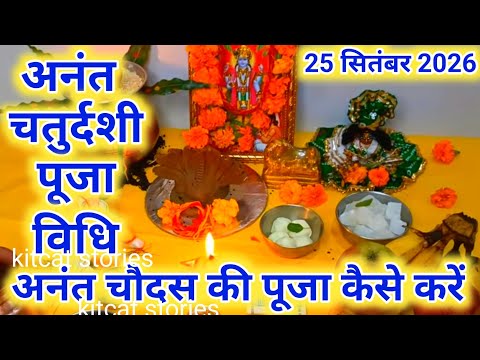
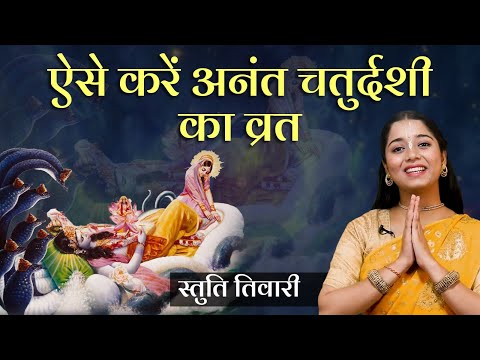
Anant Chaturdashi Puja Vidhi & Spiritual Vrat Katha Walkthrough
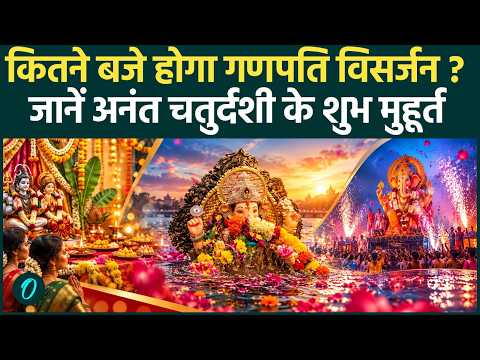
Ganesh Visarjan Shubh Muhurat & Farewell Aarti Recitation
Frequently Asked Questions (FAQs)
What is the exact date of Anant Chaturdashi in 2027?
Anant Chaturdashi in 2027 will be observed on Tuesday, September 14, 2027. The Bhadrapada Shukla Chaturdashi tithi begins on Tuesday, September 14, 2027, at 12:39 AM IST and concludes on Wednesday, September 15, 2027, at 02:48 AM IST. Since Chaturdashi prevails at sunrise on September 14, the entire day is dedicated to Anant Puja and Ganesh Visarjan under Vedic Udaya Tithi rules.
What are the most auspicious puja muhurat timings on Anant Chaturdashi 2027?
The primary morning puja window for worshipping Lord Vishnu and consecrating the Anant Sutra on September 14, 2027, is between 06:06 AM and 12:16 PM IST. For afternoon and evening Ganesh Visarjan idol immersion, the auspicious Choghadiya windows are Amrita Choghadiya from 12:16 PM to 01:49 PM IST, Shubha Choghadiya from 03:22 PM to 04:54 PM IST, and Labha Choghadiya from 07:54 PM to 09:22 PM IST.
Why is the sacred Anant Sutra thread tied with exactly 14 knots?
The 14 knots of the Anant Sutra represent the fourteen cosmic realms (Lokas) governed by Lord Vishnu: the seven upper realms (Bhur, Bhuvar, Svar, Mahar, Janas, Tapas, and Satyam) and the seven lower realms (Atala, Vitala, Sutala, Talatala, Mahatala, Rasatala, and Patala). Tying this energized thread symbolizes invoking divine protection across all spheres of existence.
On which hand should the sacred Anant thread be tied?
According to scriptural traditions, men tie the Anant Sutra on their right wrist or upper right arm, while women tie the sacred thread on their left wrist or upper left arm. Devotees preserve this holy thread for a minimum of 14 days or retain it until the subsequent year's Anant Chaturdashi.
What is the traditional food offering (Naivedya) prepared for Anant Chaturdashi?
The traditional mandatory offering for Anant Chaturdashi is Roth—fourteen sweet whole-wheat flatbreads or deep-fried puris sweetened with jaggery or sugar and fried in pure desi ghee. Half of the consecrated offerings (seven portions) are donated to Brahmins, spiritual seekers, or the needy, while the family consumes the remaining seven portions as holy prasadam.
What is Uttar Puja and why must it be performed before Ganesh Visarjan?
Uttar Puja is the farewell ritual conducted immediately before moving Lord Ganesha's idol for immersion. It expresses gratitude for the deity's stay during the ten-day festival. Devotees offer fresh flowers, dhoop, aarti, and curd-rice (Dahi Bhaat) as travel food (Patheya). The idol is then shifted slightly forward to conclude the formal Prana Pratishtha consecration before departure.
What are the government guidelines for eco-friendly Ganesh idol immersion?
Under statutory Central Pollution Control Board (CPCB) guidelines, immersion of toxic chemical-painted or Plaster of Paris (PoP) idols in natural rivers, lakes, and oceans is prohibited. Citizens are encouraged to worship natural clay (Shaadu Maati) idols and perform home immersion in water buckets or designated municipal artificial water tanks (krutrim talav). Adding alum (phitkari) accelerates clean clay sedimentation.
What is the significance of Anant Chaturdashi in the Jain religious calendar?
In Digambara Jainism, Anant Chaturdashi marks the tenth and climactic day of the sacred Paryushan / Dashlakshan Parva, celebrating the tenth supreme virtue of Uttam Brahmacharya (Supreme Self-Restraint and Spiritual Purity). It culminates in Kshamavani Parva, the universal forgiveness festival where individuals seek and grant forgiveness to all living beings with the phrase Micchami Dukkadam.
Statutory, Astronomical & Scriptural References
The dates, astronomical calculations, and procedural guidelines presented in this master manual are rigorously cross-referenced against authoritative statutory and Vedic ephemeris authorities:
- Astronomical Ephemeris & Drik Siddhanta Panchang: Verified via the Position of Sun and Moon Ephemeris, Positional Astronomy Centre (IMD), Ministry of Earth Sciences, Government of India, establishing the Bhadrapada Shukla Chaturdashi tithi onset at 12:39 AM IST on September 14, 2027.
- Central Pollution Control Board (CPCB) Statutory Guidelines: Guidelines for Idol Immersion (Circular Ref: CPCB/PRO/44/2020-21 & Ministry of Environment, Forest and Climate Change Notification No. 12-1/2020), enforcing natural clay usage and prohibiting chemical paints and natural river contamination.
- Vedic & Puranic Scriptural Texts: Bhavishyottara Purana (Ananta Vrat Mahatmya Adhyaya), Mahabharata (Vana Parva, Yudhishthira-Krishna Samvada), and Nirnayasindhu by Kamalakara Bhatta (Chaturdashi Nirnaya Prakarana).
- Jain Agamic Texts: Tattvartha Sutra by Acharya Umasvati (Chapter 9 on Dashlakshan Dharma) and Sarvarthasiddhi commentaries on Uttam Brahmacharya.