
What is an Encumbrance Certificate (EC), and what is the difference between Form 15 and Form 16?
An Encumbrance Certificate (EC) is an official statutory record issued by the Sub-Registrar's Office documenting all registered legal liabilities, mortgages, and ownership transfers tied to a specific property over a designated time period (typically 15 to 30 years). If any transactions or bank mortgages took place, the department issues Form 15, detailing the parties, deed numbers, and registered values. If no transactions or registered debts occurred during that period, the department issues Form 16 (popularly known as a Nil Encumbrance Certificate), which proves a clear registered title required for bank home loan approvals.
1. What is an Encumbrance Certificate (EC)?
The word "encumbrance" refers to any legal, financial, or administrative liability placed upon a parcel of real estate that diminishes its value or restricts the owner's ability to transfer free title. Examples include a registered bank mortgage, an outstanding court attachment, or a registered long-term lease.
An Encumbrance Certificate (EC) is issued under Section 57 of the Registration Act, 1908. It is the legal gold standard used by banks, advocates, and buyers to verify whether the seller actually possesses an unencumbered, marketable title or whether the property has already been sold, gifted, or mortgaged to third parties.
2. Who Needs It & Key Real Estate Triggers
- Prospective Property Buyers: Before paying token advances or signing an agreement to sell, pulling an EC confirms the seller is the sole registered owner without hidden bank claims.
- Home Loan Borrowers: Every bank and Housing Finance Company (HFC) insists on an advocate-audited 30-year EC before disbursing home loans or loan against property (LAP).
- Property Sellers: Furnishing a fresh Nil Encumbrance Certificate (Form 16) instills buyer confidence and accelerates sale deed execution.
- Legal Heirs in Property Partition: During succession or division of ancestral land, an EC verifies whether previous generation holders pledged the land.
3. Form 15 vs Form 16 (Nil Encumbrance)
Form 15 (Encumbrance Statement)
Issued when the searched property contains registered transaction entries during the requested timeframe. It contains a chronological table specifying deed registration numbers, volume/page numbers, registration dates, nature of deeds (Sale, Gift, Mortgage, Release, Settlement), and executing parties.
Form 16 (Nil Encumbrance Certificate)
Issued when the Sub-Registrar finds zero registered transactions or liabilities on the property during the specified search period. It explicitly states that the property is free from registered encumbrances. Banks mandate a Form 16 for the period from the seller's purchase date up to the current loan disbursement date.
4. Sub-Registrar Data & Land Records Indexing
Under the Registration Act, Sub-Registrar Offices maintain four permanent statutory indexes. When you request an EC search, the database examines Index II (Inspection of Property):
- Survey Number / Khasra Link: Maps the transaction directly to geographical land parcel identifiers.
- Boundaries & Extent: Matches North, South, East, and West boundaries with dimensions.
- Deed Type Codification: Distinguishes absolute conveyances from conditional collateral mortgages (Memorandum of Deposit of Title Deeds - MODT).
5. Search Parameters & Property Identification
Mandatory Parameters Required for Search:
- District & Sub-Registrar Office (SRO): The exact jurisdictional registration office where original deeds were executed.
- Village / Taluk / Ward: Revenue boundaries of the land.
- Survey Number / Khasra / Plot Number: Specific land survey coordinates.
- Search Duration: The exact date range (e.g., from 01/01/1995 to 20/09/2026).
- Property Boundaries: Adjacent roads or neighboring plot numbers.
6. Official Government Search Fees & Timelines
| Service Type | Official Fee | Delivery Mode |
|---|---|---|
| First Year Search Fee | ₹30 to ₹100 (state specific) | Online / Instant View |
| Every Subsequent Year | ₹10 to ₹30 per additional year | Accumulative calculation |
| Certified Copy (Digitally Signed) | ₹100 to ₹300 total fee | Download within 24 to 72 hours |
7. Mandatory Details & Sale Deed Cross-Verification
To perform an accurate search and cross-verify results, have the following documents handy:
- Parent Sale Deed / Title Deed Copy: To verify previous registration deed numbers and SRO volume references.
- Khata Certificate / Patta Passbook: To ensure revenue land records match registration numbers.
- Latest Property Tax Paid Receipt: Cross-checking building assessment numbers against survey records.
- Applicant Aadhaar Card: Required for OTP authentication on government portals.
8. Step-by-Step Online Search & Download SOP
Step 1: Access Your State Registration Portal
Log into your state's official portal (e.g., kaverionline.karnataka.gov.in for Karnataka, igrsup.gov.in for UP, or tnreginet.gov.in for Tamil Nadu). Register as a citizen user.
Step 2: Enter Property Search Criteria
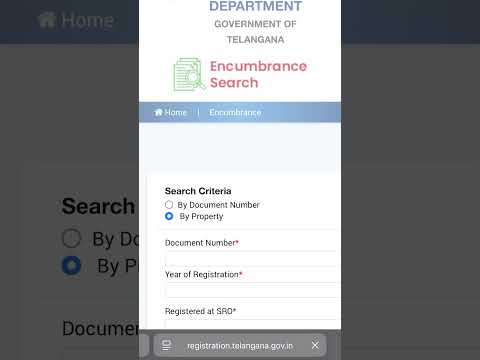
Navigate to "Online EC Search". Select District, Taluk, Hobli/Village, and enter the Survey Number or Apartment Flat Number and building name.
Step 3: Define Search Timeline
Select the date range. For robust due diligence, always choose a minimum of 30 years back to the earliest digitized records (usually 1990–2004 onwards depending on state digitization).
Step 4: Pay Government Search Fee
Pay the calculated fee via Net Banking, UPI, or state e-challan gateway.
Step 5: Download Digitally Signed PDF
Once verified by the SRO system, download the digitally signed Form 15 or Form 16 PDF containing the official QR code and SRO digital signature.
9. Form 15 vs Form 16 vs Khata / Patta Matrix
| Document | Issuing Authority | Primary Purpose |
|---|---|---|
| Form 15 EC | Sub-Registrar Office (Registration Dept) | Tracks chronological history of registered sales, mortgages & leases |
| Form 16 EC (Nil) | Sub-Registrar Office (Registration Dept) | Certifies zero registered encumbrances exist for the search period |
| Khata / Patta | Municipal Corporation / Revenue Dept | Assessment of property taxes and revenue land ownership; NOT title proof |
10. Real-World Property Case Studies
Case Study 1: Hidden Bank Mortgage Discovered in Form 15
Vikram planned to buy an independent villa in Hyderabad for ₹1.4 Crore. The seller claimed the property was 100% debt-free and produced original sale deeds. Suspicious of the seller's rush, Vikram ran a 15-year EC search on the IGRS Telangana portal. Form 15 revealed an active MODT (Memorandum of Deposit of Title Deeds) for ₹65 Lakh registered in favor of a nationalized bank three years prior, with no subsequent Release Deed recorded. The seller was attempting to defraud Vikram by selling a mortgaged asset. The transaction was aborted, saving Vikram ₹1.4 Crore.
Case Study 2: Expedited ₹80 Lakh Home Loan via Clean Form 16
Priya applied for an SBI home loan to purchase an apartment in Whitefield, Bengaluru. Before the bank legal team requested documents, she proactively downloaded a certified 30-year Form 16 Nil Encumbrance Certificate from Kaveri Online. Because the digital certificate showed an unbroken zero-liability chain, the bank's legal scrutiny was cleared in just 48 hours without raising queries.
11. Critical Search Blunders & Fraud Traps
- Searching Only 3 to 5 Years: Fraudsters often pledge a property with a 15-year mortgage and wait 5 years before selling. Searching only recent years will return a misleading Nil EC. Always search minimum 30 years.
- Typo in Survey Number or Sub-Division: Entering Survey No. 45/1 instead of 45/1A pulls records for an entirely different plot, returning a false Nil EC.
- Confusing Khata Transfer with Title Ownership: Getting your name updated in the municipal tax khata does NOT prove legal title. Legal title is established exclusively by registered deeds reflected on the EC.
12. What an EC DOES NOT Reveal (Hidden Liabilities)
Critical Legal Limitations of Encumbrance Certificates
An EC captures only registered transactions. It WILL NOT show:
- Unregistered equitable mortgages where title deeds were handed to private moneylenders.
- Oral family settlements or testamentary wills that take effect after death without probate.
- Pending civil court litigation (Lis Pendens) where no court injunction has been formally registered with the SRO.
- Unpaid statutory tax dues (property tax arrears, water cess, electricity department liens).
13. Registration Act 1908 & Bank Title Search Norms
Key statutory provisions governing encumbrance verification in India:
- Section 17 of Registration Act, 1908: Mandates compulsory registration of all non-testamentary instruments transferring immovable property worth over ₹100.
- Section 57 of Registration Act, 1908: Empowers any citizen to inspect public records of Book 1 and obtain certified extracts of registered documents.
- RBI Master Circular on Housing Loans: Directs all scheduled commercial banks to obtain a continuous 30-year Search and Title Certificate from empanelled advocates before disbursing mortgage loans.
14. How Many Years of EC Search Should You Pull?
Recommended Search Tenures:
- Purchasing Under-Construction Apartment from Tier-1 Builder: Pull EC from the date of land purchase by builder (usually 5 to 10 years).
- Purchasing Resale Flat or Independent House: Mandatorily pull a 30-year EC to trace parent title and ensure no uncleared bank loans exist.
- Purchasing Agricultural Land or Open Plots: Pull a 30 to 50-year EC to investigate ancestral inheritances, land ceiling acts, and partition deeds.
15. Property Title Due Diligence Checklist
Recommended Video Tutorials & Practical Walkthroughs
Watch these handpicked, expert video guides covering practical compliance, step-by-step procedures, and real-world implementation:
Recommended Video Tutorials & Practical Guides
16. Frequently Asked Questions
What is an Encumbrance Certificate (EC), and why is it mandatory for property buyers?
An Encumbrance Certificate (EC) is an official statutory document issued by the Sub-Registrar's Office certifying whether a particular plot, house, or apartment is free from legal, financial, or mortgage liabilities (encumbrances). It tracks all registered sale deeds, bank mortgages, lease agreements, and gift deeds over a specified period (usually 15 to 30 years).
What is the difference between Form 15 and Form 16 Encumbrance Certificates?
Form 15 is issued when registered transactions (such as sale deeds, mortgages, partition deeds, or court attachments) exist on the property during the searched timeline, listing parties, deed numbers, and registered values. Form 16 (Nil Encumbrance Certificate) is issued when NO registered encumbrances or transactions occurred during the requested period, proving a clear title for that timeframe.
How many years of EC search do banks require for sanctioning a home loan?
Indian commercial banks and housing finance corporations (such as SBI, HDFC, ICICI, LIC HFL) typically mandate a continuous 13 to 30-year Encumbrance Certificate search to verify unbroken chain of ownership and ensure the property was never pledged to another lender as collateral.
Does an Encumbrance Certificate guarantee that there are no property disputes?
No. An EC reflects ONLY documents that have been registered with the Sub-Registrar's Office. It does NOT reflect unregistered family wills, unregistered agreements to sell, oral partition disputes, pending civil court lawsuits without an attachment decree, or unpaid municipal property taxes.
How can I download an EC online in India?
You can search and download digitally signed ECs online through your state's inspector general of registration portal, such as Kaveri Online (Karnataka), IGRSUP (Uttar Pradesh), Aaple Sarkar (Maharashtra), TNREGINET (Tamil Nadu), or Meebhoomi / IGRS (Andhra Pradesh / Telangana).