
Quick Summary & Key Takeaways (Featured Snippet)
Gold Rate 2027 Valuation & Portfolio Return Calculator
Simulate bullion coins or jewellery purchases to evaluate 2027 projected net capital gains across macro scenarios.
The Structural Supercycle: 5 Core Drivers Fueling Gold Towards 2027
Gold in India has transcended its traditional identity as cultural ornament and ornamental bridal asset. In today’s complex macroeconomic reality, gold functions as the supreme sovereign balance-sheet anchor. Over the past four decades, gold denominated in Indian Rupees has delivered a compound annual growth rate (CAGR) of over 10.8%, outperforming cash savings, fixed deposits, and matching post-tax benchmark equity returns during turbulent inflationary cycles.
As we chart the runway into 2027, five massive structural currents are aligning to sustain elevated bullion valuations:
- Sovereign De-Dollarization & Central Bank Ingestion: Central banks across the Global South (China, India, Turkey, Singapore, Poland) have accumulated over 1,000 metric tonnes of physical gold annually for three consecutive years. By reducing exposure to US Treasury bills, sovereign nations are establishing an unshakeable structural price floor.
- US Federal Reserve Monetary Easing Cycle: As global interest rates gradually decline from their cycle peaks, real yields on sovereign debt compress. Because physical gold pays no dividend or coupon, lower nominal interest rates dramatically reduce the opportunity cost of holding non-yielding bullion.
- Indian Rupee (INR) Structural Depreciation: Because India imports virtually 95% of its annual gold requirement (averaging 750–850 tonnes), domestic gold prices reflect the multiplication of international COMEX dollar prices and the prevailing USD/INR exchange rate. Any gradual weakening of the rupee directly inflates domestic gold prices.
- Geopolitical Deglobalization & Supply Chain Fragmentation: Enduring trade sanctions, regional conflicts, and escalating national debt burdens across G7 economies continue to enhance gold’s status as the only tier-1 reserve asset free from counterparty default risk.
- Inelastic Domestic Cultural Demand: Across India's rural and urban heartlands, gold remains the non-negotiable cornerstone of wedding transfers, seasonal agricultural wealth preservation, and festival auspiciousness (Dhanteras and Akshaya Tritiya).
Gold Price Projections for 2027: Bear, Base, and Bull Scenarios
Per 10 Grams (MCX Domestic)Evaluation of potential domestic 24K and 22K pricing matrices under varying global interest rate environments, currency exchange trajectories, and geopolitical stress levels:
| Economic Scenario | COMEX Gold ($/oz) | USD / INR Peg | 24K Bullion (10g) | 22K Jewellery (10g) | Probability & Macro Catalysts |
|---|---|---|---|---|---|
| Bear Case: Global Disinflation & Strong Dollar | $2,450 – $2,600 | ₹83.50 – ₹84.50 | ₹78,000 – ₹83,000 | ₹71,500 – ₹76,000 | 15% Probability: Rapid geopolitical resolution, US tech-driven productivity surge, and prolonged high real yields. |
| Base Case: Steady Easing & De-dollarization | $2,950 – $3,200 | ₹85.50 – ₹87.00 | ₹92,500 – ₹98,000 | ₹85,000 – ₹90,000 | 65% Probability: Moderate global rate cuts, sustained central bank purchases (800+ tonnes), and standard 3% INR depreciation. |
| Bull Case: Stagflation & Sovereign Debt Crisis | $3,400 – $3,700 | ₹88.00 – ₹90.00 | ₹1,05,000 – ₹1,12,000 | ₹96,000 – ₹1,02,500 | 20% Probability: Second-wave global energy inflation, widespread Western sovereign debt downgrades, and panic institutional bullion flight. |
Verified YouTube Masterclasses: Gold Rate Forecast & Macro Trends
Watch comprehensive commodity market analysis, central bank reserve breakdowns, and price projection discussions from leading Indian financial news networks and certified commodity analysts.
Recommended Video Tutorials & Practical Guides
Recommended Video Tutorials & Practical Guides
Comparison: Best Ways to Invest in Gold for 2027
Every gold investment route carries distinct taxation, liquidity, and cost implications. Review the optimal channel for your wealth objectives:
- • Cost: Zero making charges; ~0.4%–0.7% annual expense ratio.
- • Liquidity: Instant T+1 settlement on NSE/BSE stock exchanges.
- • Purity & Storage: 100% backed by physical 995+ gold held in custodian bank vaults.
- • Tax: Taxed at slab rates or LTCG based on recent statutory budget updates.
- • Cost: 2%–4% premium over spot price plus 3% GST.
- • Liquidity: Immediate cash buyback across recognized bullion dealers and jewellers.
- • Safety: Requires home safe or bank locker; zero counterparty or digital risk.
- • Tax: Capital gains tax applies upon resale with holding period rules.
- • Cost: High friction; 8%–22% making charges plus 3% GST.
- • Liquidity: Jeweller deducts making charges and melting loss upon resale.
- • Hallmark: Mandatory 6-digit HUID assures 91.6% purity certification.
- • Best For: Family weddings and personal adornment, not capital appreciation.
Frequently Asked Questions: Gold Rate Forecast 2027 India
Will 24K gold cross ₹1,00,000 per 10 grams in India by 2027?
Yes, macroeconomic modeling indicates a high probability that 24K physical gold will test and potentially exceed the landmark ₹1,00,000 per 10 grams mark in domestic Indian retail markets by early-to-mid 2027 under sustained central bank bullion accumulation, global geopolitical realignments, and expected INR/USD currency depreciation.
What is the projected price of 22K hallmark jewellery gold in 2027?
The projected baseline trading range for 22K (916 hallmark) gold in India for 2027 is between ₹85,000 and ₹91,500 per 10 grams, excluding mandatory 3% GST and jeweller making charges (which typically add an additional 8% to 18% to final consumer billing).
How does the Reserve Bank of India (RBI) gold buying policy affect domestic prices?
The RBI has progressively expanded its gold reserves past 850 metric tonnes, repatriating over 100 tonnes of physical bullion from the Bank of England to domestic vaults. Central bank de-dollarization and structural diversification provide a sovereign price floor under international bullion, shielding gold from prolonged market corrections.
Which gold investment vehicle is best for 2027: Digital Gold, SGBs, Gold ETFs, or Physical Bullion?
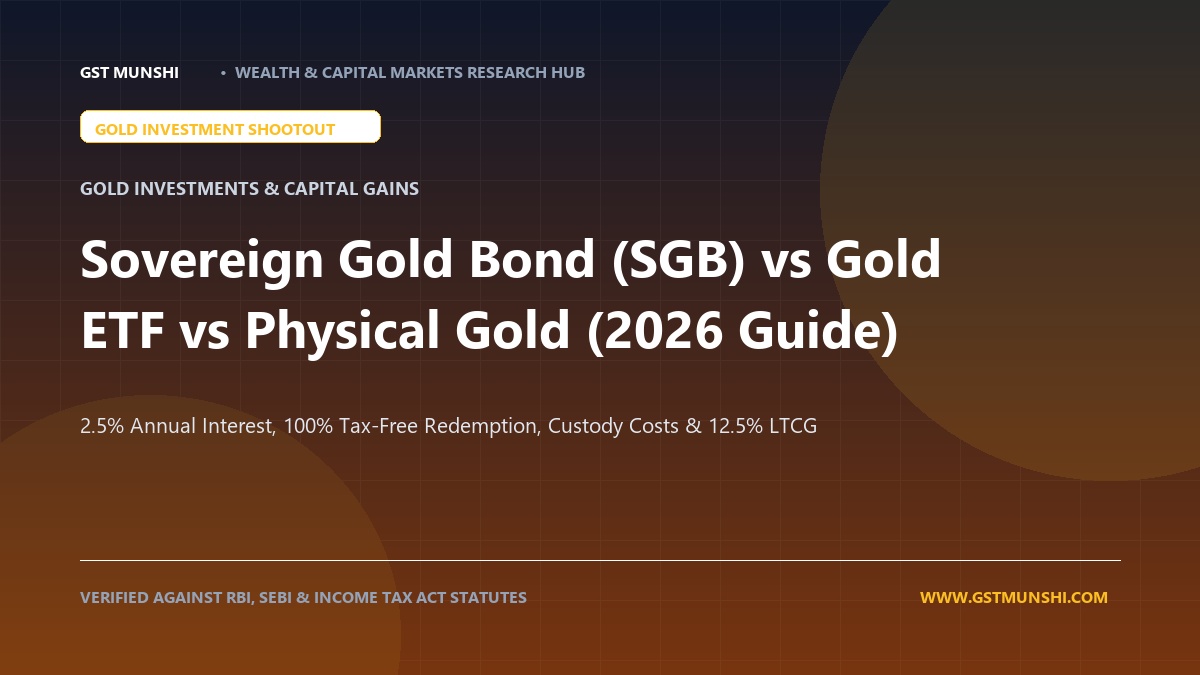
For pure financial capital appreciation with zero storage risk and minimal tracking error, Gold ETFs and Gold Mutual Funds are the most efficient liquid options. Existing Sovereign Gold Bonds (SGBs) offering 2.5% annual interest remain unmatched for holders until maturity, while physical 999 gold coins/bars are optimal for long-term family wealth preservation.
How will US Federal Reserve interest rate cycles influence Indian gold prices by 2027?
When the US Federal Reserve enters prolonged monetary easing cycles, US Treasury yields decline, lowering the opportunity cost of holding non-yielding physical gold. Historically, every 100 basis point rate cut cycle has fueled a 12% to 18% medium-term bull rally in COMEX gold futures.
What is the difference between 24K, 22K, and 18K gold purity?
24-Karat gold is 99.9% pure bullion, ideal for investment bars and coins but too soft for intricate jewellery. 22-Karat gold contains 91.6% pure gold alloyed with copper/silver (BIS 916), making it the national benchmark for traditional Indian bridal jewellery. 18-Karat gold contains 75.0% pure gold, predominantly used in diamond-studded and modern lifestyle jewellery.
How are making charges calculated on gold jewellery in India?
Making charges represent craftsmanship costs and range from 6%–12% for machine-made chains/bangles to 15%–25%+ for handcrafted temple or antique jewellery. When selling back jewellery, making charges are non-refundable and represent immediate sunk capital.
Is there any GST on gold purchases in India?
Yes. Physical gold purchases (both bullion and jewellery) attract a mandatory 3% Goods and Services Tax (GST) on the value of gold. An additional 5% GST is levied on the making charges component of jewellery.
How does inflation hedge work through gold investments?
Gold possesses an intrinsic physical scarcity that cannot be diluted by central bank currency printing. Over multi-decade periods, an ounce of gold has preserved its purchasing power against real-world commodities like grain, crude oil, and housing, outperforming fiat paper currencies experiencing persistent purchasing power loss.
What is HUID in gold jewellery and why is it mandatory?
Hallmark Unique Identification (HUID) is a mandatory 6-digit alphanumeric code laser-etched onto every piece of BIS hallmarked gold jewellery in India. HUID guarantees traceable purity verification, protects consumers from adulterated karatage, and enables instant authenticity verification via the BIS Care mobile app.
Should I buy gold during Dhanteras or wait for market dips?
Festive occasions often carry promotional retail discounts on making charges (typically 20% to 50% off on craftsmanship fees). However, institutional investors recommend adopting a systematic investment plan (SIP) into Gold ETFs throughout the year to dollar-cost average volatility rather than timing large single-day bullion purchases.
What percentage of an investment portfolio should be held in gold?
Premier financial planners and macroeconomic asset allocators recommend allocating between 10% and 15% of your total liquid net worth to precious metals (gold and silver). This allocation optimizes portfolio Sharpe ratios and buffers equity drawdowns during recessions without dragging long-term capital compounding.