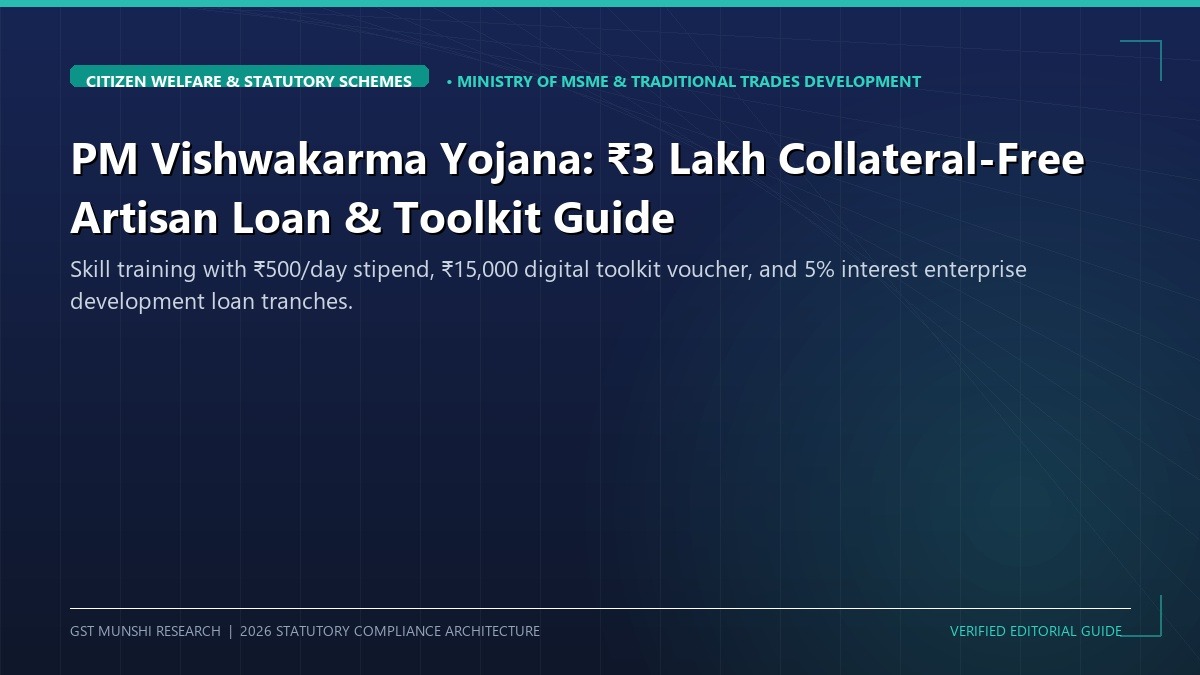
Direct Answer: What are the Benefits and Loan Limits of PM Vishwakarma Yojana?
What is PM Vishwakarma Yojana?
For centuries, India's traditional craftspersons and artisans—known collectively as Vishwakarmas—have preserved indigenous artisanal skills, handcrafting textiles, metal tools, pottery, footwear, and wooden architecture. However, due to lack of modern power tools, predatory local moneylenders, and exclusion from formal banking channels, traditional artisan communities faced severe economic marginalization.
To integrate these master craftspersons into the formal industrial supply chain, the Ministry of Micro, Small and Medium Enterprises (MoMSME) launched PM Vishwakarma Yojana. The scheme provides a comprehensive five-pillar support framework: Recognition, Skill Upgradation, Toolkit Incentive, Enterprise Credit Support, and Market Linkage.
Official Recognition: PM Vishwakarma Certificate & ID Card
Upon successful verification, every artisan receives a digitally verifiable PM Vishwakarma Certificate and Identity Card with a unique identification number. This formal credential legally certifies their craft expertise across India, granting access to subsidized raw materials, exhibitions, and public procurement.
The 18 Traditional Trades Covered Under PM Vishwakarma
The scheme specifically recognizes 18 traditional professions categorized under four core artisan sectors:
Wood & Metal Artisans
- Carpenter (Suthar): Furniture makers and woodworkers.
- Boat Maker: Traditional wooden boat and barge builders.
- Armorer: Traditional sword, shield, and blade restorers.
- Blacksmith (Lohar): Agricultural and domestic iron implement makers.
- Hammer & Tool Kit Maker: Hand tool forging specialists.
- Locksmith: Traditional lock repairers and key fabricators.
Clay, Stone & Jewelry Artisans
- Goldsmith (Sonar): Traditional gold and silver ornament makers.
- Potter (Kumhaar): Earthenware, terracotta, and clay pot makers.
- Sculptor (Moortikar / Stone Carver): Stone idol and monument carvers.
- Cobbler (Charmakar / Shoesmith): Leather footwear fabricators.
- Mason (Rajmistri): Traditional brick, mortar, and stone builders.
Fibre & Domestic Craftspersons
- Basket / Mat / Broom Maker / Coir Weaver: Bamboo & cane weavers.
- Doll & Toy Maker (Traditional): Wooden, fabric, and clay toys.
- Garland Maker (Malakaar): Flower garland and ritual arrangement makers.
- Barber (Naai): Traditional village and community grooming specialists.
Textile & Marine Artisans
- Washerman (Dhobi): Traditional clothes cleaning and ironing artisans.
- Tailor (Darzi): Garment stitchers and bespoke tailoring units.
- Fishing Net Maker: Hand-woven marine and freshwater net artisans.
₹3 Lakh Collateral-Free Enterprise Loan Structure
The credit component under PM Vishwakarma provides low-cost working capital and capital expenditure funding without third-party mortgages or guarantors:
Available immediately upon completing 5 to 7 days of Basic Skill Training. Repayment tenor: 18 months in monthly installments. Interest rate to artisan: strictly 5% p.a.
Available to artisans who maintain standard repayment on Tranche 1 for at least 6 months and adopt digital transactions. Repayment tenor: 30 months at the same 5% subsidized interest rate.
₹15,000 Digital Toolkit Incentive
Outdated hand tools cause physical exhaustion and low productivity. To modernize workshop equipment:
How the ₹15,000 E-Voucher Works:
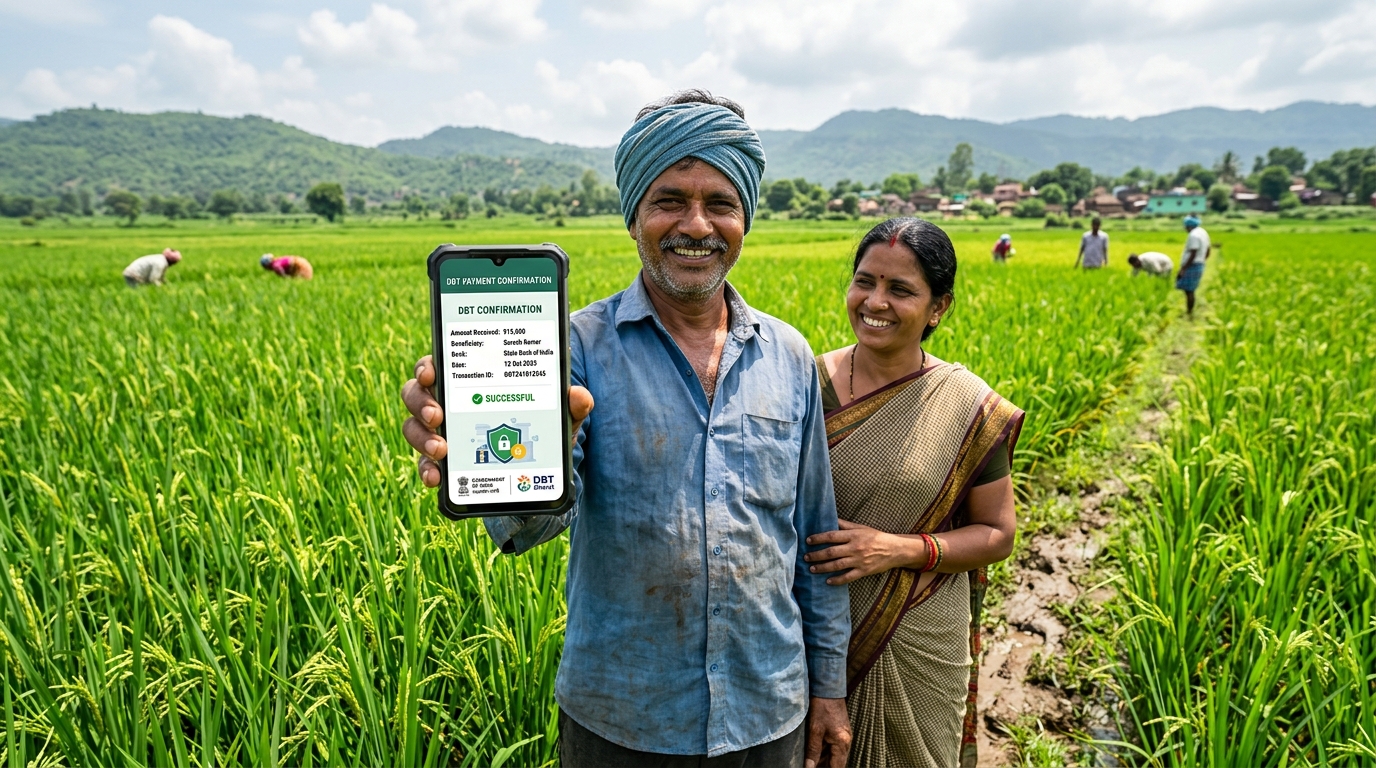
Upon successfully completing the Basic Skill Training assessment, the Ministry issues a ₹15,000 digital e-RUPI voucher directly to the artisan's Aadhaar-linked mobile phone. The voucher cannot be converted to physical cash; it is redeemable exclusively at authorized hardware and tool dealers for modern equipment (e.g. electric saws for carpenters, power sewing machines for tailors, electric potter wheels for potters).
Skill Upgradation & ₹500 Daily Stipend
Training is conducted by the National Skill Development Corporation (NSDC) across two distinct levels:
- Basic Skill Training (5 to 7 Days / 40 Hours): Focuses on operating modern power tools, product design, quality standardization, and digital payment methods.
- Advanced Skill Training (15 Days / 120 Hours): Advanced techniques, specialized manufacturing, packaging, and enterprise management.
- ₹500 Daily Wage Stipend: Recognizing that daily wage artisans cannot afford to lose daily earnings, the government deposits a ₹500 daily stipend directly into the artisan’s bank account via DBT for each training day attended.
Eligibility Criteria & Family Caps
- Age: Minimum 18 years on the date of online registration.
- Occupation: Must be engaged in one of the 18 recognized traditional trades on a self-employment basis.
- One Member Per Family Cap: The benefits are strictly restricted to one member per family (defined as husband, wife, and unmarried children).
- Exclusion of Government Servants: Government employees and their family members are completely ineligible.
- Credit Scheme Exclusion: Applicants who have outstanding loans under PMEGP, PM SVANidhi, or Mudra loans in the last 5 years are ineligible until prior loans are settled.
Documents Required for Application
- Aadhaar Card of the artisan (biometric authentication mandatory).
- Active Mobile Number linked with Aadhaar for OTP verification.
- Bank Account Passbook / Statement showing Account Number and IFSC code.
- Ration Card / Family Composition Certificate (to verify one-member-per-family rule).
Step-by-Step CSC Online Registration Workflow
Visit Nearest Common Service Centre (CSC)
Artisans must visit their local CSC VLE (Village Level Entrepreneur) center. Self-registration is disabled to prevent fraudulent applications.
Biometric & Aadhaar Authentication
The CSC operator enters Aadhaar and mobile details, executing biometric iris or fingerprint scanning to authenticate identity.
Trade Selection & Bank Details
Select the specific craft from the 18 eligible trades and enter bank account details for DBT stipend and loan disbursement.
Acknowledgement Receipt & Routing
Receive the digitally generated application acknowledgement number. The application routes automatically to the local Gram Panchayat or Municipality.
The 3-Tier Verification Process
Stage 1: Gram Panchayat / Urban Local Body (ULB) Verification
The village Sarpanch / Panchayat Secretary or Municipal Ward Officer physically verifies whether the applicant genuinely practices the traditional craft.
Stage 2: District Implementation Committee (DIC)
Chaired by the District Magistrate / Collector and General Manager DIC to screen trade legitimacy and remove duplicate family registrations.
Stage 3: State Level Screening Committee
Final statutory approval and batch generation for NSDC skill training allotment and bank loan processing.
Comparison: PM Vishwakarma vs PM SVANidhi vs Mudra Loan
| Feature | PM Vishwakarma | PM SVANidhi | PM Mudra Yojana |
|---|---|---|---|
| Target Beneficiaries | 18 Traditional Artisan Trades | Urban Street Vendors | General Non-Farm Small Businesses |
| Max Loan Amount | ₹3,00,000 (Tranche 1+2) | ₹50,000 (Tranche 1+2+3) | ₹10,00,000 (Shishu/Kishore/Tarun) |
| Artisan Interest Rate | Strictly 5.00% p.a. | 7% interest subsidy | Standard bank rates (9% to 14%) |
| Toolkit Incentive | ₹15,000 Free E-Voucher | Nil | Nil |
Real-World Artisan Case Study
CaseRamesh Suthar (Carpenter in Rajasthan): Workshop Modernization
Ramesh operated a small wooden furniture workshop using manual hand saws, taking 3 days to craft a single wooden door.
Common Application Rejection Reasons
Digital Transaction Incentives & Rewards
To promote cashless digital inclusion, artisans receive a ₹1 cash incentive per eligible digital transaction (via UPI QR code) credited directly to their bank account for up to 100 transactions per month (earning up to ₹1,200 additional cash rewards annually).
National Marketing Support & GeM Onboarding
The National Institute for Micro, Small and Medium Enterprises (NI-MSME) assists certified Vishwakarmas in listing their handmade products directly on the Government e-Marketplace (GeM) portal, enabling government departments and PSUs to purchase handicrafts and tools directly from registered artisans.
Artisan Financing Decision Matrix
| Applicant Profile | Recommended Program | Primary Benefit |
|---|---|---|
| Traditional artisan in one of 18 listed trades | PM Vishwakarma Yojana | ₹15,000 free toolkit + 5% subsidized loan up to ₹3 Lakhs. |
| Urban street vendor selling fruits/vegetables/snacks | PM SVANidhi Scheme | Fast micro-working capital up to ₹50,000 with 7% subsidy. |
| General retail shopkeeper or repair service | Pradhan Mantri Mudra Yojana (Shishu) | Loans up to ₹50,000 without trade-specific restrictions. |
Applicant Preparedness Checklist
✓ Ensure your mobile number is actively linked to your Aadhaar card for OTPs.
✓ Check that only one member of your immediate family applies.
✓ Inform your local Gram Panchayat Sarpanch or Ward Councillor before verification.
✓ Carry bank passbook with clean IFSC code to avoid DBT disbursement failures.
Recommended Video Tutorials & Practical Walkthroughs
Watch these handpicked, expert video guides covering practical compliance, step-by-step procedures, and real-world implementation:
Recommended Video Tutorials & Practical Guides
Frequently Asked Questions (FAQs)
What is PM Vishwakarma Yojana?
▼
PM Vishwakarma is a flagship Central Sector Scheme launched by the Government of India with an outlay of ₹13,000 Crores to provide end-to-end holistic support to traditional artisans and craftspersons working with hands and tools across 18 traditional trades, including skill training, ₹15,000 toolkits, and collateral-free enterprise loans up to ₹3 Lakhs at 5% interest.
What are the 18 eligible traditional trades under PM Vishwakarma?
▼
The 18 eligible traditional trades are: (1) Carpenter (Suthar), (2) Boat Maker, (3) Armorer, (4) Blacksmith (Lohar), (5) Hammer and Tool Kit Maker, (6) Locksmith, (7) Goldsmith (Sonar), (8) Potter (Kumhaar), (9) Sculptor/Stone Carver, (10) Cobbler (Charmakar), (11) Mason (Rajmistri), (12) Basket/Mat/Broom Maker/Coir Weaver, (13) Doll & Toy Maker, (14) Barber (Naai), (15) Garland Maker (Malakaar), (16) Washerman (Dhobi), (17) Tailor (Darzi), and (18) Fishing Net Maker.
How much loan is provided under PM Vishwakarma and at what interest rate?
▼
The scheme provides collateral-free enterprise development loans in two tranches: Tranche 1 provides up to ₹1,00,000 with an 18-month repayment period. Upon successful timely repayment, Tranche 2 provides an additional ₹2,00,000 with a 30-month repayment period. The effective interest rate charged to the artisan is strictly 5% per annum, with the central government providing an 8% interest subvention directly to lending banks.
How is the ₹15,000 toolkit incentive disbursed?
▼
After completing Basic Skill Training (5 to 7 days), the beneficiary receives a digital toolkit incentive of ₹15,000 in the form of an electronic voucher (e-RUPI / UPI digital voucher) directly on their Aadhaar-linked mobile phone, redeemable exclusively at registered equipment hardware outlets for purchasing modern trade tools.
What is the daily stipend provided during PM Vishwakarma skill training?
▼
Artisans undergo 5 to 7 days (40 hours) of Basic Skill Training and an optional 15 days (120 hours) of Advanced Skill Training. The government provides a daily wage-compensation stipend of ₹500 per day directly into the artisan's bank account via Direct Benefit Transfer (DBT) during training.
Can someone who has taken a PMEGP or PM SVANidhi loan apply for PM Vishwakarma?
▼
Under scheme guidelines, beneficiaries who have availed credit facilities under central or state government self-employment schemes like PMEGP, PM SVANidhi, or Mudra loans within the last 5 years are ineligible, unless the prior loan has been fully repaid and closed.
Statutory Sources & Regulatory References
- Ministry of Micro, Small and Medium Enterprises (MoMSME) – PM Vishwakarma Scheme Operational Guidelines.
- National Skill Development Corporation (NSDC) – Training Curricula for Traditional Trades.
- Credit Guarantee Fund Trust for Micro and Small Enterprises (CGTMSE) – Credit Guarantee Framework for PM Vishwakarma.
- Department of Financial Services (DFS), Ministry of Finance – Circular on 8% Interest Subvention for PM Vishwakarma Loans.