How is HRA exemption calculated under Section 10(13A) for salaried employees in 2027?
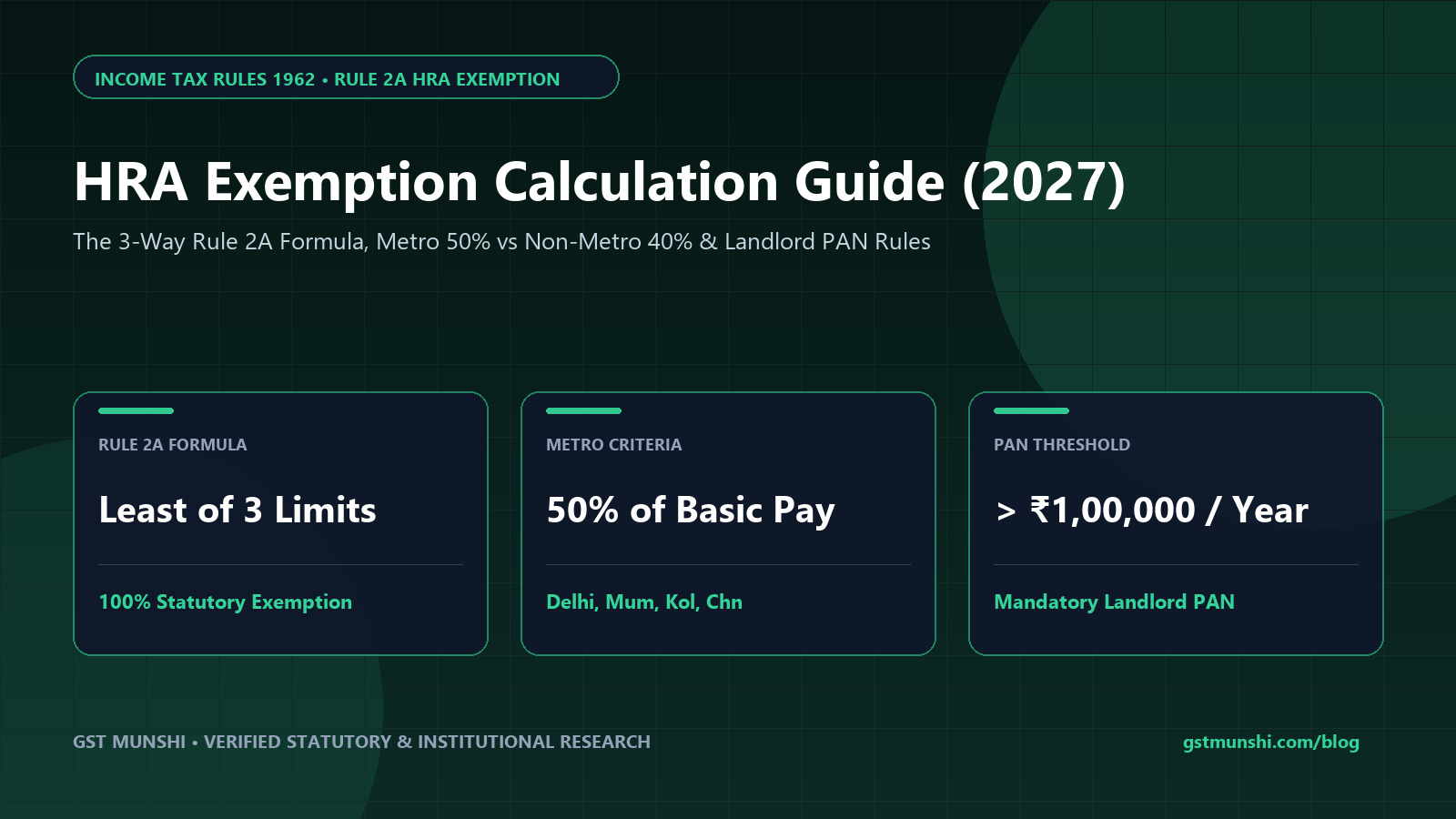
Actual HRA, 50%/40% of salary, or Rent - 10% salary
50% in 4 Metros; all other tier-1/tier-2 cities capped at 40%
Annual rent exceeding ₹1L mandates landlord PAN
Zero HRA exemption permitted under New Tax Regime
HRA Tax Exemption Calculator (Rule 2A)
Compute your exact tax-exempt HRA, taxable allowance, and statutory landlord PAN requirements.
Statutory Blueprint: Section 10(13A) and Income Tax Rule 2A
House Rent Allowance (HRA) is one of the most substantial salary components provided to private and public sector employees in India. However, unlike flat deductions, HRA exemption is strictly conditional on actual expenditure incurred on residential accommodation occupied by the employee. Under Section 10(13A) read with Rule 2A, if an employee resides in a self-owned residential property or incurs zero rental outflow, the entire HRA received from the employer is 100% taxable.
Furthermore, for the purposes of HRA calculation, the term “Salary” includes Basic Pay plus Dearness Allowance (if considered for retirement benefits) plus commissions earned as a fixed percentage of sales turnover (Section 36(1)(ii)). Allowances such as Special Allowance, Conveyance Allowance, or Performance Bonuses are excluded from the salary base.
Essential Document Checklist for Legitimate HRA Claims
Must state property address, landlord identity, tenancy duration, agreed monthly rent, and security deposit details.
If paying cash, each receipt above ₹5,000 must carry a ₹1 revenue stamp signed across by the landlord. Electronic bank transfers provide solid audit trails.
Mandatory if rent exceeds ₹8,333/month. The Income Tax Department matches this PAN with the landlord's ITR to verify reported rental income.
Electricity, water, or piped gas bills in the landlord's name proving actual physical occupation of the rented residence.
Judicial Precedents & ITAT Rulings on Genuine Parental Tenancy
Salaried professionals residing in their parents' house can legitimately pay rent to their parents and claim Section 10(13A) exemption. Multiple Income Tax Appellate Tribunal (ITAT) rulings have upheld this arrangement, provided it is supported by substantive financial evidence:
- The parent must be the sole legal owner of the residential property. You cannot pay rent to your spouse.
- Rent must be transferred through regular banking channels (NEFT, RTGS, UPI) rather than unverified cash withdrawals.
- The parent must report the rental income under “Income from House Property” in their ITR (and can claim the standard 30% statutory deduction under Section 24(a)).
Verified Direct Tax Practitioner & Chartered Accountant Disclosures
“Income Tax assessing officers now use automated AIS matching to cross-verify the PAN furnished by employees in Form 12BB against the landlord's reported rental income. If the landlord fails to report your rent, both parties receive computerized notices.”
“A widespread misconception is that Bengaluru, Hyderabad, and Pune are classified as 50% Metros. Under the statutory definitions of Rule 2A, only Delhi, Mumbai, Kolkata, and Chennai qualify for the 50% threshold. All other tech hubs are strictly 40%.”
“Fake rent receipts are under severe scrutiny. If paying cash, ensure proper revenue stamps and bank withdrawal trails. Digital transfers via UPI or Net Banking provide 100% indisputable legal proof.”
“You can claim BOTH HRA and Home Loan Interest under Section 24(b) simultaneously if your own house is in a different city due to employment, or if it is rented out to another tenant.”
Verified Video Guides: HRA Exemption Rules & Proofs
Watch comprehensive step-by-step video tutorials explaining HRA formulas, rent agreement essentials, and parent rental rules:


Related Tax Planning & Exemption Guides
Explore interconnected analyses on salary restructuring, form selection, and deductions: