
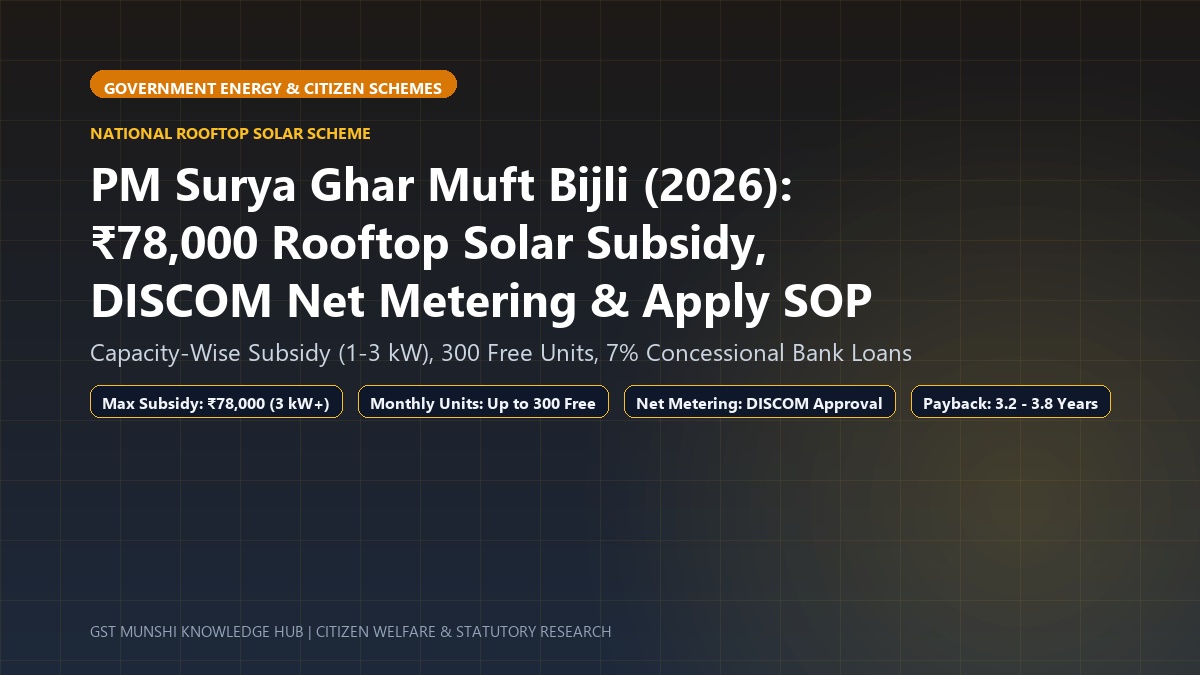
How much subsidy do you get under PM Surya Ghar Muft Bijli Yojana and how do you apply?
Under the PM Surya Ghar Muft Bijli Yojana, Indian homeowners can claim up to ₹78,000 in direct central government cash subsidy transferred directly into their bank account via Direct Benefit Transfer (DBT). A 1 kW system receives ₹30,000, a 2 kW system receives ₹60,000, and systems of 3 kW or higher receive the maximum ₹78,000 subsidy. Applications are submitted online at pmsuryaghar.gov.in. After state DISCOM inspection and bidirectional net meter installation, the subsidy is credited within 30 days of plant commissioning.
1. What is PM Surya Ghar Muft Bijli Yojana?
Launched by the Government of India with a total financial outlay of ₹75,021 Crore, the PM Surya Ghar Muft Bijli Yojana aims to power 1 Crore (10 million) Indian households with rooftop solar by 2027.
The program transforms consumers into "prosumers"—households that both consume and produce electricity. By generating decentralized solar power on residential rooftops, families eliminate their monthly electricity bills while selling surplus units back to the state power grid.
2. Capacity-Wise Central Financial Assistance (Subsidy Matrix)
The Ministry of New and Renewable Energy (MNRE) provides standardized Central Financial Assistance (CFA) regardless of state boundaries:
| Rooftop Solar Capacity | Central Financial Subsidy | Monthly Generation | Ideal Household Profile |
|---|---|---|---|
| 1 kW System | ₹30,000 | ~120 Units / month | Small homes, 1-2 fans, lights, refrigerator (Bill: ₹600-₹1,000) |
| 2 kW System | ₹60,000 | ~240 Units / month | 2-3 BHK homes with 1 inverter AC & washing machine (Bill: ₹1,500-₹2,500) |
| 3 kW to 10 kW System | ₹78,000 (Maximum Cap) | ~360 to 1,200+ Units | Independent houses, multi-story villas, multiple ACs (Bill: ₹3,000-₹8,000+) |
| Group Housing Societies (GHS / RWA) | ₹18,000 per kW (Up to 500 kW) | Common amenities load | Society elevators, water pumps, common area staircase lighting |
3. Real Financial Economics: 3.5-Year Breakeven on a 3 kW Setup
Detailed Cost-Benefit Simulation for a Standard 3 kW On-Grid Rooftop System:
Capital Payback Period: ₹72,000 / ₹22,800 = 3.15 Years. After month 38, your rooftop solar plant delivers 100% free electricity for over 21 years of remaining panel lifecycle warranty.
4. How DISCOM Net Metering Works in Practice
On-grid solar systems do NOT require expensive chemical battery banks (which need replacement every 4–5 years). Instead, the state electricity grid acts as your virtual battery through Bidirectional Net Metering:
Daytime (Export Mode)
Between 9:00 AM and 4:00 PM, your rooftop solar generates surplus electricity. If your home uses 2 kW and your panels generate 3 kW, the surplus 1 kW flows outward into the neighborhood power lines. Your bidirectional meter counts backward or records 'Export Units'.
Nighttime (Import Mode)
At night, when solar generation stops, your home automatically draws power from the regular grid. At the end of the month, your electricity bill is computed strictly on: Net Billed Units = Total Import Units - Total Export Units.
5. 7% Concessional Bank Loans (Zero Upfront Financial Strain)
If you do not wish to spend ₹72,000 upfront, the central government has integrated collateral-free green energy loans directly into the national portal:
- Participating Banks: State Bank of India (SBI Surya Ghar Loan), Punjab National Bank, Canara Bank, Bank of Baroda, and Union Bank.
- Concessional Interest Rate: Linked to the RBI Repo Rate plus 0.50% (approx. 7.00% p.a.), compared to standard personal loans charging 12% to 16%.
- Loan Quantum: Up to ₹2,00,000 without requiring any collateral or mortgage of property.
- Zero Prepayment Penalty: Once the ₹78,000 government subsidy is credited into your bank account, you can apply it directly to prepay the loan principal without any penalty fees.
6. Step-by-Step SOP: Online Application on pmsuryaghar.gov.in
Visit pmsuryaghar.gov.in. Select your State, Electricity Distribution Company (DISCOM), Consumer Account Number (from your electricity bill), Mobile Number, and Email.
Log in with your mobile OTP. Submit your rooftop capacity request (e.g. 3 kW). The state DISCOM reviews grid transformer capacity and grants online feasibility approval within 7 business days.
Choose an official registered vendor from the portal's directory. Sign the model agreement specifying Tier-1 DCR (Domestic Content Requirement) solar modules and branded inverters.
The vendor completes mounting structure and wiring. DISCOM junior engineers inspect the plant, replace your old meter with a bidirectional net meter, and issue a digital Commissioning Certificate.
Submit your bank details (account number and cancelled cheque) on the portal. The ₹78,000 central subsidy is released directly via DBT within 30 days.
Recommended Video Tutorials & Practical Solar Walkthroughs
Watch these verified expert video guides demonstrating portal registration, net metering installation, and subsidy verification:
Recommended Video Tutorials & Practical Guides

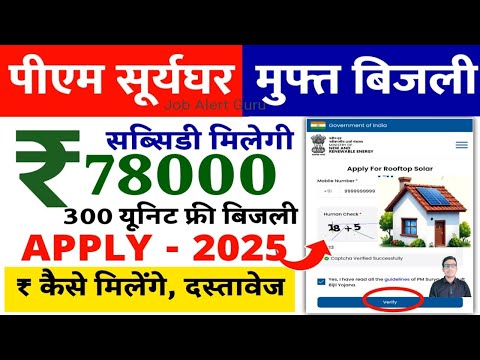
Recommended Video Tutorials & Practical Guides
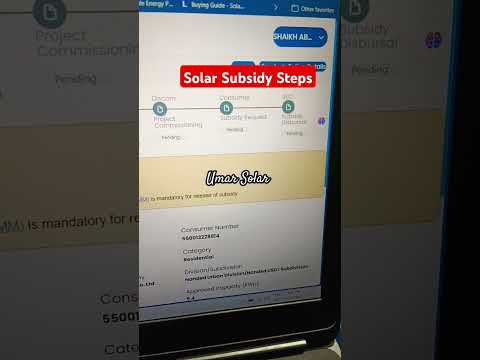
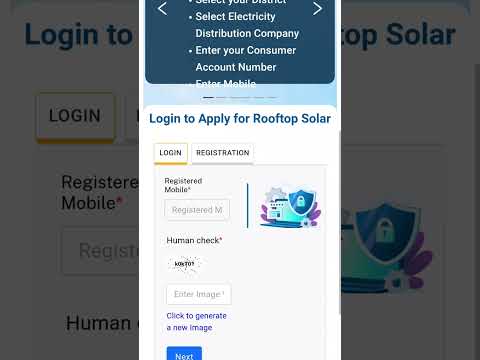
7. Frequently Asked Questions (FAQs)
What is the maximum subsidy provided under PM Surya Ghar Muft Bijli Yojana?
The central government provides a maximum direct bank subsidy of ₹78,000 for residential rooftop solar installations. The subsidy structure is ₹30,000 for a 1 kW system, ₹60,000 for a 2 kW system, and ₹78,000 for systems of 3 kW capacity and above.
How does net metering work with local state electricity DISCOMs?
Net metering installs a bidirectional electricity meter that measures both the power you import from the grid and the excess solar electricity you export to the grid during sunny hours. At the end of the monthly billing cycle, your DISCOM deducts your exported units from your imported units. If your solar generation exceeds your consumption, the net credit carries forward to offset future electricity bills.
What is the estimated capital payback period for a 3 kW residential solar system?
A standard 3 kW on-grid solar system costs approximately ₹1,45,000 to ₹1,55,000. After deducting the ₹78,000 central subsidy, the net out-of-pocket cost is approximately ₹67,000 to ₹77,000. Generating approximately 360 units per month, a household saving ₹2,000 to ₹2,500 monthly recovers its entire net investment in 3.2 to 3.8 years, enjoying virtually free electricity for the remaining 21+ years of the solar panel's 25-year warranty.
Can I obtain a concessional bank loan to finance a PM Surya Ghar installation?
Yes. Through the national portal pmsuryaghar.gov.in, leading public and private banks (including State Bank of India, Punjab National Bank, Canara Bank, and Bank of Baroda) offer collateral-free rooftop solar loans up to ₹2 Lakh at an attractive concessional interest rate of around 7.00% (pegged at 0.50% above the prevailing RBI Repo Rate).
What are the mandatory eligibility criteria to apply on pmsuryaghar.gov.in?
You must be an Indian citizen, possess a residential property with an unshaded rooftop suitable for solar panels, have an active domestic electricity connection in your name or your family's name, and have no prior solar subsidy claimed for the same consumer electricity connection number.
8. Statutory Portals, Helplines & Related Analysis
Official National Portal: PM Surya Ghar Muft Bijli Yojana: pmsuryaghar.gov.in | Ministry of New and Renewable Energy (MNRE): mnre.gov.in.
National Toll-Free Helpline: 15555 | REC Limited Project Management Cell.