
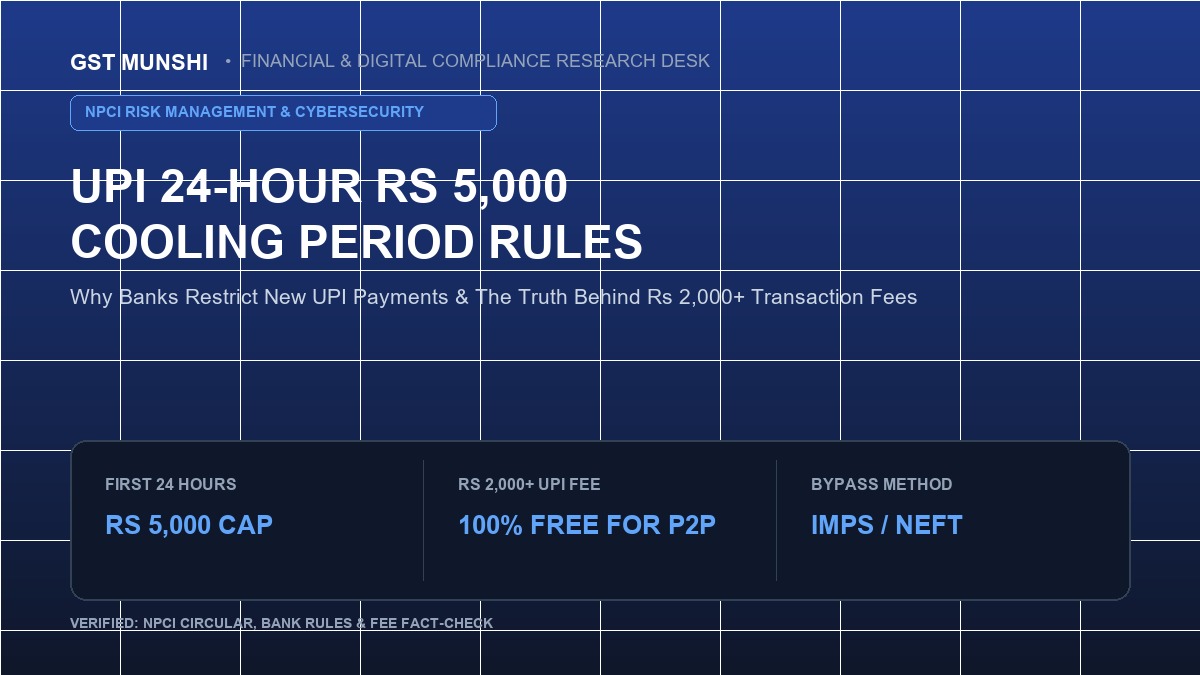
Quick Answer: What Does the ₹5,000 24-Hour UPI Cooling Period SMS Mean?
The Viral Bank SMS: Word-for-Word Breakdown
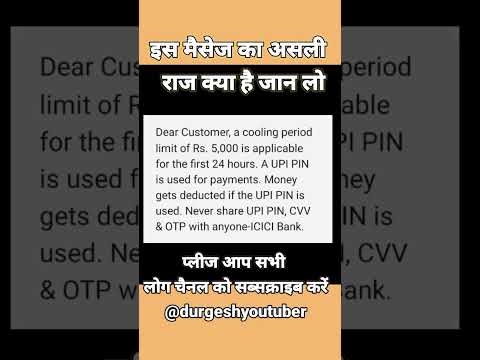
Millions of Indian banking customers receiving unexpected text messages from banks like Yes Bank, State Bank of India (SBI), HDFC Bank, ICICI Bank, Axis Bank, and Punjab National Bank often panic, fearing their account has been hacked or frozen. Let us inspect the exact statutory SMS verbatim:
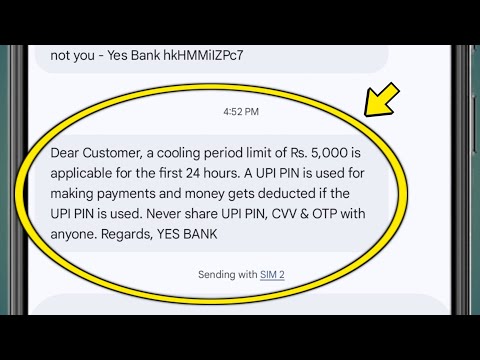
"Dear Customer, a cooling period limit of Rs. 5,000 is applicable for the first 24 hours. A UPI PIN is used for making payments and money gets deducted if the UPI PIN is used. Never share UPI PIN, CVV & OTP with anyone. Regards, Yes Bank"
Deconstructing the Three Critical Warnings Inside This Message
₹5,000 Daily Cap
Your outbound transfers cannot exceed ₹5,000 in total across all UPI apps (Google Pay, PhonePe, Paytm, BHIM) during the initial 24 hours.
UPI PIN = Money Out
The SMS reinforces the golden rule: entering your 4-digit or 6-digit UPI PIN ALWAYS sends money away from your bank. Receiving money never requires a PIN.
Zero Sharing Mandate
Bank officials, police, or tech support will never ask for your UPI PIN, debit card CVV, or one-time password (OTP).
Why Does the 24-Hour Cooling Period Exist? (SIM Swap & Fraud Defense)
Under Reserve Bank of India (RBI) directives on Digital Payment Security Controls (2021) and National Payments Corporation of India (NPCI) fraud risk circulars, financial institutions are statutorily mandated to enforce a 24-hour rate limit whenever sensitive authentication credentials change. This cooling restriction is automatically triggered by:
New Device or Smartphone Switch
When you install Google Pay, PhonePe, or BHIM on a new phone and verify device binding via encrypted SMS, NPCI tags this as an untrusted hardware session for 24 hours.
SIM Swap & Mobile Porting Protection
If a cybercriminal fraudulently issues a duplicate SIM card of your mobile number, they cannot immediately drain your life savings. Even if they reset your UPI, they are stopped cold at ₹5,000.
UPI PIN Reset or Change
Executing a "Forgot UPI PIN" workflow using debit card credentials triggers an immediate reset cooldown across core banking switches.
Newly Added Beneficiary (NetBanking / Mobile Banking)
Most major banks (HDFC, ICICI, SBI) enforce an additional beneficiary cooling window ranging from ₹25,000 to ₹50,000 for the first 24 hours to prevent unauthorized push-payments.
UPI 24-Hour Cooling Limit & Fee Status Calculator
Simulate your transaction approval, cooling countdown, and exact statutory zero-fee status
Verified 2026 Standards
How to Unlock ₹1,00,000 Limit: Step-by-Step SOP Blueprint
Customers often waste hours calling call centers or visiting physical bank branches demanding that the cooling limit be lifted. Follow this statutory reality blueprint:
Every time you uninstall the app, reinstall it, or reset your UPI PIN again in frustration, the 24-hour countdown clock resets back to zero. Allow the initial 24-hour timer to run without touching security settings.
The lock is governed by automated server timestamps. If you registered on Tuesday at 11:30 AM, your standard limits will unlock automatically on Wednesday at exactly 11:31 AM.
After the 24 hours have elapsed, perform a small test transfer of ₹10 or ₹100. Once this clears successfully, the bank switch confirms normal account health and unlocks your full daily limit.
If you have urgent hospital, tuition, or property payments exceeding ₹5,000 right now, log in to your bank's desktop netbanking portal and execute an IMPS or NEFT transfer, or use your physical debit card.
Statutory Fact-Check: Is UPI Paid Above ₹2,000? (NPCI Circular Decoded)
Widespread social media panic was caused by viral misinterpretations of NPCI circular NPCI/2022-23/UPI/183. Millions of users believed that sending more than ₹2,000 over UPI would trigger a 1.1% deduction or convenience charge. Here is the legally verified reality:
| Payment Scenario | Customer Cost | Merchant Cost | Statutory Explanation |
|---|---|---|---|
| Normal Bank UPI to Bank UPI (P2P / P2M) | ₹0.00 (100% Free) | ₹0.00 (Zero MDR) | Zero Merchant Discount Rate (MDR) mandated under Section 10A of the Payment & Settlement Systems Act. No fees regardless of amount (₹10 to ₹1,00,000). |
| PPI Wallet to Merchant (> ₹2,000) | ₹0.00 (Zero Fee) | Up to 1.1% Interchange | Applies strictly when paying from a Prepaid Wallet (Paytm Wallet, Amazon Pay Wallet, Sodexo) to large commercial merchants. Customer never pays this surcharge. |
| Person-to-Person Wallet Transfer | ₹0.00 (Free) | Not Applicable | Direct wallet-to-wallet transfers between friends remain free under standard provider limits. |
| Credit Card on UPI (RuPay) | ₹0.00 (Free for User) | Standard Card Interchange | Small merchants (< ₹2,000 turnover) pay zero MDR. Large merchants pay card interchange, but consumer pays zero convenience fee. |
Bank-by-Bank UPI Cooling Period Comparison Matrix (2026)
Different commercial banks apply varying internal risk parameters on new registrations and new beneficiary additions within the first 24 hours:
| Bank Name | First 24h Cooling Limit | Standard Daily Limit | Hospital & Education Limit | New Beneficiary Cooldown |
|---|---|---|---|---|
| Yes Bank | ₹5,000 (First 24h) | ₹1,00,000 / day | Up to ₹5,00,000 | ₹50,000 max for first 24h via NetBanking |
| State Bank of India (SBI) | ₹5,000 (First 24h) | ₹1,00,000 / day | Up to ₹5,00,000 | ₹50,000 cap for first 24h after activation |
| HDFC Bank | ₹5,000 (First 24h) | ₹1,00,000 / day | Up to ₹5,00,000 | ₹25,000 cap for first 24h for new beneficiaries |
| ICICI Bank | ₹5,000 (First 24h) | ₹1,00,000 / day | Up to ₹5,00,000 | ₹50,000 cap during initial 24h window |
| Axis Bank | ₹5,000 (First 24h) | ₹1,00,000 / day | Up to ₹5,00,000 | ₹50,000 limit for first 24 hours |
| Punjab National Bank (PNB) | ₹5,000 (First 24h) | ₹1,00,000 / day | Up to ₹5,00,000 | ₹25,000 restriction during first 24 hours |
Verified Video Masterclasses: UPI Limits, Security & Fee Fact-Checks
Watch 4 verified tutorials analyzing cooling period mechanics, NPCI interchange guidelines, and safe digital payments:
Frequently Asked Questions (FAQs)
Can my bank branch manager override the ₹5,000 24-hour limit manually?
No. The 24-hour ₹5,000 cooling limit is an automated algorithmic lock implemented directly within the bank's Core Banking Solution (CBS) and the NPCI UPI switch. Branch managers and customer support executives possess zero administrative tools to disable this security rule.
Does receiving money count towards the ₹5,000 cooling period limit?
No. The ₹5,000 cooling period applies strictly to OUTBOUND debit transactions (money leaving your account). You can receive unlimited incoming UPI transfers, salary credits, or refunds during the first 24 hours without any restriction.
Why do scammers tell victims to enter their UPI PIN to claim lottery prizes or refunds?
Because entering your UPI PIN authorizes your bank to debit money from your account. Fraudsters fabricate fake refund links or 'Collect Requests' claiming you must enter your PIN to accept funds. In reality, accepting or receiving funds via UPI NEVER requires entering a PIN.
Does the cooling period apply if I just update my UPI app to the latest version on the same phone?
Standard app updates via Google Play Store or Apple App Store do not trigger a cooling period, provided your SIM card and phone hardware remain unchanged. Only re-installations that require fresh SMS device binding trigger the 24-hour cooldown.
Are merchant payments (paying at grocery shops, petrol pumps) subject to the ₹5,000 limit?
Yes. During the first 24 hours, all cumulative outbound transfers—whether to another individual (P2P) or to a merchant QR code (P2M)—are capped at ₹5,000 in total.
Related Banking & Cyber Security Manuals
Safeguard your digital assets and master Indian banking compliance with our guides: