

How do federal student loans work, how is interest calculated on Subsidized vs. Unsubsidized loans, and what are your repayment and PSLF options in 2026–2027?
Federal student loans issued under Title IV of the Higher Education Act (20 U.S.C. § 1087e) offer fixed interest rates set annually each May using the high yield of the 10-Year US Treasury Note auction plus a statutory margin (+2.05% for undergraduate Direct Subsidized and Unsubsidized loans, +3.60% for Graduate Unsubsidized, and +4.60% for Direct PLUS loans). On Direct Subsidized loans, the US Department of Education pays 100% of accruing interest while you are enrolled at least half-time and during your 6-month grace period. For repayment, while the SAVE Plan remains blocked under an 8th Circuit injunction (placing enrolled borrowers in 0% interest forbearance), borrowers can choose between the 10-Year Standard Plan, Graduated/Extended Plans, or statutory Income-Based Repayment (IBR) and Public Service Loan Forgiveness (PSLF).
Federal Student Loan Repayment & PSLF Forgiveness Calculator (SAVE Injunction Mode)
Compare your monthly payment and loan forgiveness trajectory across SAVE, IBR, and PSLF under active 8th Circuit Court of Appeals preliminary injunctions and administrative forbearance rules.
If you are on SAVE administrative forbearance, those months do not automatically count toward your 120 PSLF payments. However, borrowers can submit a "PSLF Buyback" request once they reach 120 qualifying months of employment, paying the equivalent IBR amount to retroactively claim debt discharge.
1Federal Student Loan Options Explained: Direct Subsidized vs. Unsubsidized vs. PLUS & Interest Math
Before evaluating repayment plans or loan forgiveness, every borrower and family must understand the three primary Direct Loan structures originated by the U.S. Department of Education through the Free Application for Federal Student Aid (FAFSA). Unlike private student loans from commercial banks—which underwrite based on your FICO credit score and carry variable rates without federal income-driven protections—federal Direct Loans feature statutory interest caps, flexible deferment rights, and death/disability discharge protections.
Under Section 455(b) of the Higher Education Act (20 U.S.C. § 1087e(b)), Congress establishes federal student loan interest rates every year for loans disbursed between July 1 and June 30 based on the final 10-Year US Treasury Note auction held in May. Once your loan is disbursed, that rate is permanently fixed for the life of the loan, and interest accrues using a simple daily interest formula (Outstanding Principal Balance × Interest Rate ÷ 365.25) rather than daily compounding.
- Direct Subsidized Loans (Undergraduates with Financial Need): The federal government pays 100% of the interest while you are in college at least half-time, during your 6-month post-graduation grace period, and during authorized deferments. Annual limits range from $3,500 (freshmen) to $5,500 (juniors/seniors).
- Direct Unsubsidized Loans (Undergrad, Graduate & Professional): Available regardless of family income. Interest begins accruing on Day 1 of disbursement; if you do not pay the interest while in school, it is added to your principal balance upon entering repayment. Graduate students can borrow up to $20,500 annually ($138,500 aggregate cap).
- Direct PLUS Loans (Grad PLUS & Parent PLUS): Available to graduate students and parents of dependent undergraduates up to the full Cost of Attendance minus other aid. Requires an adverse-credit check, carries an upfront ~4.228% loan origination fee, and charges the highest statutory interest margin (May 10-Year Treasury + 4.60%).
2The 2026–2027 Legal Standoff: 8th Circuit Injunction on the SAVE Plan
Federal student loan policy in the United States is navigating unprecedented legal and regulatory turbulence. In response to lawsuits brought by state attorneys general (led by Missouri and Kansas), the U.S. Court of Appeals for the 8th Circuit issued an injunction halting key provisions of the Department of Education's Saving on a Valuable Education (SAVE) Plan.
The legal controversy centers on the 'Major Questions Doctrine'—the constitutional principle that executive agencies cannot enact sweeping economic regulations with hundreds of billions of dollars in fiscal impact without clear, explicit authorization from Congress. While the Biden-Harris administration created SAVE under the Higher Education Act of 1965, the appellate court ruled that lowering repayment rates to 5% of discretionary income and forgiving balances after 10 years exceeded statutory executive authority.
- Injunction Scope: Halts all loan discharges under the SAVE Plan, blocks the 5% undergraduate repayment calculation, and freezes new automated IDR processing on StudentAid.gov.
- Executive Transition Context: Prospective policy under conservative leadership and Congressional majorities aims to sunset SAVE entirely, eliminating administrative forgiveness while consolidating federal repayment back into a single standard IBR formula.
3Administrative Forbearance Explained: $0 Payments, 0% Interest & Credit Reports
To protect borrowers while federal courts litigate the legality of SAVE, the U.S. Department of Education placed all enrolled borrowers into interest-free general administrative forbearance. Understanding the precise financial terms of this forbearance is critical for household budgeting:
- Payment Obligation: Exactly $0.00 per month. Loan servicers (MOHELA, Nelnet, Aidvantage, Edfinancial) cannot demand payments or initiate collections.
- Zero Interest Accrual: Your loan principal balance is completely frozen. Interest does NOT capitalize or accumulate during this litigation pause.
- Credit Reporting: Servicers are legally prohibited from reporting borrowers as delinquent or past-due. Your credit score is completely insulated from negative marks during administrative forbearance.
- The Crucial Catch: Months spent in this court-ordered administrative forbearance do NOT automatically count as qualifying monthly payments toward the 120 payments required for Public Service Loan Forgiveness (PSLF) or 20/25-year IDR forgiveness.
4Public Service Loan Forgiveness (PSLF): Statutory Law vs Executive Action
Many public servants—teachers, nurses, military personnel, first responders, and non-profit 501(c)(3) professionals—fear that a change in presidential administration could retroactively abolish Public Service Loan Forgiveness. It is vital to separate political campaign rhetoric from statutory law.
PSLF is NOT an executive order or temporary presidential initiative. It was enacted into federal statute by a bipartisan Congress and signed into law by President George W. Bush under the College Cost Reduction and Access Act of 2007 (codified at 20 U.S.C. § 1087e(m) and 34 C.F.R. § 685.219).
- Statutory Master Promissory Note (MPN) Contract: When you signed your federal Direct Loan MPN, the terms of statutory forgiveness programs (including PSLF) were legally incorporated into your contractual agreement with the United States government.
- Non-Retroactivity Doctrine: Congress cannot retroactively strip away statutory contractual terms for existing borrowers without violating the Due Process Clause and Contract Clause principles.
- Tax-Free Discharge: Unlike general IDR 20/25-year forgiveness (which may face federal taxability after 2025 unless extended), debt discharged under PSLF is permanently 100% tax-free under Internal Revenue Code Section 108(f).
5The PSLF Buyback Protocol: How to Recover Lost Forbearance Months (34 CFR § 685.219)
Because SAVE administrative forbearance months do not automatically earn PSLF credit, borrowers on the 10-year track face potential career delays. Fortunately, federal regulations provide an elite mechanism called the 'PSLF Buyback'.
Under 34 C.F.R. § 685.219(g), borrowers can retroactively purchase qualifying status for months spent in deferment or forbearance if they meet three specific statutory requirements:
- 120 Months of Certified Employment: You must have completed at least 120 months of full-time qualifying public service employment documented via approved Employer Certification Forms (ECF).
- Remaining Balance Greater Than Zero: The buyback can only be submitted once the bought-back months would immediately push your total qualifying count to exactly 120, fully eliminating the remaining loan balance.
- Payment Calculation: The Department of Education calculates the exact monthly payment you would have owed under an alternative active IDR plan (such as standard IBR or PAYE) during those forbearance months. You pay that lump sum, and your entire balance is immediately forgiven.
6Income-Driven Repayment (IDR) Transition: Switching from SAVE to Standard IBR
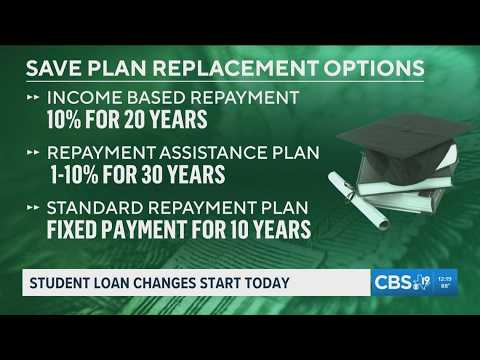
If you are approaching your 120th PSLF payment and cannot afford to wait for the lengthy Buyback adjudication, or if you prefer active ongoing payment credits, transitioning to standard Income-Based Repayment (IBR) is your primary alternative.
Standard IBR was enacted by Congress under 20 U.S.C. § 1098e and is completely immune to the SAVE legal challenges. For borrowers who took out loans after July 1, 2014, IBR caps monthly payments at 10% of discretionary income (defined as income above 150% of the Federal Poverty Line). For older borrowers, the cap is 15%.
- Submit Paper IDR Application: While online automated IDR processing on StudentAid.gov is temporarily throttled, borrowers can download, fill out, and upload the official PDF Income-Driven Repayment Plan Request to their servicer portal.
- Request Processing Forbearance: While your servicer processes the transition from SAVE to IBR, you enter an administrative processing forbearance that DOES count toward PSLF credit (up to 60 days).
7Long-Term Legislative Outlook: What Upcoming Congressional Action Means for Borrowers
Looking forward into 2027, Congress is expected to take up reauthorization of the Higher Education Act. Legislative blueprints circulating in Washington propose streamlining all federal student loan repayment into two simplified paths: a Standard 10-Year Fixed Plan and a single Statutory Income-Driven Repayment Plan capping payments at 10% of discretionary income above 150% of the poverty line.
Additionally, federal proposals seek to eliminate the Graduate PLUS loan program's unlimited borrowing caps and end borrower defense backlogs. Regardless of statutory revisions, borrowers currently holding Direct Loans will retain grandfathered protections for existing master promissory notes.
Federal Income-Driven Repayment (IDR) Plan Comparison Matrix
| Repayment Plan | Current Legal Status (2026–2027) | Monthly Payment Formula | Forgiveness Timeline & PSLF Status |
|---|---|---|---|
| SAVE Plan (Formerly REPAYE) | BLOCKED by 8th Circuit Court Injunction | 5% (Undergrad) / 10% (Grad) above 225% FPL (Currently $0 Forbearance) | 10–25 Years. Injunction paused discharges; months do not automatically earn PSLF. |
| Standard IBR (Post-2014 Borrowers) | FULLY OPERATIONAL (Congressional Statute) | 10% of Discretionary Income above 150% FPL | 20 Years general forgiveness; 120 payments for PSLF. 100% legal & active. |
| Standard IBR (Pre-2014 Borrowers) | FULLY OPERATIONAL (Congressional Statute) | 15% of Discretionary Income above 150% FPL | 25 Years general forgiveness; 120 payments for PSLF. 100% legal & active. |
| Pay As You Earn (PAYE) | Phased Out for New Enrollees | 10% of Discretionary Income above 150% FPL (Capped at Standard 10-Yr) | 20 Years general forgiveness; 120 payments for PSLF. Existing enrollees protected. |
| Income-Contingent Repayment (ICR) | Open Primarily for Parent PLUS Consolidation | 20% of Discretionary Income above 100% FPL | 25 Years general forgiveness; 120 payments for PSLF. Highest monthly payment IDR. |
| Standard 10-Year Fixed | PERMANENT DEFAULT (Statutory Benchmark) | Equal monthly amortized payments over 120 months | Loan paid in full in 10 years. Qualifies for PSLF if not consolidated into longer terms. |
4-Step Blueprint to Protect Your Federal Student Loans & PSLF Eligibility
Confirm Your Loan Types on StudentAid.gov
Log into your Federal Student Aid dashboard. Verify that all your loans are 'Direct Loans'. Older FFEL or Perkins loans must be consolidated into a Direct Consolidation Loan to qualify for PSLF.
Submit an Annual PSLF Employment Certification (ECF)
Use the official PSLF Help Tool to have your public service employer digitally sign Form ECF. This locks in your certified qualifying payment count in the federal database.
Decide Between SAVE Forbearance vs Switching to IBR
If you have 3+ years left until PSLF, enjoying $0 interest-free SAVE forbearance and planning a future Buyback may save you thousands. If you are near month 120, consider transitioning to IBR.
Archive Every Servicer Communication & Payment Receipt
Download full payment histories and loan disclosure statements from your servicer every quarter. In administrative disputes, borrower-held records are indispensable.
Curated Expert Video Walkthroughs & Wall Street Briefings
Frequently Asked Questions (Verified Statutory Answers)
Q1: Can the President eliminate PSLF with an executive order?
No. Public Service Loan Forgiveness is a statutory entitlement enacted by Congress under Section 455(m) of the Higher Education Act of 1965 (20 U.S.C. § 1087e(m)). A President cannot abolish a statutory program created by Congress via executive order. Only an Act of Congress can modify the law, and contract principles would protect existing borrowers.
Q2: Do months spent in the SAVE administrative forbearance count toward PSLF?
Not automatically. Under current Department of Education guidance, months spent in court-ordered administrative forbearance do not directly register as qualifying payments. However, borrowers can submit a 'PSLF Buyback' request once they reach 120 months of qualifying employment to retroactively claim forgiveness.
Q3: Is interest growing on my federal student loans while on SAVE forbearance?
No. The administrative forbearance carries a strict 0% interest rate. Your principal loan balance is completely frozen, and no new interest accumulates while the 8th Circuit Court of Appeals litigation proceeds.
Q4: What is the difference between SAVE and standard IBR?
SAVE was created by administrative agency rulemaking and calculates payments at 5% (undergraduate) or 10% (graduate) of discretionary income above 225% of the poverty line. Standard IBR was enacted by Congress and calculates payments at 10% (new borrowers) or 15% (older borrowers) of discretionary income above 150% of the poverty line.
Q5: Is student loan forgiveness under PSLF taxable by the IRS?
No. Forgiveness achieved through the Public Service Loan Forgiveness program is permanently exempt from federal income tax under Internal Revenue Code Section 108(f). Additionally, virtually all states (including California, New York, and Pennsylvania) exempt PSLF discharges from state income tax.
Q6: How do I switch from SAVE to another repayment plan if I need active payment credit?
You can download the paper Income-Driven Repayment Plan Request (OMB No. 1845-0102) from StudentAid.gov, select 'Income-Based Repayment (IBR)', attach your most recent federal tax return (Form 1040), and upload it through your loan servicer's online document portal.
Verified X (Twitter) & LinkedIn Expert Insights
“For PSLF borrowers on SAVE: Don't panic about the administrative forbearance. While these months don't show up on your monthly counter today, the PSLF Buyback provision under 34 CFR § 685.219 allows you to buy these months back for cheap when you hit 120 certified months. Keep your qualifying employment continuous!”
“Just received my official forgiveness letter for $214,000 under PSLF after 10 years at a 501(c)(3) hospital system! Congress created PSLF in 2007 by law; administrations change, but statutory contracts in your Master Promissory Note hold up in federal court.”