GST Munshi Logo
Start Free
🇺🇸 US Edition ($ USD)Travel, Flights, Sports & Annual EventsUS Commercial Airport Terminals, Security & Transit Master Manual

US Airport Guide 2027: Terminals, Transit & TSA Lounges

Complete US airport guide to terminals, inter-terminal trains, TSA PreCheck vs CLEAR lanes, ground transportation, lounges, and passenger facilities.

GBy GST Munshi US Quantitative & Statutory Desk•Published: October 2026•20 min read
Audited against TSA Security Screening Procedures, DHS REAL ID Act (6 C.F.R. Part 37), FAA Airport Design Standards & Americans with Disabilities Act (14 C.F.R. Part 382)
Share
US Airport Guide 2027: Terminals, Transit & TSA Lounges
US Commercial Airport Terminals, Security & Transit Master Manual — Verified US Statutory & Quantitative Analysis ($ USD)
Read in Your Regional Language:
Table of Contents (11 Sections)
Quick Answer & Key Takeaways

How do US airport terminals, inter-terminal trains, TSA security lanes, and ground transportation systems work?

Major US commercial airports are organized into Landside (pre-security ticketing, baggage drop, and ground transit) and Airside (post-security concourses, gates, and lounges). Domestic passengers should arrive at the terminal curb at least 2 hours before departure (3 hours for international flights), as checked bag drop closes strictly 45–60 minutes prior to takeoff and aircraft boarding doors close 15 minutes prior. Automated People Movers (such as AirTrain, Skytrain, and Plane Train) connect terminals in 3 to 12 minutes.

The 2-Hour / 3-Hour Arrival Rule: Arrive 2 hours early for domestic flights and 3 hours early for international routes during peak morning (6–9 AM) and evening (4–7 PM) banks
Strict Bag-Drop & Boarding Cutoffs: Checked luggage counters lock 45 mins prior (domestic) and 60 mins prior (international); gate doors close 15 mins before takeoff
Airside vs. Landside Transfers: Moving between airside-connected concourses keeps you inside security; switching landside terminals requires re-clearing TSA screening
Expedited Security Stack: TSA PreCheck ($78/5 yrs) keeps shoes, belts, and laptops on; CLEAR Plus ($199/yr) uses biometrics to escort you to the front of the podium
Ground Transport Hierarchy: Airport rail links ($2.25–$13.50) beat highway traffic, while Uber/Lyft pickups now use dedicated Consolidated Rideshare Lots at major hubs
US Airport Terminal, TSA Wait & Ground Transport Simulator ($ USD)

LAX, Miami (MIA) & Major US Hub Terminal Transfer & Transit Planner

Select your US airport hub, TSA screening tier, and baggage setup to calculate your ideal curb-to-gate buffer and compare public rail/bus transit against Uber/Lyft rideshare fares.

Est. Peak TSA Security Wait
~32 mins
Arrive at curb at least 102 mins before departure
Terminal & Airside Connector
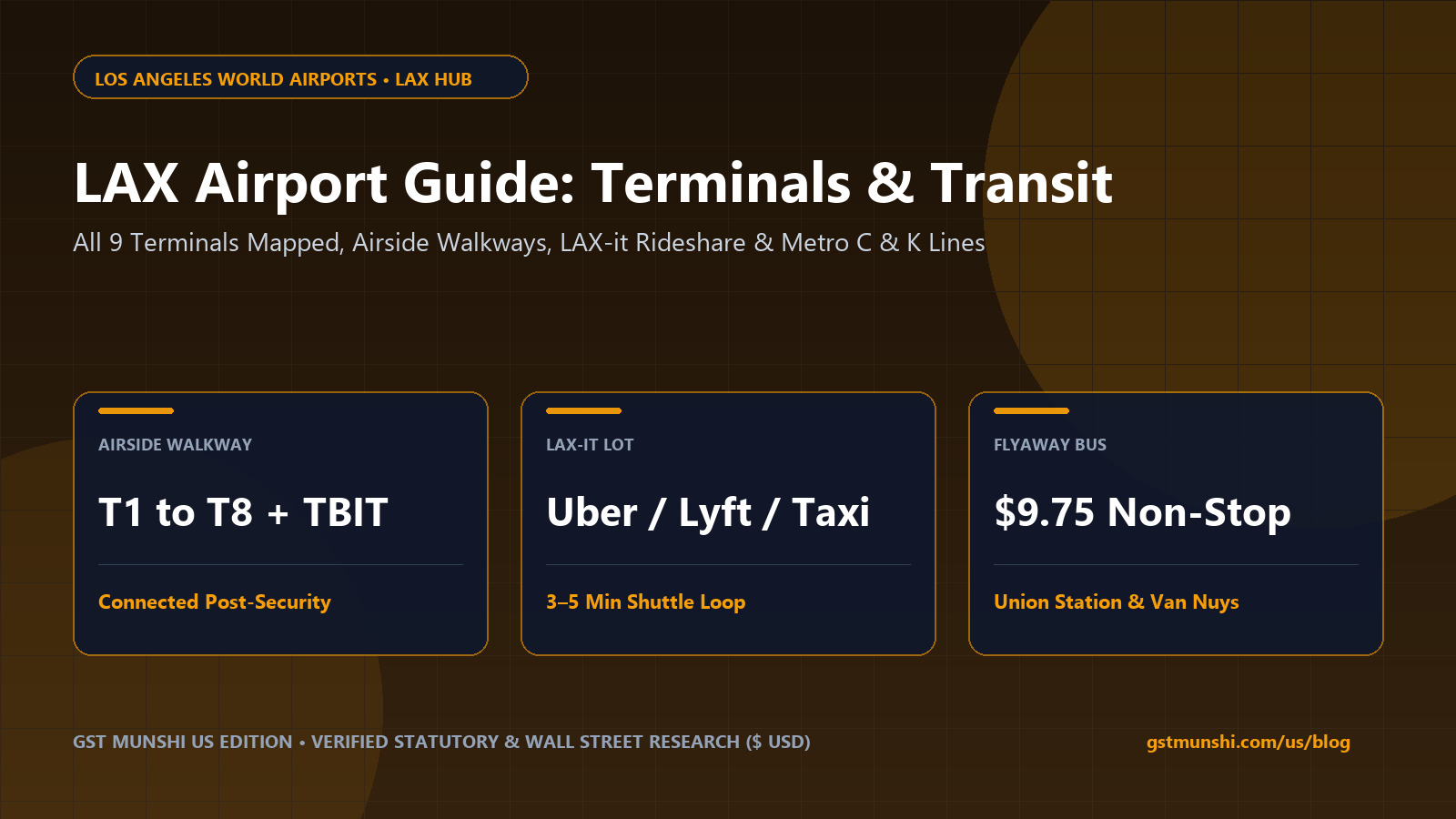
9 Terminals (Terminals 1–8 + Tom Bradley Intl TBIT)
All terminals connected airside post-security via tunnels/walkways + Automated People Mover (APM)
Public Transit Cost
$9.75 (FlyAway) / $1.75 (Metro Rail)
LAX FlyAway Bus (Union Station / Van Nuys) & Metro K/C Line

1Understanding Airport Terminals, Concourses & Airside People Movers

Navigating a major hub airport smoothly begins with understanding the architectural split between a Terminal and a Concourse. A Terminal is the landside building where you arrive by car or train, check luggage at airline ticketing counters, clear TSA security checkpoints, and reclaim bags upon arrival. A Concourse (labeled by letters such as Concourse A, B, C, or D) is the airside pier post-security where the physical aircraft boarding gates (e.g., Gate B22) are located.

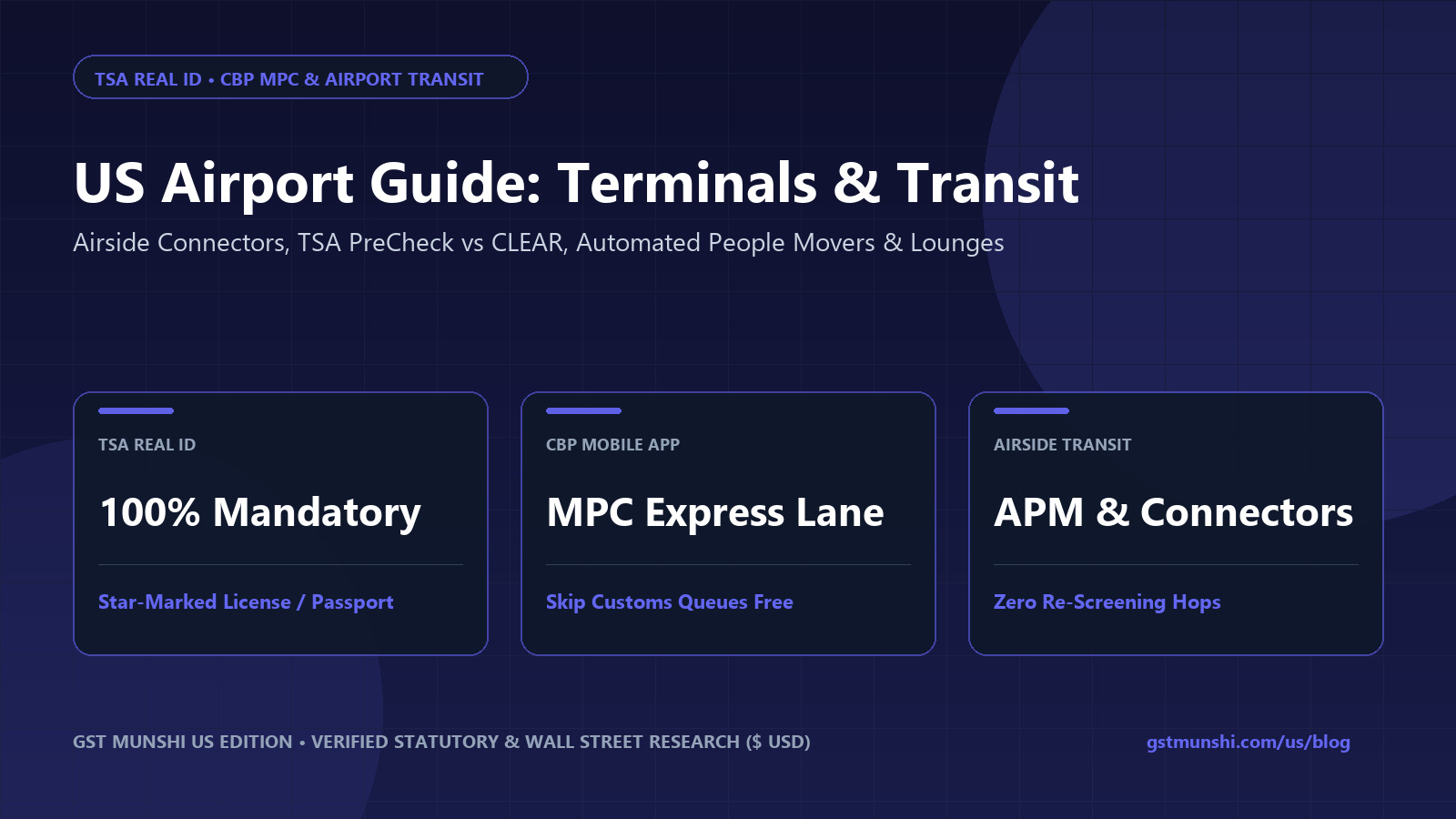
At single-roof mega-hubs like Atlanta (ATL), Denver (DEN), Dallas/Fort Worth (DFW), and Charlotte (CLT), all concourses are connected 'airside' behind security via underground automated trains (such as ATL's Plane Train or DFW's Skylink) or pedestrian walkways. That means you can land at Gate A10 and ride the train to Gate E18 in eight minutes without ever exiting security.

Conversely, at multi-terminal airports like New York JFK, Boston Logan (BOS), or Chicago O'Hare (ORD Terminal 5 to Domestic Terminals), switching between certain terminals on a landside train (like AirTrain JFK) exits the secure sterile area—meaning you must budget an extra 25 to 45 minutes to re-clear TSA security.

  • Always Check Terminal AND Gate: Your airline assignment determines your terminal (e.g., Delta uses Terminal 2/3 at LAX and Terminal 4 at JFK), while your specific aircraft determines the concourse gate.
  • Inter-Terminal Shuttle Buses: Many hubs operate hidden post-security airside shuttle buses between terminals so connecting flyers avoid re-clearing TSA.
  • Wheelchair & Electric Cart Assistance (14 C.F.R. Part 382): Under the Air Carrier Access Act, airlines must provide free wheelchair escort and terminal transfer assistance upon request—add the SSR request to your ticket at least 48 hours prior.

2Mastering Airport Security: Standard TSA, TSA PreCheck, CLEAR & Global Entry

Security checkpoint bottlenecks are the number-one cause of missed flights at US airports. Standard TSA screening lanes require removing shoes, belts, light jackets, and large electronics (above a tablet) unless the lane is equipped with newer TSA Computed Tomography (CT) 3D scanners. All carry-on liquids, gels, and aerosols must comply with the TSA 3-1-1 Rule: containers of 3.4 ounces (100 ml) or smaller, fitting comfortably inside one clear quart-sized zip-top bag.

Frequent travelers eliminate security friction by enrolling in DHS Trusted Traveler Programs. TSA PreCheck ($78 for 5 years) gives you access to dedicated expedited lanes where averages waits are under 10 minutes, and you keep shoes, belts, light outerwear, 3-1-1 liquids, and laptops inside your bag. Global Entry ($120 for 5 years) includes full TSA PreCheck benefits plus instant facial-recognition US Customs and Border Protection (CBP) kiosks when returning from international trips.

3Airport Ground Transportation: Rail Links, Consolidated Rideshare Lots & Rental Cars

Exiting the airport efficiently requires choosing between four ground transport tiers: Direct Airport Rail/Bus Transit, Rideshare (Uber/Lyft), Metered Taxis, and Consolidated Rental Car Facilities (ConRAC). To combat terminal curbside gridlock, major US airports—including LAX (LAX-it), Atlanta (ATL), Seattle (SEA), Boston (BOS), and Phoenix (PHX)—have relocated Uber and Lyft pickups away from the terminal arrival curb into dedicated rideshare zones accessed by walking paths or Automated People Movers.

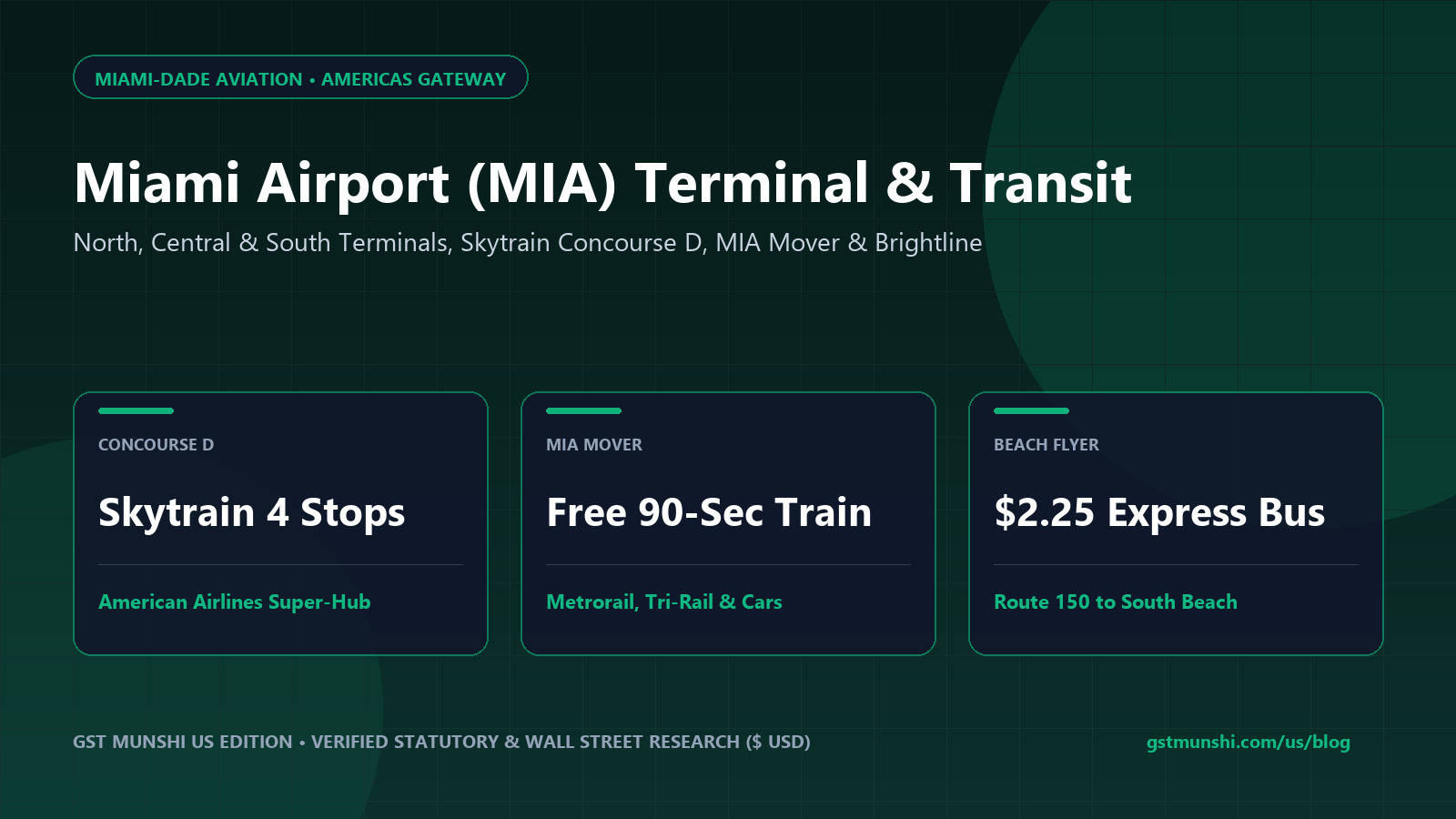
Whenever traveling to a congested downtown business district during rush hour (7:00–9:30 AM or 4:00–7:00 PM), dedicated airport rail connections—such as JFK AirTrain + LIRR to Manhattan, Chicago CTA Blue Line/Orange Line, Atlanta MARTA, Washington Reagan Metro, or Miami Metrorail—deliver faster, predictable travel times at 80% lower cost than rideshare surge pricing.

4Passenger Facilities: Airport Lounges, Nursing Suites, Pet Relief & Free Wi-Fi

Modern US terminals provide extensive passenger amenities beyond standard food courts. Every major US commercial airport is required by federal law (the Friendly Airports for Mothers Act, 49 U.S.C. § 47107) to maintain clean, private, non-restroom lactation rooms (such as Mamava nursing pods) with electrical outlets behind TSA security in every terminal, alongside post-security Service Animal and Pet Relief areas.

For business travelers and families facing 3+ hour layovers, airport lounges offer complimentary hot buffets, high-speed Wi-Fi, shower suites, and quiet workspaces. Access is available via credit card networks (Priority Pass Select, American Express Centurion Lounges, Capital One Lounges, and Chase Sapphire Lounges), airline co-branded cards (Delta Sky Club, United Club, Admirals Club), or $59–$79 single-day passes.

Addressed to active-duty US military personnel and their families, USO Airport Centers operate free lounges with beds, snacks, and television rooms across more than 40 major US hub airports.

US Airport Security & Customs Programs Comparison (2026–2027)

Program NameOfficial Fee & ValidityPrimary Airport BenefitCredit Card Fee Reimbursement?
TSA PreCheck$78 – $85 for 5 YearsDedicated US domestic/intl departure lanes; keep shoes, belt, laptop & 3-1-1 bag insideYes (100% statement credit on 30+ travel cards)
CBP Global Entry$120 for 5 Years (Free for kids <18)Includes full TSA PreCheck + touchless facial-scan US Customs entry in <60 secondsYes (100% credit on Sapphire, Venture, Amex)
Mobile Passport Control (MPC)100% Free (Official CBP App)Dedicated fast-track US Customs lane at 50+ international arrival airports with zero enrollment feeFree for all US citizens, LPRs & Canadian B1/B2
CLEAR Plus Biometrics$199 / Year (Discounts with Delta/United)Eye/fingerprint scan bypasses the ID podium line straight to physical TSA screeningYes (Covered by Amex Platinum / Green cards)

4-Step Blueprint for Stress-Free US Airport Navigation

STEP 01

Verify Your Airline Terminal & Check-In 24 Hours Ahead

Confirm your exact terminal and concourse in the airline app 24 hours prior to takeoff and save your mobile boarding pass to Apple Wallet or Google Wallet.

STEP 02

Respect the Strict 45-Minute / 60-Minute Bag Drop Cutoff

If checking suitcases, arrive at the airline counter at least 90–120 minutes before domestic flights and 3 hours before international flights; computers lock bag tags at the cutoff.

STEP 03

Pack an Empty Reusable Water Bottle & Power Bank

Bring an empty insulated water bottle through TSA security to fill at free filtered hydration stations post-security, and keep lithium power banks strictly in your carry-on (never checked bags).

STEP 04

Check Airport Rail vs. Rideshare Pickup Lot Before Landing

While taxiing to the arrival gate, check whether your airport uses a consolidated rideshare lot (like LAX-it) or a direct terminal rail station to save 30+ minutes exiting the hub.

Curated Expert Video Walkthroughs & Wall Street Briefings

TSA Official: TSA Security Rules, REAL ID & Expedited Airport Screening Guide
Watch on YouTube
TSA Security Rules, REAL ID & Expedited Airport Screening Guide
Click to Play Video
TSA Security Rules, REAL ID & Expedited Airport Screening GuideOpen in App
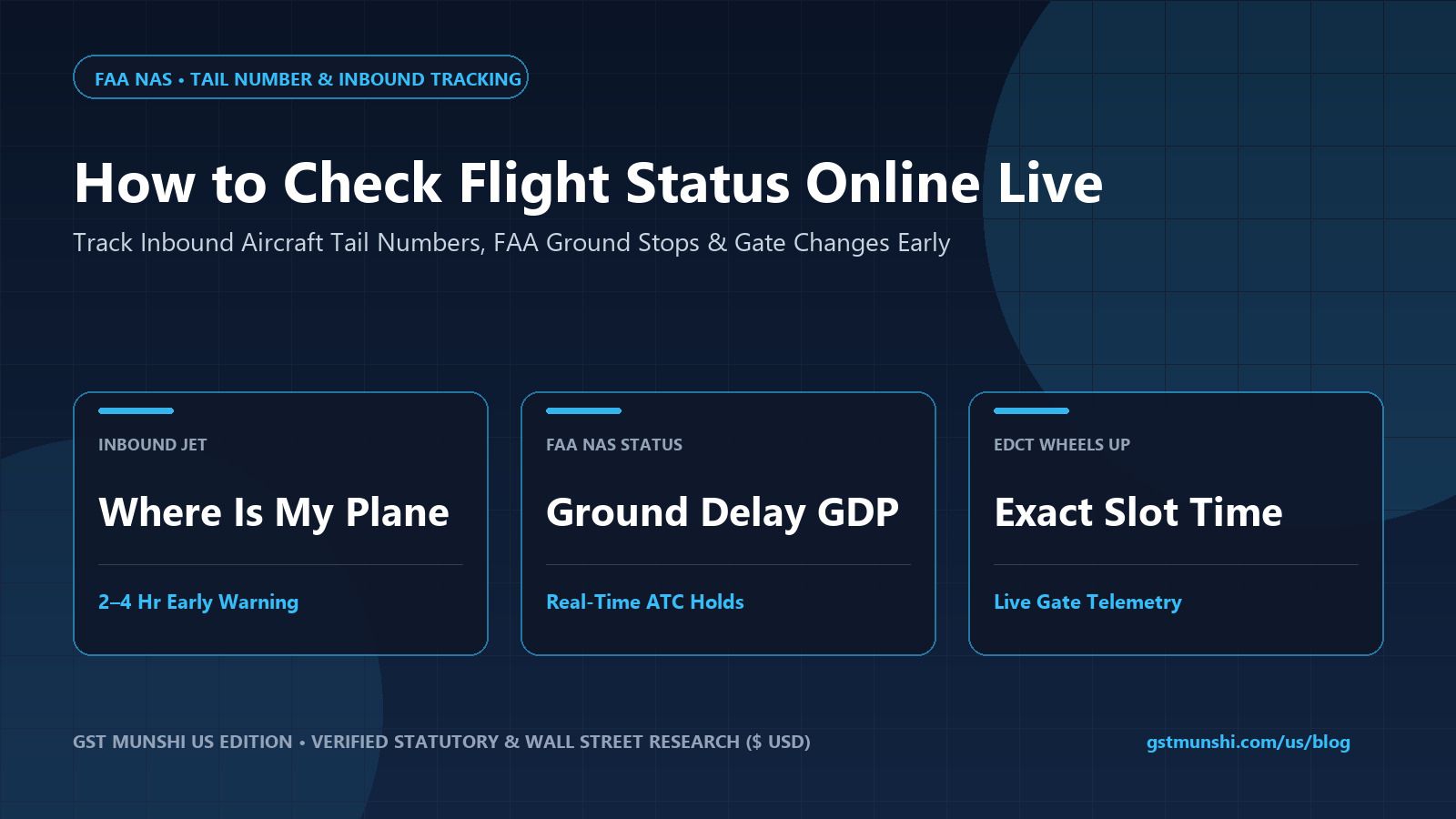
Travel Tips & FAQ: How to Navigate Major US Airport Terminals, Connections & Security
Watch on YouTube
How to Navigate Major US Airport Terminals, Connections & Security
Click to Play Video
How to Navigate Major US Airport Terminals, Connections & SecurityOpen in App
CNBC Television: Inside US Commercial Airport Operations & Passenger Protections
Watch on YouTube
Inside US Commercial Airport Operations & Passenger Protections
Click to Play Video
Inside US Commercial Airport Operations & Passenger ProtectionsOpen in App
CBS News: Airport Travel Tips: Avoiding Delays, Bag Issues & Security Lines
Watch on YouTube
Airport Travel Tips: Avoiding Delays, Bag Issues & Security Lines
Click to Play Video
Airport Travel Tips: Avoiding Delays, Bag Issues & Security LinesOpen in App

Frequently Asked Questions (Verified Statutory Answers)

Q1: What is the difference between an airport terminal and a concourse?

A terminal is the main landside building where passengers enter from the street, check bags at airline counters, pass through TSA security, and claim luggage. A concourse is the post-security airside section (often designated by letters like Concourse A, B, or C) containing the boarding gates where airplanes park.

Q2: Do I have to go through TSA security again on a connecting flight?

For most domestic-to-domestic connections and domestic-to-international connections at US hubs, you do not have to re-clear TSA security if the terminals or concourses are connected 'airside' via walkways, tunnels, or automated trains. However, if you arrive on an international flight (unless departing from a US CBP Preclearance airport like Dublin, Toronto, or Abu Dhabi), you must claim your checked bags, clear US Customs, re-drop your bags, and pass through TSA security again before boarding your domestic connection.

Q3: Can I bring food and snacks through TSA airport security?

Yes. Solid foods—including sandwiches, fruit, nuts, protein bars, chips, pizza, and baked goods—are 100% permitted through TSA security in unlimited quantities. Only liquid or gel-like foods (such as yogurt, soup, peanut butter, hummus, jam, and sauces) are subject to the 3.4-ounce (100 ml) liquid limit.

Q4: Is DHS REAL ID required at US airport security checkpoints?

Yes. Under federal DHS REAL ID Act enforcement (6 C.F.R. Part 37), adult passengers 18 and older must present a REAL ID-compliant state driver's license (marked with a star in the top corner), an Enhanced Driver's License (EDL), a valid US or foreign Passport, a DHS Trusted Traveler card (Global Entry/NEXUS/SENTRI), or a US Military ID to clear TSA checkpoints for domestic flights.

Q5: How can I access an airport lounge without flying First or Business Class?

You can access airport lounges on an Economy ticket by holding a travel credit card with complimentary Priority Pass Select, Amex Centurion, Capital One, or Chase Sapphire Lounge access; holding a premium airline credit card (such as Delta Reserve, United Club Infinite, or Citi AAdvantage Executive); or buying a $59–$79 single-entry day pass at the lounge reception desk when space permits.
Wall Street Desk • $ USDNASDAQ & NYSE Institutional Equity Research

Analyze 10 Major US Stocks (NVDA, AAPL, MSFT, TSLA, AVGO, ORCL, QCOM, INTC, HPE, BE) in Real $ USD

Complete SEC 10-K/10-Q valuation multiples, DCF fair value models, and multi-agent AI committee ratings.

Share
US

Our US Quantitative & Statutory Research Desk audits every guide against primary federal sources — including SEC EDGAR 10-K/10-Q filings, CBOE Exchange rules, Federal Reserve H.15 rate releases, Social Security Administration (SSA) actuarial tables, CMS Medicare notices, USDA FNS standards, and FDA enforcement reports. All figures are strictly denominated in $ USD.

Related US Master Guides & $ USD Calculators

All US Guides

Questions & Discussion

0 Comments

Have a question or feedback about US Airport Guide 2027: Terminals, Transit & TSA Lounges? Ask below. Dedicated discussion thread for this page.

Leave a Comment or Ask a Question
Spam Protected (UGC nofollow) Email is 100% private
All submitted hyperlinks automatically receive rel="nofollow ugc" tags. Zero do-follow backlinks.0 / 2,000

Loading live discussions...

US Institutional Edition • 100% Denominated in $ USD

Explore Live Wall Street Equity Research & Federal Financial Simulators

Access SEC 10-K/10-Q fundamental tearsheets, DCF valuation models, and Multi-Agent AI Committee ratings for top NASDAQ & NYSE stocks (NVDA, AAPL, MSFT, TSLA, AVGO, ORCL, QCOM, INTC, HPE, BE), alongside 18+ statutory US guides on Social Security COLA, Medicare IRMAA, and Federal Reserve mortgage rates.