What causes Chronic Traumatic Encephalopathy (CTE), and how is it diagnosed?
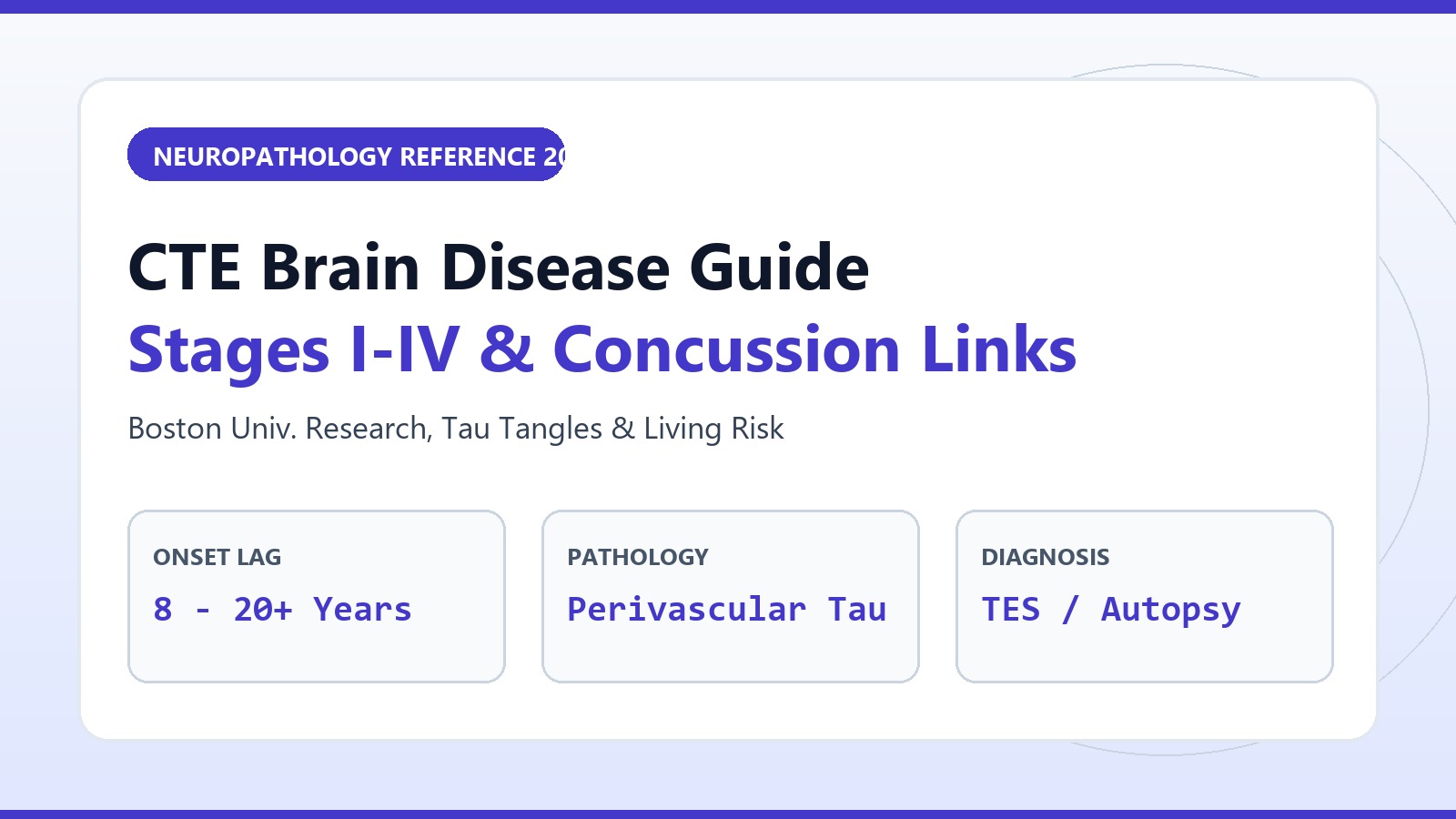
Chronic Traumatic Encephalopathy (CTE) is a progressive degenerative brain disease triggered by years of repetitive head impacts—including asymptomatic sub-concussive hits—commonly studied in tackle football players, boxers, soccer headers, hockey athletes, and blast-exposed military veterans. Repetitive rotational shear causes misfolded tau protein to clump around small blood vessels deep inside cortical folds, leading decades later to impulsivity, mood volatility, memory loss, and dementia. Today, definitive confirmation requires post-mortem brain tissue examination, while living patients are evaluated under NINDS Traumatic Encephalopathy Syndrome (TES) criteria.
1. Boston University McKee Pathological Stages (Stage I to Stage IV)
| Pathological Stage | Brain Tau Distribution | Reported Behavioral & Cognitive Symptoms |
|---|---|---|
| Stage I (Mild Focal) | 1–2 discrete perivascular tau spots in frontal cortex sulci | Often asymptomatic; occasional headaches, mild attention lapses |
| Stage II (Spread) | 3+ cortical lesions spreading to temporal & brainstem nuclei | Mood volatility, explosive temper, depression, executive difficulty |
| Stage III (Widespread) | Dense tau across frontal, temporal, amygdala & hippocampus | Noticeable short-term memory loss, apathy, visuospatial errors |
| Stage IV (Severe) | Global cerebral atrophy, white-matter loss & widespread tangles | Profound dementia, paranoia, word-finding loss & parkinsonian gait |
2. Acute Concussion vs. CTE vs. Alzheimer's Disease
| Characteristic | Acute Concussion | CTE | Alzheimer's Disease |
|---|---|---|---|
| Trigger | Single sudden head/neck acceleration | Years of repetitive sub-concussive blows | Age, genetics (APOE4), vascular & lifestyle risks |
| Recovery Course | Reversible metabolic recovery (weeks–months) | Progressive neurodegenerative decline | Progressive neurodegenerative decline |
| Amyloid Plaques | Absent | Usually absent or secondary in older age | Core diagnostic requirement |
Repetitive Head Impact & Clinical Triage Explorer (TES Criteria)
Understand how years of contact exposure and symptom patterns guide living neurologic evaluations.
3. Future Living Diagnosis: Blood Biomarkers & Why Symptoms Remain Treatable
While clinical diagnosis during life currently relies on Traumatic Encephalopathy Syndrome (TES) history plus exclusion of alternatives, Boston University's ongoing DIAGNOSE CTE project is testing plasma tau fragments and specialized PET tracers to spot CTE in living brains. Critically, Concussion Legacy Foundation physicians stress that depression, insomnia, chronic headaches, sleep apnea, and hormonal deficits are highly treatable today—athletes experiencing mood or memory decline should never assume hopelessness without comprehensive neurological workups.
4. Verified Boston University & Neuroscience Video Explainers
5. 5-Step Youth Athlete & Veteran Brain Protection Protocol
Delay Tackle Age
Favor flag football before age 12–14 to slash lifetime cumulative sub-concussive hits.
Cap Full-Contact Drills
Limit full-speed hitting practices during youth and high-school football weeks.
Zero Same-Day Return
Remove any athlete immediately when suspected of concussion—protect against second-impact syndrome.
Screen Sleep & Mood
Treat post-career sleep apnea, headaches, depression, and hypertension promptly.
Support Research
Consult Concussion Legacy Foundation helplines for veteran and athlete neuro-rehab resources.