What are the step-by-step requirements to become a licensed attorney in the United States?
Becoming a licensed lawyer in the United States requires four sequential stages: completing a 4-year undergraduate bachelor's degree (3.6+ GPA recommended), scoring competitively on the LSAT (160+ target), graduating from an ABA-accredited law school with a Juris Doctor (J.D.) degree (3 years), passing the MPRE ethics exam and the nationwide NextGen Bar Examination, and clearing the State Bar Character and Fitness background audit. The process requires seven years of post-secondary study.
Law School Tuition, Debt Load & Starting Salary ROI Calculator (2026–2027)
Simulate 3-year J.D. tuition, Grad PLUS loan capitalized interest, and post-graduation take-home cash flow across BigLaw, mid-sized regional firms, and public interest PSLF paths.
1Stage 1: Undergraduate Pre-Law Preparation & The LSAT Strategy
The American Bar Association does not mandate any specific undergraduate pre-law major. Admissions committees at top-tier law schools place primary statistical weight on your cumulative undergraduate GPA and your standardized Law School Admission Test (LSAT) score.
Majors that cultivate analytical writing, statutory interpretation, and rigorous logical reasoning—such as Philosophy, Economics, Political Science, Mathematics, and History—consistently yield the highest average LSAT percentiles. Candidates targeting Top-14 (T-14) institutions should aim for a GPA of 3.85+ and an LSAT score of 170+ (97th percentile).
- LSAT Scoring: Scaled from 120 to 180. A score of 160 places candidates in the top 20%, qualifying for regional merit scholarships, while 172+ opens doors to Harvard, Yale, and Stanford.
- GRE Acceptance: Over 100 ABA-accredited law schools now accept the GRE in lieu of the LSAT, although the LSAT remains the gold standard for merit scholarship allocation.
2Stage 2: The 3-Year Juris Doctor (J.D.) Program & The 1L Curve
Law school differs fundamentally from undergraduate coursework. The first year (1L) is universally standardized across all ABA-accredited institutions, comprising Civil Procedure, Torts, Contracts, Constitutional Law, Criminal Law, Property, and Legal Research & Writing.
Most law schools enforce a strict grading curve where only the top 10% to 15% of the class receive 'A' marks. Because large corporate law firms conduct On-Campus Interviews (OCI) at the start of the 2L year based almost exclusively on 1L class rank, first-year academic performance has an outsized impact on immediate post-graduate earnings.
- Law Review & Moot Court: Co-curricular honor organizations selected at the conclusion of 1L through writing competitions; critical resume credentials for federal judicial clerkships.
- 2L Summer Associate Positions: 10-week summer internships at major law firms paying $4,000–$4,500 per week, with full-time post-graduation conversion rates exceeding 90%.
3Stage 3: The NextGen Bar Exam Overhaul (2026–2027 Rollout)
The licensure landscape is undergoing its most radical transformation in four decades. Administered by the National Conference of Bar Examiners (NCBE), the NextGen Bar Exam officially debuts in July 2026 and expands nationwide through 2027, replacing the legacy Uniform Bar Examination (UBE).
Unlike the older format that tested rote memorization of obscure legal doctrines across 14 subjects, the NextGen Bar Exam is a 9-hour computerized assessment focused on practical legal skills: client counseling, dispute resolution, legal research, and transactional document drafting.
- Core Doctrinal Fields: Civil Procedure, Contract Law, Evidence, Torts, Business Associations, Constitutional Law, Criminal Law, and Real Property.
- MPRE Ethics Requirement: Candidates must also pass the Multistate Professional Responsibility Examination (MPRE) with a score of 75 to 86 depending on the jurisdiction.
2026–2027 Attorney Salary Landscape by Practice Sector
| Practice Sector | Starting Base Salary (1st Year) | Mid-Level Associate (4–5 Years) | Senior Partner / General Counsel |
|---|---|---|---|
| BigLaw Corporate (Cravath Scale) | $225,000 + $20k bonus | $345,000 – $390,000 | $1,200,000 – $4,500,000+ (Equity) |
| Mid-Sized Commercial Firm | $115,000 – $145,000 | $175,000 – $225,000 | $350,000 – $650,000 |
| Boutique Trial Practice | $120,000 – $165,000 | $190,000 – $260,000 | $450,000 – $1,500,000+ |
| Public Defender / District Attorney | $68,000 – $85,000 | $95,000 – $125,000 | $140,000 – $190,000 (Chief) |
| In-House Corporate Counsel | $135,000 – $170,000 | $195,000 – $265,000 | $400,000 – $950,000+ (Stock) |
The 4-Step Character and Fitness Audit Checklist
Audit and Resolve Outstanding Financial Liabilities
State Bar examiners review your credit profile. Unpaid tax liens, defaulted student loans, or unresolved civil judgments must be placed in formal repayment arrangements prior to application.
Disclose All Traffic Citations and Academic Disciplinary Records
Complete transparency is essential. Failing to disclose a minor college honor council reprimand or speeding ticket is considered a severe character infraction that can trigger a formal moral fitness hearing.
Secure Verified Affidavits from Former Legal Employers
Obtain formal character references from licensed attorneys and law professors attesting to your ethical reliability, personal integrity, and professional demeanor.
Complete the State Supreme Court Swearing-In Ceremony
Take the constitutional oath before a state Supreme Court justice or federal appellate bench to receive your official bar card and active attorney registration number.
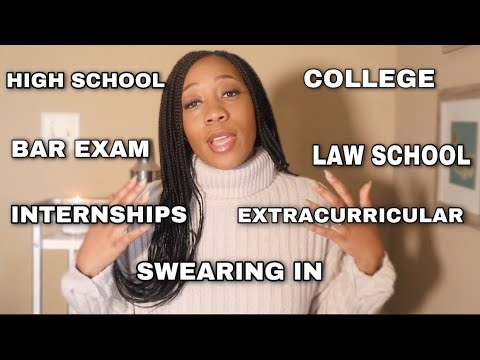
Curated Expert Video Walkthroughs & Wall Street Briefings



Frequently Asked Questions (Verified Statutory Answers)
Q1: How long does it take to become a lawyer in the United States?
It takes seven years of full-time academic study: four years to complete an undergraduate bachelor's degree and three years to earn a Juris Doctor (J.D.) from an ABA-accredited law school, followed by bar exam preparation and character review.
Q2: What is the NextGen Bar Exam and when does it take effect?
The NextGen Bar Exam is the modernized national bar exam created by the NCBE, launching in July 2026 and rolling out through 2027. It shortens the test from 12 to 9 hours and tests integrated legal drafting, negotiation, and realistic client problem solving instead of rote memorization.
Q3: Can I become a lawyer without going to law school?
Only four states—California, Vermont, Virginia, and Washington—permit candidates to take the bar exam via a formal multi-year legal apprenticeship ('reading the law') under a supervising judge or practicing attorney without attending law school.
Q4: What starting salary can a new law school graduate expect?
The legal profession features a bimodal salary distribution. Graduates entering large BigLaw firms earn a standardized base salary of $225,000 plus bonuses on the Cravath scale, while those entering public service, prosecution, or small regional firms earn between $65,000 and $95,000.