What is the difference between Vitamin K1 and K2, and what happens if you are deficient?
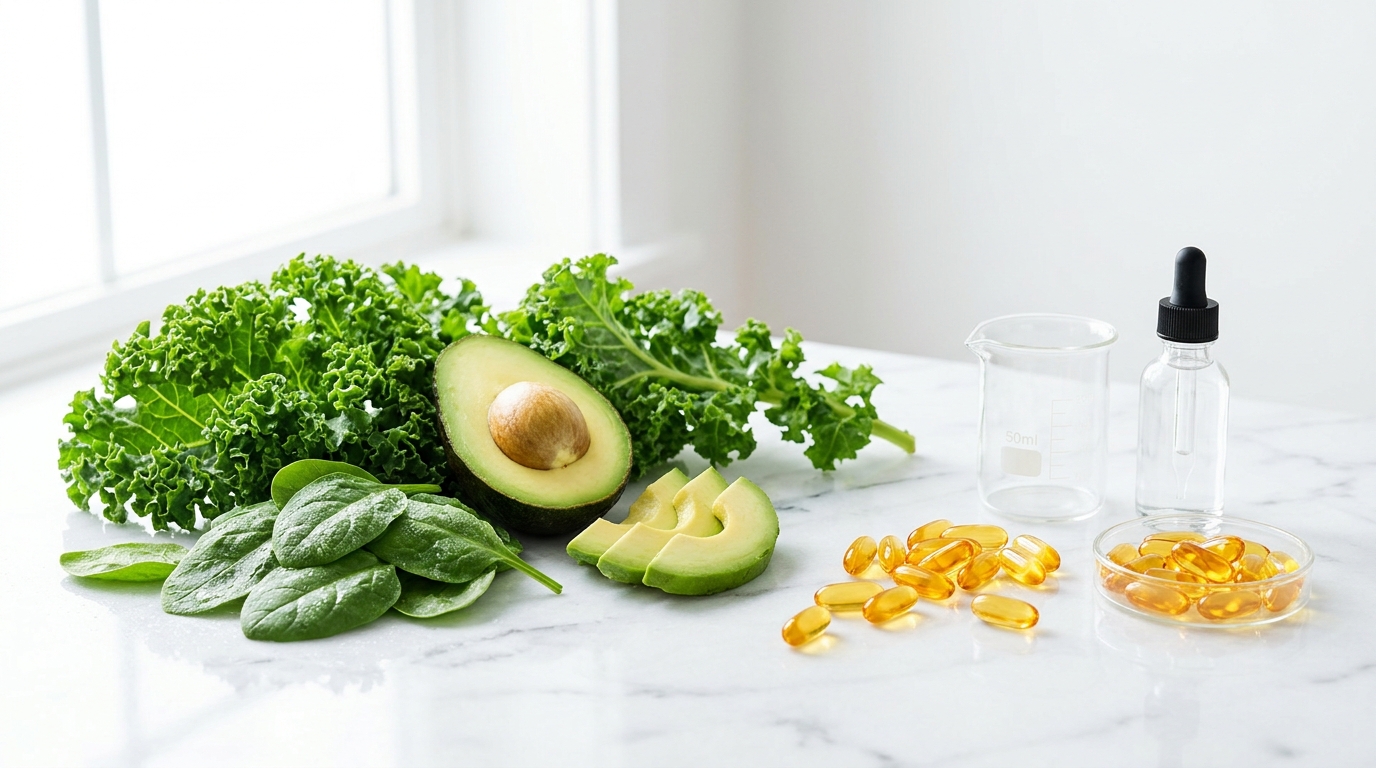
Vitamin K1 (phylloquinone) comes from leafy greens (kale, spinach, broccoli) and primarily stays in the liver to power essential blood clotting. Vitamin K2 (menaquinone, specifically MK-7) enters peripheral blood vessels and bones to activate Osteocalcin and MGP—pulling calcium into teeth and bones while blocking calcium buildup in arteries. While overt bleeding deficiency is uncommon outside fat-malabsorption disorders or long-term antibiotics, subclinical Vitamin K2 inadequacy is widespread in standard Western diets—especially among people taking high-dose Vitamin D3 alone.
1. Vitamin K1 vs K2 (MK-4 vs MK-7) Biochemical Comparison
| Form | Top Dietary Sources | Primary Biological Role | Blood Half-Life |
|---|---|---|---|
| Vitamin K1 (Phylloquinone) | Kale, Spinach, Collard Greens, Broccoli | Liver blood coagulation proteins (Factors II, VII, IX, X) | 1 – 2 Hours |
| Vitamin K2 (MK-4) | Grass-fed butter, dark chicken meat, egg yolks | Cellular gene expression & short-term bone health | 2 – 4 Hours |
| Vitamin K2 (MK-7) | Natto (fermented soy), Gouda & Brie cheeses | Activates Osteocalcin (bones) & MGP (artery flexibility) | ~72 Hours (Sustained) |
Daily Vitamin K1 & K2 (MK-7) Intake & D3 Pairing Estimator
2. Common Signs & Risk Factors of Vitamin K Deficiency
Classic Vitamin K1 deficiency manifests through prolonged clotting times—easy skin bruising from minor bumps, small dark blood spots beneath fingernails, bleeding gums while brushing teeth, nosebleeds, and heavy menstrual bleeding. Meanwhile, chronic low Vitamin K2 intake produces no immediate bruising; instead, uncarboxylated Osteocalcin and inactive Matrix Gla Protein accumulate silently over years, contributing to reduced bone mineral density and premature arterial stiffness.
3. Crucial Safety Warning: Blood Thinners & Fat Malabsorption
If you take Warfarin (Coumadin), consistency is vital because Warfarin works specifically by inhibiting Vitamin K recycling in the liver. Never begin or abruptly stop Vitamin K2 supplements or dramatically double leafy green intake without direct INR lab monitoring by your physician. Conversely, individuals with celiac disease, ulcerative colitis, cystic fibrosis, or chronic antibiotic therapy should speak with a gastroenterologist about water-miscible or fat-paired Vitamin K absorption testing.
4. Verified Clinical Nutrition Explainers
5. 5-Step Vitamin K Optimization Checklist
Pair With Meal Fat
Always eat spinach/kale with olive oil, avocado, or eggs—dry greens absorb minimal K1.
Add Fermented Dairy
Include aged Gouda, Jarlsberg, or natto 2–3 times weekly for natural dietary K2.
Check D3 Pairing
Verify your daily Vitamin D3 capsule includes 90–100 mcg of Vitamin K2 (MK-7).
Audit Gut Health
Replenish probiotics after antibiotic rounds that temporarily reduce gut menaquinones.
Verify Medications
Ask your pharmacist to cross-check Warfarin/anticoagulant interactions first.