
What is the difference between homeowners (HO-3) and renters (HO-4) insurance?
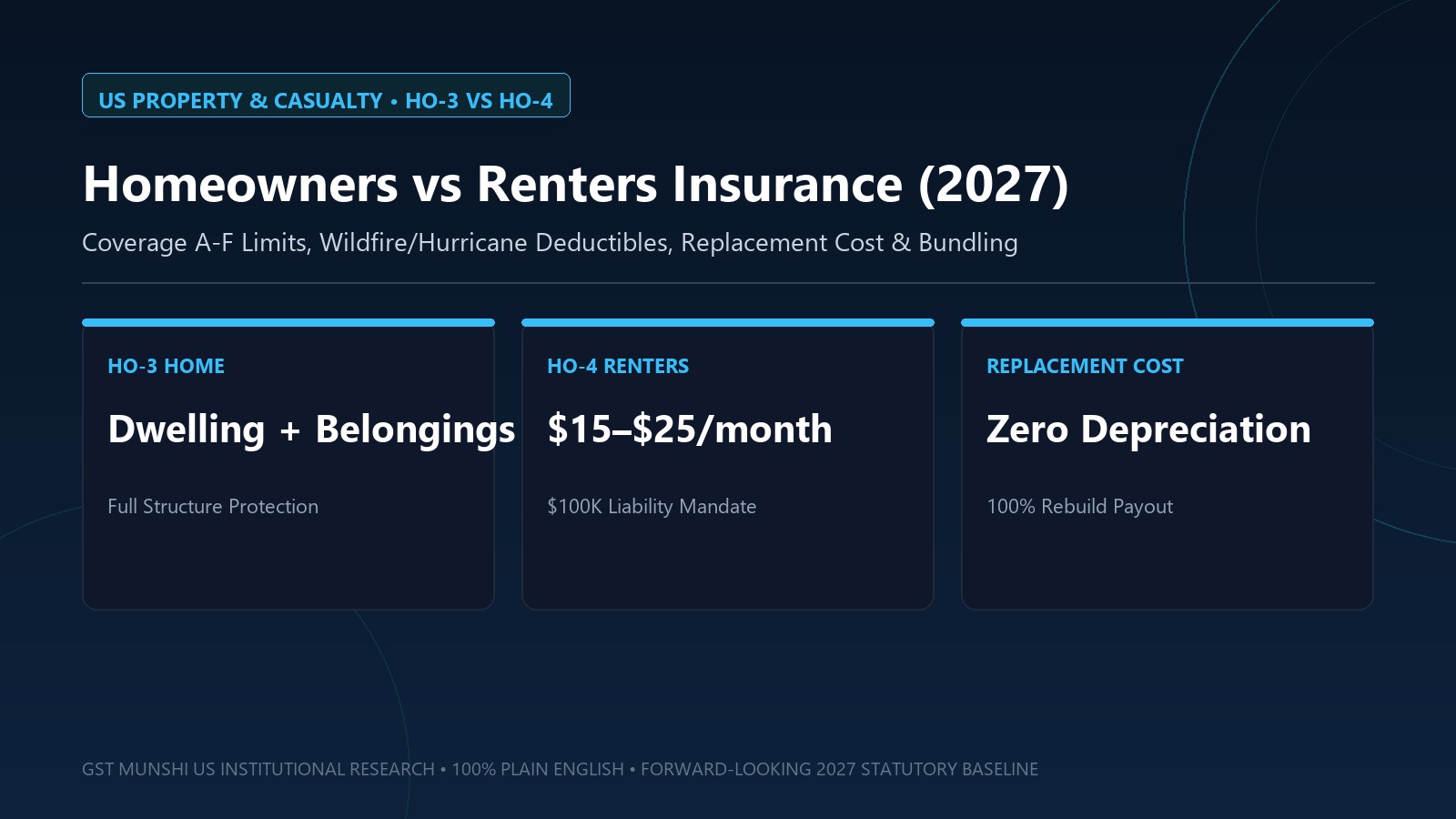
Homeowners insurance (HO-3) protects both the physical building structure (Coverage A Dwelling) and the owner's personal belongings, costing an average of $1,850/year in the US. Renters insurance (HO-4) covers only the tenant's personal property (Coverage C) and personal liability (Coverage E) without insuring the physical building, costing only $15–$25/month ($180–$250/year). Both policies require Replacement Cost Coverage to prevent depreciation cuts on claims.
Homeowners (HO-3) vs Renters (HO-4) Replacement Cost & Premium Simulator
Calculate your structure rebuild replacement cost (Coverage A), personal contents (Coverage C), loss of use (Coverage D), and bundle discount savings.
1Deconstructing ISO Property Policies: Coverages A, B, C, D, E & F
Standard US residential property insurance operates under standardized policy forms developed by the Insurance Services Office (ISO). Whether purchasing a single-family homeowner policy (HO-3), a renters policy (HO-4), or a condominium unit policy (HO-6), your coverage is divided into distinct categories.
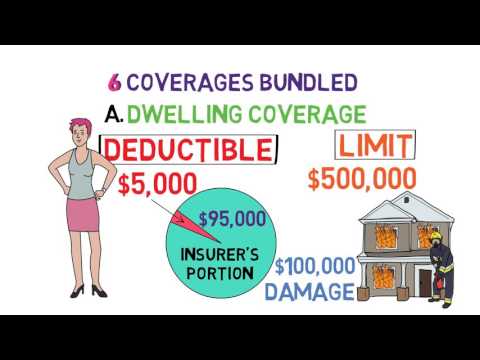
Coverage A (Dwelling) is the foundational cornerstone of an HO-3 policy. It pays to rebuild the physical frame, foundation, roof, plumbing, and electrical infrastructure of your home. Coverage B provides 10% of Coverage A for detached structures such as fences, sheds, and detached garages. Coverage C covers personal property (furniture, electronics, clothing) at 50% to 70% of Coverage A.
- Coverage D (Loss of Use / Additional Living Expense): Pays for hotel stays, restaurant dining, and storage if your home is rendered uninhabitable by a covered fire, hurricane, or tornado.
- Coverage E (Personal Liability): Protects your life savings and future wages if a guest slips on your icy driveway, suffers a dog bite, or gets injured on your property (standard limit: $300,000 to $500,000).
- Coverage F (Medical Payments to Others): Pays $1,000 to $5,000 for minor guest medical bills regardless of who was at fault, preventing costly liability lawsuits.
2Actual Cash Value (ACV) vs Replacement Cost: The Depreciation Trap
The single most critical clause on your insurance declarations page is the loss settlement valuation provision. Far too many homeowners and renters assume their policy will buy them brand-new replacements after a disaster, only to discover they selected an Actual Cash Value (ACV) policy.
Actual Cash Value deducts depreciation for age, wear, and obsolescence. If a 10-year-old roof with a 20-year lifespan is destroyed by hail, an ACV settlement pays only 50% of the replacement cost minus your deductible. In contrast, Replacement Cost Value (RCV) reimburses the full market price to install a brand-new roof or purchase a new television today, without deducting a single penny for depreciation.
3The US Property Crisis: Wildfire Exclusions & Hurricane Percentage Deductibles
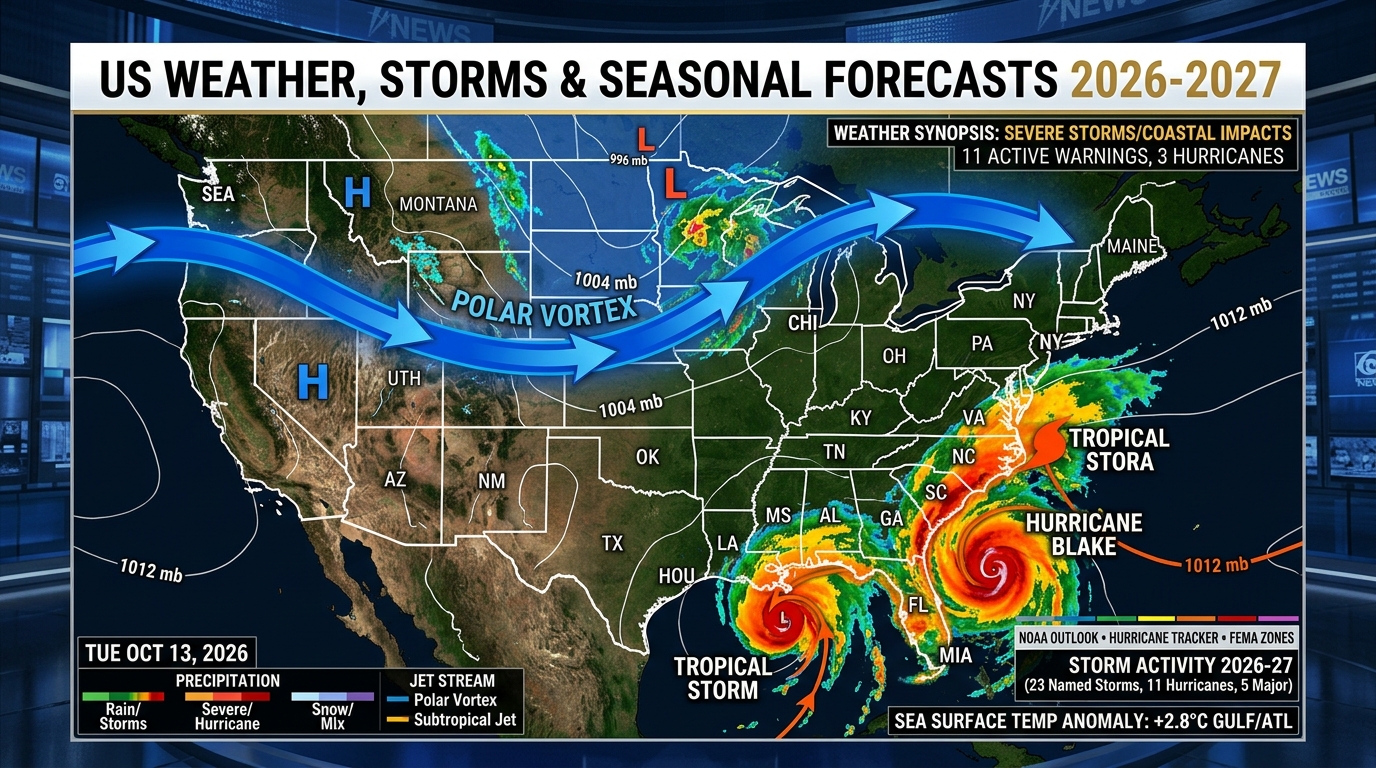
In high-risk coastal and wildfire states such as Florida, California, Louisiana, and Texas, insurance carriers have restructured deductible mechanisms. Instead of a flat $1,000 all-peril deductible, insurers enforce separate percentage deductibles for named hurricanes, tropical storms, and wind/hail events.
A 2% hurricane deductible on a home insured for $400,000 requires the homeowner to pay $8,000 out-of-pocket before insurance coverage kicks in. Furthermore, standard homeowners and renters policies strictly exclude flood damage (rising surface water) and earth movement (earthquakes), which require separate policies through FEMA's National Flood Insurance Program (NFIP) or private surplus lines.
Property Insurance Comparison: HO-3 Homeowner vs HO-4 Renter vs HO-6 Condo
| Policy Form | Physical Dwelling (Coverage A) | Personal Contents (Coverage C) | Average Annual Cost | Who Needs It |
|---|---|---|---|---|
| HO-3 (Special Form Homeowner) | Open-Peril (100% Rebuild Cost) | Named-Perils (50%–70% of Dwelling) | $1,850 / yr ($154/mo) | Single-family homeowners with a mortgage or free-and-clear |
| HO-4 (Contents Broad Form / Renters) | $0 (Building insured by landlord) | Named-Perils ($25,000 – $60,000) | $195 / yr ($16/mo) | Apartment tenants & residential home renters (Landlord required) |
| HO-6 (Unit-Owners Form / Condo) | Walls-In / Studs-In ($30k – $100k) | Named-Perils (50% of interior) | $540 / yr ($45/mo) | Condo and co-op owners relying on an HOA master policy |
| HO-5 (Comprehensive Master Policy) | Open-Peril (Full Structure) | Open-Peril (All Belongings Included) | $2,450 / yr ($204/mo) | High-value luxury homes ($750k+) seeking maximum protection |
4-Step Blueprint to Audit Your Property Policy & Maximize Payouts
Create a Cloud-Backed Digital Video Home Inventory
Walk through every room with your smartphone camera, recording electronics serial numbers, furniture brands, jewelry, and closet contents. Upload the file to Google Drive or iCloud so proof exists if the home burns down.
Verify Guaranteed or Extended Replacement Cost Endorsement
Ensure your policy contains a 25% or 50% Extended Replacement Cost rider. This guarantees the insurer pays up to 150% of your Coverage A limit if post-disaster inflation spikes local lumber and labor costs.
Add Water Backup & Sump Overflow Endorsements
Standard property policies exclude drain and sewer backups. Adding a $10,000–$25,000 water backup rider costs only $35–$50/year and protects against catastrophic finished basement sewage floods.
Lock In Multi-Line Auto + Home Bundling Discounts
Link your property policy with your auto insurer to activate immediate 20%+ reciprocal discounts that often offset over half the cost of a renters insurance policy.
Curated Expert Video Walkthroughs & Wall Street Briefings



Frequently Asked Questions (Verified Statutory Answers)
Q1: Does homeowners or renters insurance cover flood damage?
No. Standard HO-3 homeowners and HO-4 renters policies strictly exclude flood damage resulting from overflowing rivers, storm surges, tidal waves, or accumulated surface rainwater runoff. Flood insurance must be purchased separately through the FEMA National Flood Insurance Program (NFIP) or private flood underwriters.
Q2: Why do apartment landlords require tenants to show proof of renters insurance?
Landlords require renters insurance primarily for the $100,000+ Personal Liability (Coverage E) component. If a tenant accidentally leaves a bathtub running or causes a kitchen grease fire that damages the building structure or neighboring units, the tenant's renters insurance pays for the damage rather than the landlord's commercial property insurer.
Q3: What is an extended replacement cost endorsement?
Extended Replacement Cost is an optional endorsement that expands your Coverage A Dwelling limit by an extra 20% to 50% above your policy cap. If a widespread wildfire or hurricane destroys hundreds of homes in your community, local contractor labor and building material costs surge dramatically; extended replacement cost ensures your home is completely rebuilt even if costs exceed the initial estimate.
Q4: What items require a personal property scheduled floater endorsement?
Standard property policies place internal sub-limits on high-value personal belongings—typically $1,500 for stolen jewelry and watches, $2,500 for firearms, and $2,500 for silverware. High-value engagement rings, luxury watches, fine art, and rare collectibles should be individually 'scheduled' with a floater endorsement, which provides zero-deductible worldwide coverage at agreed value.
Curated Expert Insights & Verified Consumer Disclosures
“Renters who skip HO-4 insurance because 'I don't own $100k of stuff' fundamentally misunderstand the policy. Renters insurance isn't just for your couch; it's for the $300,000 in personal liability if your toaster catches fire and damages 4 other units in the building.”
“Always verify if your roof settlement is 'Replacement Cost' or 'Actual Cash Value'. If your policy quietly switched to ACV at age 10, a hail storm will leave you with a $12,000 out-of-pocket shortfall due to roof depreciation.”